The Difference Between Visiting and Penetrating
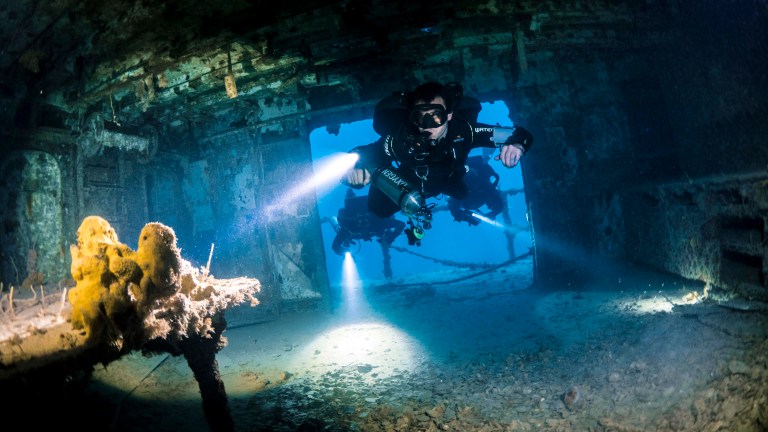
Many divers explore the exterior of wrecks. Fewer move inside. The distinction is not depth — it is overhead.
Once a diver passes through a doorway, hatch, or collapsed section into an enclosed structure, the dive transitions from open water to overhead environment. Direct ascent is no longer possible. Exit depends on navigation memory, guideline integrity, and gas sufficiency.
Advanced wreck penetration introduces:
- Silt accumulation
- Structural instability
- Sharp metal edges
- Entanglement hazards
- Spatial disorientation
The environment offers no forgiveness for lost situational awareness.
Penetration is not sightseeing. It is controlled navigation within confined, often deteriorating structures.
Gas Planning in Confined Spaces
Gas planning in wreck penetration must assume complexity, not simplicity.
Unlike open water technical diving, wreck interiors may:
- Restrict movement
- Increase workload
- Delay exit
- Require repositioning cylinders
Gas rules must account for:
- Penetration distance
- Possible zero-visibility exit
- Assistance to a teammate
- Elevated breathing rates under stress
The traditional rule of thirds is a baseline, not a guarantee. In complex wrecks, more conservative gas strategies may be necessary.
Gas is not just time — it is margin.
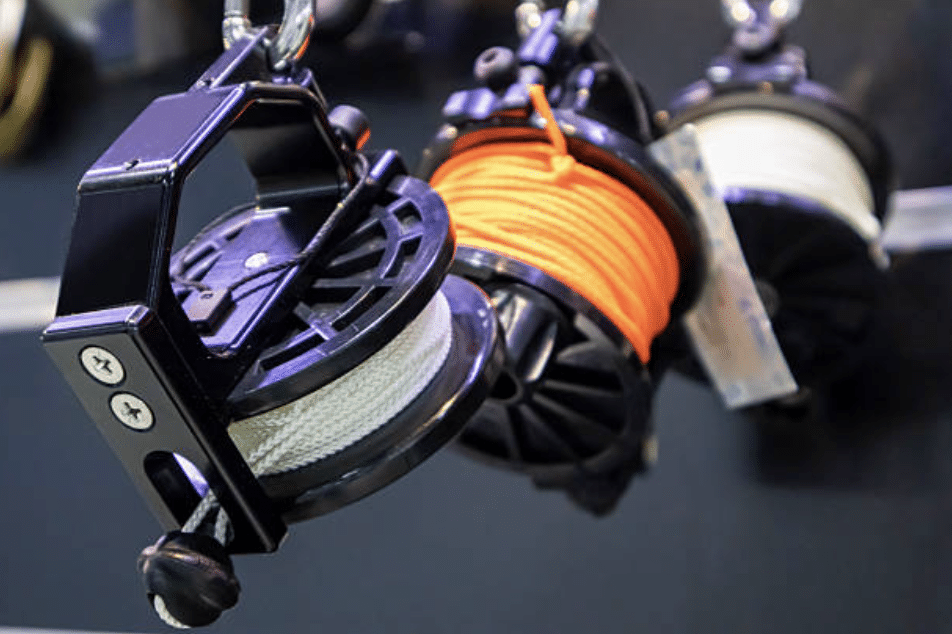
Guideline Discipline: Your Only Exit
In overhead environments, the guideline is the exit reference. Without it, orientation becomes unreliable.
Advanced wreck divers must be proficient in:
- Primary reel deployment
- Secure tie-offs
- Maintaining tension without over-tightening
- Avoiding line traps and sharp edges
- Lost line recovery procedures
Line placement must anticipate:
- Silt-out conditions
- Zero visibility
- Team movement
- Structural complexity
A poorly placed line becomes a hazard rather than a solution.
At N9BO℠, we emphasise that guideline discipline is non-negotiable. The line is not optional equipment — it is the lifeline.
Silt and Zero Visibility
Many wreck interiors accumulate decades of fine particulate matter. A single fin kick, cylinder contact, or improper movement can create a silt-out.
In seconds, visibility can drop to zero.
This is not theoretical. It is predictable.
Training must prepare divers to:
- Maintain contact with the line
- Control buoyancy precisely
- Move deliberately without stirring sediment
- Communicate calmly with teammates
Panic in zero visibility is catastrophic. Calm procedural response is survival.
Advanced wreck diving is built on the assumption that visibility will disappear at some point.
Entanglement and Structural Hazards
Wrecks are dynamic environments. Corrosion weakens metal. Fishing lines accumulate. Electrical wiring and debris create hidden traps.
Divers must:
- Carry cutting devices
- Maintain streamlined configuration
- Avoid unnecessary protrusions
- Anticipate snag points
Failure management in wreck penetration includes:
- Controlled stop
- Gas assessment
- Problem isolation
- Team communication
Rushing escalates problems. Slowing down resolves them.
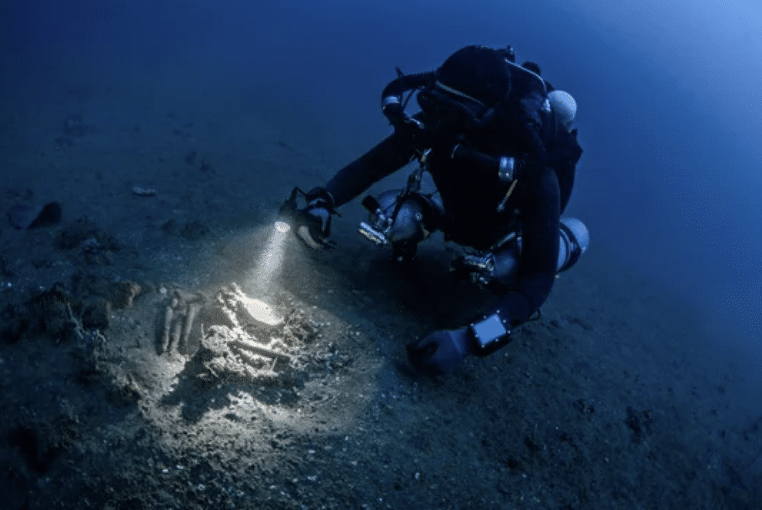
Team Structure and Communication
Wreck penetration is rarely a solo activity.
Team roles must be defined:
- Lead diver (navigation and line management)
- Secondary diver (monitoring and support)
- Third diver (if applicable, backup and redundancy)
Communication must remain simple and pre-briefed.
Overcomplicated signals increase confusion. Clear pre-dive planning reduces ambiguity.
Structured thinking begins before entering the wreck.
Psychological Discipline in Confined Spaces
The interior of a wreck can feel disorienting:
- Limited light
- Narrow corridors
- Echoing sound
- Reduced spatial cues
Stress responses increase breathing rate and reduce cognitive clarity.
This is where training reveals its value.
Divers must remain:
- Neutral in buoyancy
- Deliberate in movement
- Conservative in penetration limits
The exit must always remain within planned gas margin.
Confidence in overhead environments comes from repetition and discipline — not adrenaline.
Why Structured Thinking Matters Most
Advanced wreck penetration is not about exploring deeper into a structure than others.
It is about:
- Entering within plan
- Operating within margin
- Exiting before conditions degrade
The environment punishes optimism and rewards procedure.
At N9BO℠, overhead training is structured to build decision-making discipline before penetration distance increases. Progression is incremental. Margin is preserved deliberately.
Penetration is not conquest. It is controlled exploration within defined limits.
In overhead diving, structured thinking is not optional. It is survival.
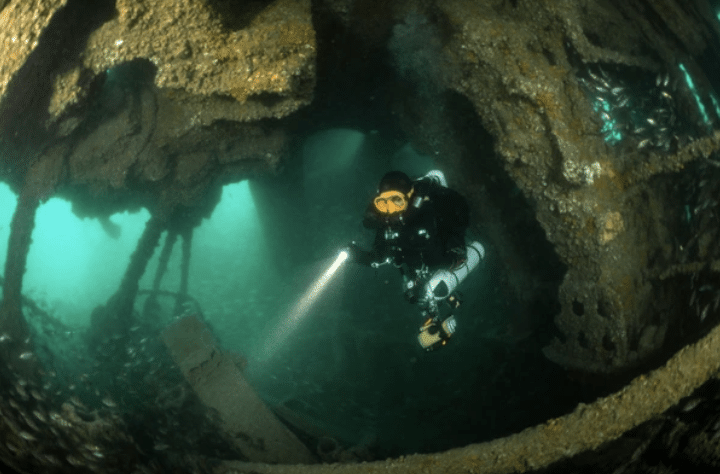
Ready to Progress into Advanced Wreck Penetration?
Overhead environments demand disciplined gas planning, guideline mastery, and structured team coordination. Contact N9BO℠ to discuss wreck penetration training pathways.
From the N9BO℠ Knowledge Base