Surface Rescue and Underwater Rescue Are Different Domains
Many lifeguards and water rescue professionals assume their experience translates directly underwater. While watermanship is invaluable, underwater rescue introduces constraints that fundamentally change risk management.
Limited visibility, depth, gas dependency, and equipment complexity alter everything. Professional public safety diving training treats underwater rescue as a distinct operational discipline.
The Physiological Shift Below the Surface
Underwater rescuers must manage:
- Gas supply and consumption
- Buoyancy and trim
- CO₂ retention
- Thermal stress
These factors do not exist at the surface. ERDI Public Safety Diver training prepares rescuers to manage physiology before attempting victim interaction.
Rescue Priorities Change Underwater
At the surface, speed often dominates decision-making. Underwater, uncontrolled speed can be fatal.
Professional underwater rescue prioritises:
- Scene safety
- Team coordination
- Controlled recovery
- Evidence preservation (when applicable)
Public safety diving training teaches rescuers to slow down to remain effective.

Equipment Is Not Neutral
Rescue equipment adds drag, task loading, and failure points.
Lifeguards must learn to integrate tools without compromising buoyancy or awareness. ERDI training emphasises equipment management as a safety skill—not just a capability enhancer.
The Danger of “Hero Mode”
Surface rescuers are often praised for rapid, decisive action. Underwater, hero behaviour increases risk dramatically.
Professional training replaces heroism with discipline. Public safety diving programmes prioritise returning the rescuer safely above all else.
Instructor Perspective: Resetting Assumptions
Instructors frequently observe experienced lifeguards struggling initially underwater—not due to lack of ability, but due to incorrect assumptions.
At N9BO℠, instructors deliberately reset rescue mindset before advancing skills.
Team-Based Operations Underwater
Unlike many surface rescues, underwater operations are rarely solo.
Communication, spacing, and role clarity are essential. ERDI Public Safety Diver training treats teamwork as a core safety control.
Psychological Load of Subsurface Rescue
Underwater rescue often involves low visibility, entanglement risk, and emotionally charged scenarios.
Professional training prepares divers for these psychological stresses explicitly. Public safety diving instruction integrates mental resilience into skill development.

Why Retraining Is Non-Negotiable
Attempting underwater rescue without formal training places both rescuer and victim at extreme risk.
ERDI-certified programmes exist because surface rescue experience alone is insufficient below the surface.
Professional Parallels
Firefighters, paramedics, and military personnel retrain for new environments despite existing expertise.
Diving follows the same rule. Environment dictates method.
The Bottom Line
Strong swimmers save lives at the surface.
Trained public safety divers save lives underwater.
In professional rescue operations, underwater capability must be trained deliberately. Experience above water is a foundation—not a substitute.
At N9BO℠, public safety divers are trained for the realities below the surface.
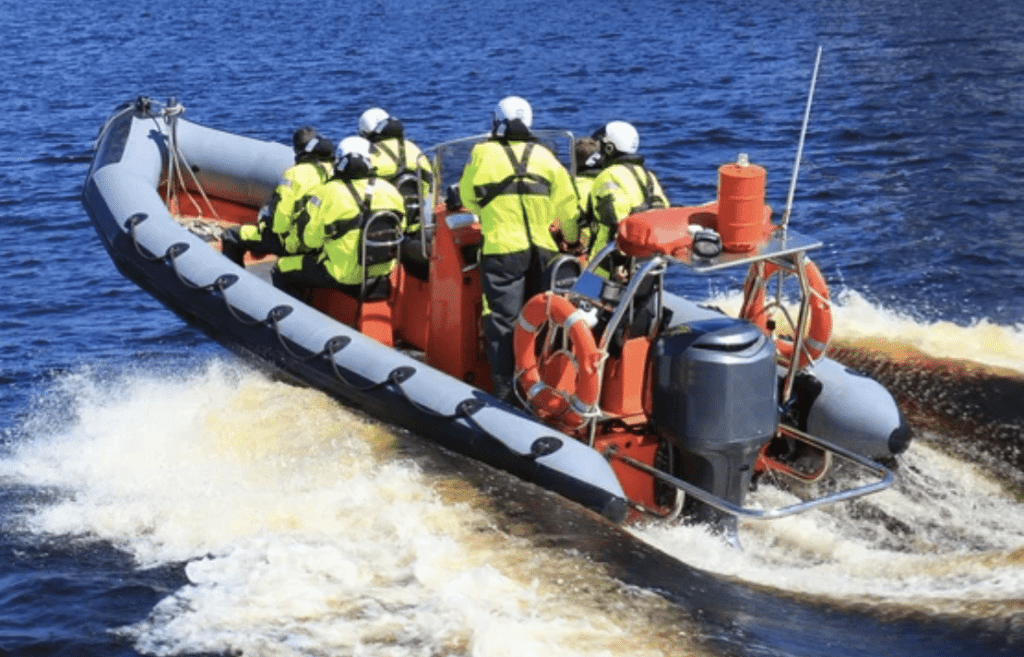
Transitioning From Surface Rescue to Diving Operations?
Surface rescue experience is valuable, but underwater operations require additional skills and mindset. Contact us to discuss appropriate rescue and PSD training pathways.
From the N9BO℠ Knowledge Base