Diving Is a Cognitive Activity First
While diving involves physical movement, equipment handling, and environmental exposure, the most important work happens mentally.
Decisions, prioritisation, anticipation, and restraint all occur in the mind. Technical diving training recognises that physical skill without mental discipline is fragile.
Mental Skills Are Trainable
Many divers believe mental resilience is a personality trait—you either have it or you don’t.
This belief is false. Mental skills can be trained deliberately through exposure, feedback, and reflection. Advanced technical diving progression treats mindset as a core competency.
Awareness Is a Mental Discipline
Situational awareness requires active mental engagement. It does not happen automatically.
Divers must consciously cycle attention between self, team, environment, and mission. Technical diving training trains this scanning behaviour explicitly.
Emotional Regulation Underwater
Fear, frustration, and urgency all degrade performance.
Professional divers learn to recognise emotional shifts early and regulate them before they influence action. Advanced technical diving progression integrates emotional control into technical drills.

Anticipation Reduces Stress
Anticipation prevents surprise. Divers who think ahead experience fewer stress spikes because deviations feel expected rather than threatening.
Technical diving training emphasises “what’s next” thinking rather than reactive behaviour.
Mental Discipline vs Mental Rigidity
Discipline does not mean inflexibility. It means controlled response.
Rigid thinking collapses under stress. Disciplined thinking adapts. Advanced technical diving progression teaches divers to remain structured while staying flexible.
Instructor Perspective: Watching the Mind at Work
Instructors observe mental performance through behaviour—hesitation, rushed movement, fixation.
At N9BO℠, instructors coach mental habits as carefully as fin kicks and buoyancy.
Stress Exposure Builds Mental Strength
Mental resilience is built through controlled exposure to challenge—not avoidance.
Technical diving training uses stress exposure to harden cognitive pathways safely.
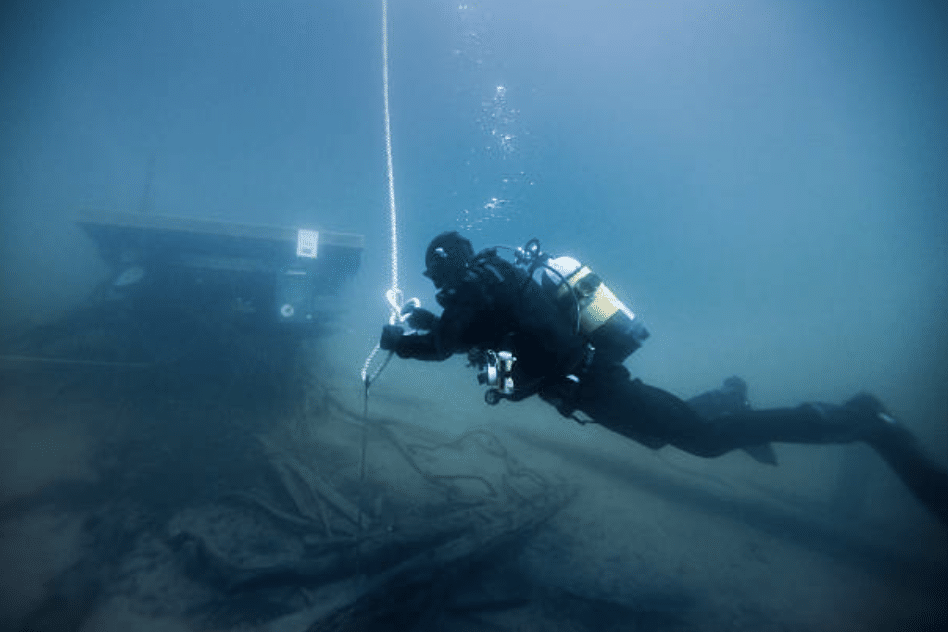
Team Mental Alignment
Teams function best when mental models align. Shared expectations reduce confusion and hesitation.
Advanced technical diving progression treats mental alignment as a team skill.
Professional Parallels
Elite athletes, pilots, and special operations personnel train mental skills deliberately.
Technical diving adopts this professional standard. Mental fitness is trained—not assumed.
The Bottom Line
Your body executes.
Your mind decides.
In technical diving, survival depends more on how you think than how hard you kick. The most capable divers train their minds as deliberately as their bodies.
At N9BO℠, mental performance is part of mastery.
Developing Mental Skills for Safer Diving?
Physical skills alone are not enough in demanding environments. Contact us to discuss training that strengthens awareness, decision-making, and mental resilience underwater.
From the N9BO℠ Knowledge Base