Recreational Diving Is Experience-Driven
Recreational diving is built around enjoyment, exploration, and personal comfort. Objectives are flexible, and dives can be shortened or aborted with minimal consequence.
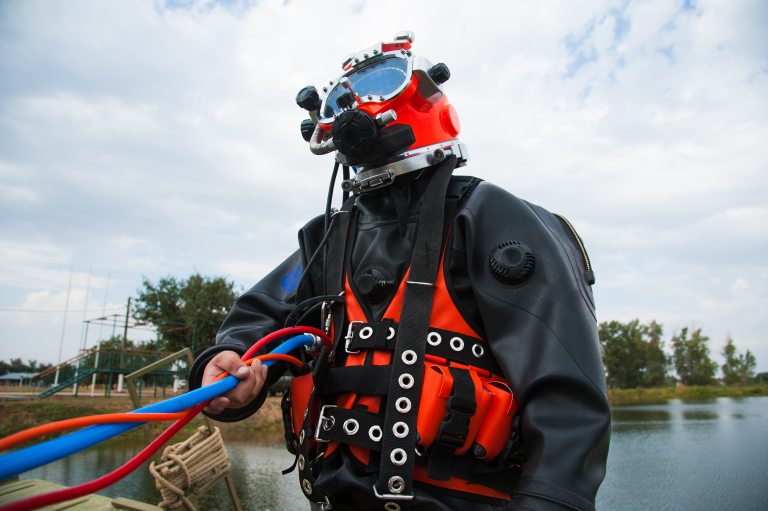
This freedom disappears once diving becomes operational. Professional diving training reframes the dive as a task, not an experience.
What Defines Operational Diving
Operational diving introduces:
- Fixed objectives
- External accountability
- Time and resource constraints
- Defined success and failure criteria
These factors fundamentally change decision-making. Public safety and technical diving training prepares divers to operate within this structure.
Mission Focus Increases Risk Exposure
When a mission exists—recovery, inspection, rescue, survey—divers may feel pressure to “get it done.”
Professional training teaches that mission success is meaningless if safety is compromised. Advanced technical and ERDI training places abort authority above task completion.
Planning Becomes Central
Operational dives succeed or fail before anyone enters the water.
Gas planning, role assignment, contingencies, and environmental assessment are mandatory. Professional diving education treats planning as an operational skill.

Equipment Shifts From Comfort to Function
Operational equipment prioritises reliability, redundancy, and task integration.
Comfort becomes secondary. Technical and public safety diving training teaches divers to configure equipment to serve the mission safely.
Instructor Perspective: Resetting Expectations
Instructors often see recreational divers struggle with mission discipline.
At N9BO℠, instructors explicitly retrain expectations—dives are no longer about “seeing more,” but about doing exactly what was planned.
Communication Is No Longer Casual
Operational diving requires clear, standardised communication.
Hand signals, slates, and briefings replace informal gestures. Professional training treats communication as a control measure.
Stress and Accountability
Operational divers work under scrutiny—by teams, agencies, or organisations.
Training prepares divers to manage this pressure without rushing decisions. Advanced technical and ERDI programmes condition calm under accountability.

Team Dynamics Change
In operational diving, individual preference yields to team function.
Roles are fixed, and improvisation is limited. Professional diving training emphasises discipline and mutual accountability.
Professional Parallels
In aviation and emergency response, missions follow procedures regardless of individual comfort.
Operational diving follows the same rule. Systems replace spontaneity.
The Bottom Line
Recreational diving is about experience.
Operational diving is about responsibility.
The transition requires retraining mindset, discipline, and judgment. When dives become missions, professionalism becomes non-negotiable.
At N9BO℠, divers are trained for operational reality.

Moving Toward Operational Diving?
Operational diving demands a different mindset, preparation level, and training structure. Contact us to discuss pathways into professional and public safety diving.
From the N9BO℠ Knowledge Base