The Seduction of Equipment
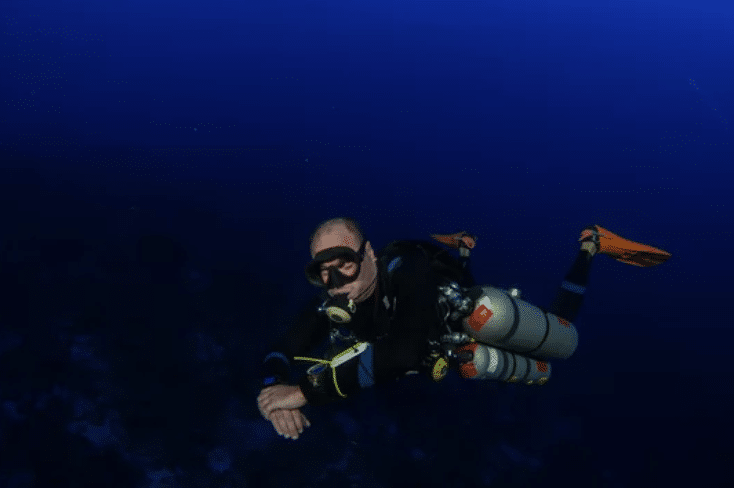
New equipment promises control, redundancy, and reassurance. Computers manage decompression, wings provide lift, reels guide navigation, and redundant systems promise backup.
But equipment does nothing without correct human input. Professional technical diving training treats gear as an amplifier—not a solution.
Technology Amplifies Behaviour
Good habits become safer with good equipment.
Bad habits become more dangerous.
Technology increases reach, depth, and duration—but also multiplies the consequences of error. Advanced technical diving progression teaches divers to manage the human side before adding complexity.
The False Sense of Security
Divers often feel safer simply because they are better equipped.
This perceived safety can encourage deeper dives, longer penetrations, or reduced margins. Technical diving training explicitly addresses this psychological risk.
Equipment Failure Is Not the Primary Risk
Most incidents do not begin with catastrophic equipment failure.
They begin with:
- Misconfiguration
- Misinterpretation
- Delayed response
- Poor prioritisation
Professional training focuses on preventing these human errors long before equipment is stressed.

Instructor Perspective: Gear Masks Weakness
Instructors frequently see students using equipment to compensate for poor fundamentals—over-weighting, unstable buoyancy, or weak situational awareness.
At N9BO℠, instructors strip complexity back until fundamentals are solid.
Redundancy Requires Competence
Carrying redundant systems increases task loading and decision complexity.
Without training, redundancy becomes confusion. Advanced technical diving progression ensures divers can deploy backups calmly and correctly.
Simplicity Over Complexity
Professional divers favour simplicity wherever possible.
Each added device requires monitoring, maintenance, and decision bandwidth. Technical diving training teaches intentional equipment selection.
Equipment Does Not Make Decisions
Computers provide data—but they do not judge context.
Only trained divers can decide when to abort, modify plans, or accept risk. Professional diving education prioritises judgement over instrumentation.
Maintenance and Familiarity Matter
Owning equipment is not the same as knowing it.
Professional training requires divers to understand failure modes, limitations, and maintenance needs. Advanced technical diving progression treats familiarity as safety-critical.
Professional Parallels
In aviation, technology assists pilots—but does not replace training.
Diving follows the same rule. Equipment supports competence; it does not create it.
The Bottom Line
Gear extends capability.
Training creates capability.
In professional diving, safety depends on the diver—not the equipment. Tools only work when guided by discipline, knowledge, and judgement.
At N9BO℠, equipment follows training—not the other way around.

Unsure If Your Equipment Matches Your Training?
The right equipment supports skill — it never replaces it. Contact us to discuss configuration, training progression, and safe capability development.
From the N9BO℠ Knowledge Base