The Role of Communication in Dive Safety
Diving operations rely on communication at every stage—planning, execution, and response. Unlike surface environments, underwater communication is limited, making clarity and consistency critical.
Communication ensures that:
- Plans are understood and followed
- Changes in conditions are reported
- Issues are identified and addressed early
When communication fails, coordination breaks down. Divers operate on assumptions rather than shared information.
At N9BO℠, we treat communication as a primary safety system, not a supporting function.
Common Causes of Communication Failure
Communication failures are rarely due to a single factor. They typically result from a combination of human and procedural issues.
Frequent causes include:
- Assumptions replacing explicit confirmation
- Incomplete or unclear briefings
- Misinterpretation of signals
- Lack of standardisation within the team
These failures are often subtle. They may not be recognised until a problem develops.
For example, a diver may assume a planned depth or route without confirming, leading to separation or misalignment.
At N9BO℠, we emphasise that communication must be explicit and verified, not assumed.
Limitations of Underwater Communication
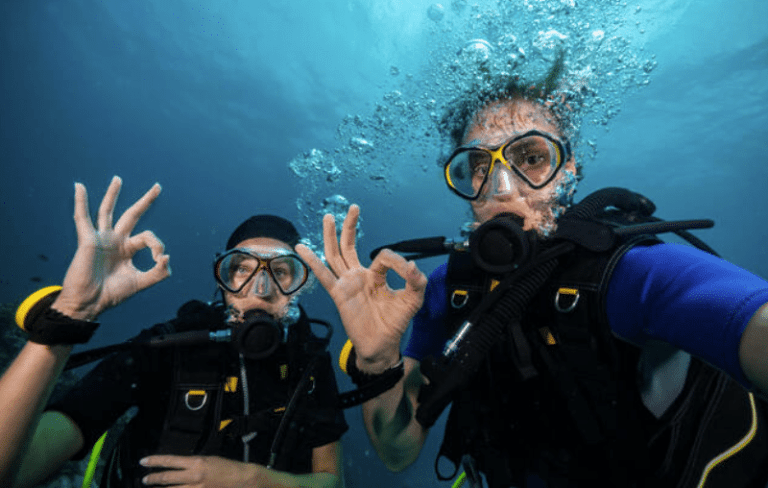
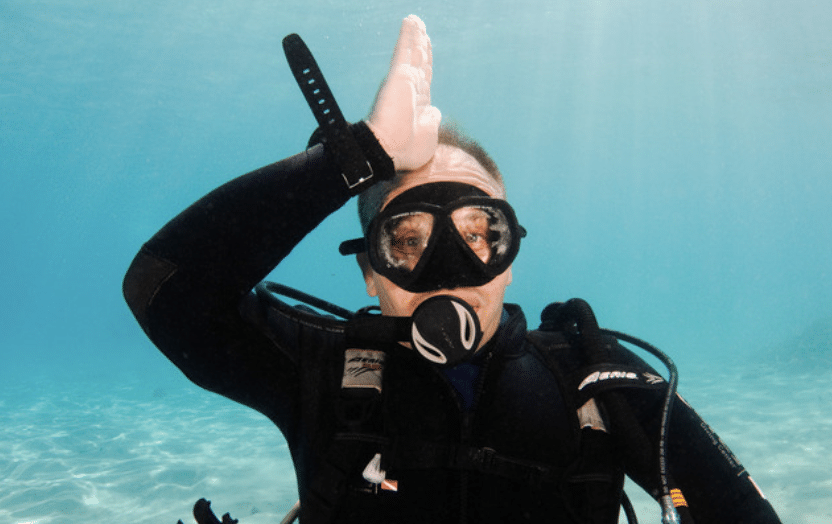
Underwater environments restrict communication methods. Hand signals, light signals, and limited tactile communication are the primary tools available.
These methods have inherent limitations:
- Reduced visibility affecting signal recognition
- Ambiguity in similar signals
- Limited ability to convey complex information
As a result, communication must be simplified and standardised.
Complex instructions cannot be effectively transmitted underwater. Planning must account for this limitation.
At N9BO℠, we design communication protocols to match environmental constraints.
Briefing Quality and Shared Mental Models
Effective communication begins before the dive. Briefings establish a shared understanding of the plan, roles, and contingencies.
A high-quality briefing ensures that all team members:
- Understand the dive objectives
- Know their roles and responsibilities
- Are aware of potential hazards and responses
This creates a shared mental model. Without it, divers interpret situations differently, leading to inconsistent actions.
Poor briefings result in:
- Misaligned expectations
- Delayed or incorrect responses
- Increased reliance on assumption
At N9BO℠, we treat briefings as operational alignment tools, not administrative steps.

Confirmation and Feedback Loops
Communication is not complete until it is confirmed. Sending a signal or instruction does not guarantee understanding.
Effective communication includes:
- Acknowledgement of received signals
- Confirmation of understanding
- Continuous feedback during operations
Without confirmation, errors go undetected.
For example, a signal to ascend must be acknowledged and understood. If not confirmed, divers may continue at depth, increasing risk.
At N9BO℠, we enforce closed-loop communication to ensure clarity.
Task Loading and Communication Breakdown
High workload reduces communication effectiveness. When divers focus on tasks, communication may be delayed, incomplete, or overlooked.
Task loading contributes to:
- Missed signals
- Reduced frequency of communication
- Incomplete information exchange
This is particularly critical in complex or high-stress environments.
Managing task load is therefore essential to maintaining communication.
At N9BO℠, we integrate communication into task management, ensuring it remains a priority.
Team Familiarity and Standardisation
Teams that operate together regularly develop consistent communication patterns. However, mixed or ad hoc teams may lack this consistency.
Differences in:
- Signal interpretation
- Communication style
- Procedural expectations
Increase the likelihood of misunderstanding.
Standardisation reduces variability. All team members must use the same signals and protocols.
At N9BO℠, we standardise communication across teams to ensure consistency.
Environmental and Equipment Factors
Environmental conditions directly affect communication. Low visibility, strong currents, and equipment configuration influence signal effectiveness.
Examples include:
- Reduced visibility limiting hand signal recognition
- Bulky equipment restricting movement
- Noise or vibration affecting communication systems
These factors must be considered during planning.
Alternative communication methods or increased proximity may be required.
At N9BO℠, we adapt communication protocols to environmental conditions.

Preventing Communication Failures
Effective prevention requires structured control measures.
Key strategies include:
- Conducting clear and comprehensive briefings
- Using standardised signals and terminology
- Implementing confirmation and feedback loops
- Managing task load to maintain awareness
Regular training reinforces these practices, ensuring consistency across operations.
Prevention is more effective than correction. Once communication fails, response becomes reactive.
At N9BO℠, we prioritise proactive communication management.
Recognising Early Signs of Breakdown
Communication failures often develop gradually. Early recognition allows for correction before escalation.
Indicators include:
- Delayed or absent responses to signals
- Repeated need to clarify instructions
- Diver separation or misalignment
These signs require immediate attention.
Intervention may involve stopping the task, re-establishing communication, or adjusting the plan.
At N9BO℠, we train teams to identify and respond to early communication issues.
Operational Mindset
Communication is not a passive process. It requires continuous effort, verification, and adaptation.
In diving operations, limited communication capability increases the importance of clarity and discipline. Assumptions and shortcuts introduce risk.
At N9BO℠, we approach communication as a controlled system. Every signal, instruction, and response is part of maintaining operational alignment.
In complex environments, effective communication is not an advantage—it is essential for safety and performance.
Strengthen Communication, Reduce Risk
Contact N9BO℠ to integrate structured communication protocols into your dive training and operations, ensuring clear, consistent, and reliable team coordination.
From the N9BO℠ Knowledge Base