The Comforting Myth of Experience
“Experience” is one of the most frequently cited justifications in diving discussions. Divers often reference years in the water, number of dives, or familiarity with a site as evidence of competence. While experience matters, it is commonly misunderstood.
Time in the water does not inherently produce improvement. It produces familiarity—and familiarity can be deceptive. Technical diving training exists because experience alone does not reliably correct errors, refine judgement, or prepare divers for new levels of complexity.
Without structured feedback, experience tends to reinforce what already exists, whether good or bad.
Repetition Without Correction
Human learning is not linear. Repeating an action does not guarantee improvement unless errors are identified and corrected. In diving, this is particularly problematic because many inefficient or unsafe habits do not produce immediate consequences.
Examples include:
- Subtle buoyancy instability
- Poor situational awareness
- Inconsistent gas monitoring
- Delayed communication
A diver may perform hundreds of dives without incident while slowly embedding these habits. Advanced technical diving progression intervenes by deliberately exposing and correcting them before consequences escalate.
Why “I’ve Always Done It This Way” Is a Warning Sign
Experience can become a liability when it hardens into rigidity. Divers who rely solely on past success may resist new procedures or dismiss structured training as unnecessary.
This mindset often appears when divers transition from recreational to technical environments. TDI technical diving courses frequently encounter candidates with extensive experience but limited adaptability.
Experience should expand options, not restrict them.
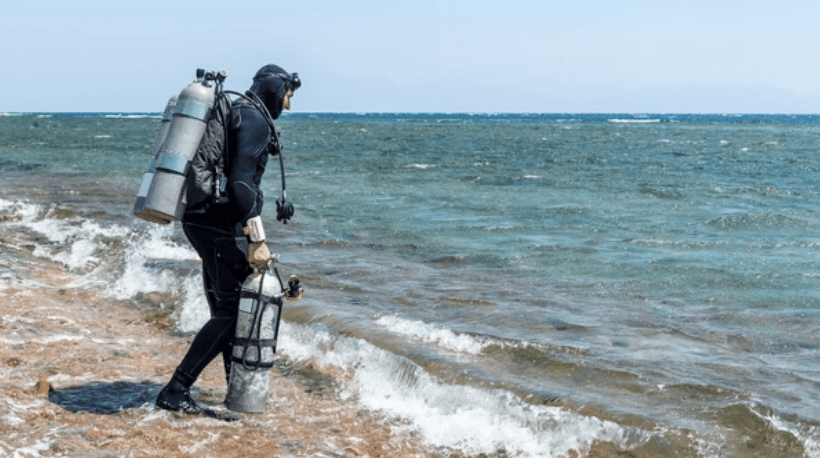
Training as Accelerated Experience
Structured training compresses learning. In a controlled environment, divers encounter scenarios that might otherwise take years to experience—if they ever do.
Failure drills, task loading, and complex planning exercises simulate conditions that expose weaknesses early. Technical diving training accelerates learning by removing randomness and focusing attention where it matters most.
This is not artificial difficulty; it is efficient preparation.
Feedback: The Missing Ingredient
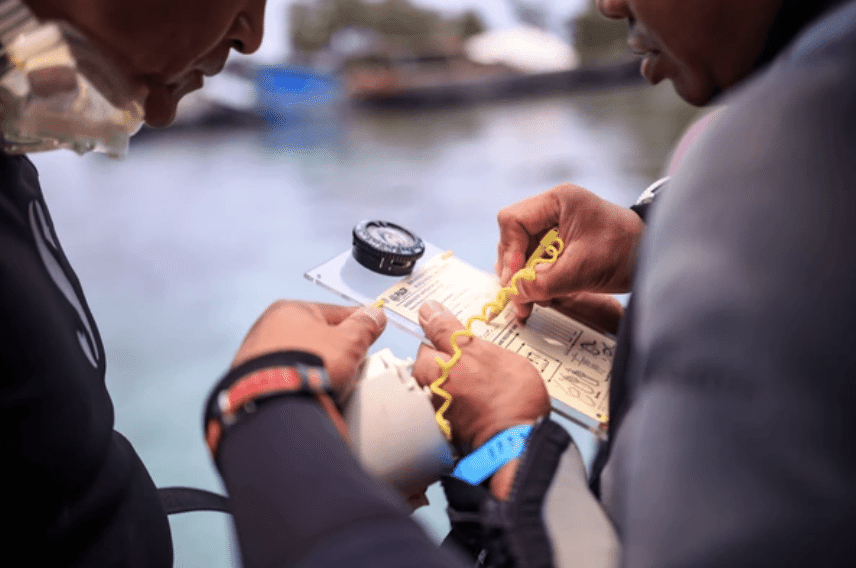
Experience without feedback is blind. Divers rarely observe their own subtle errors underwater. Without external input, they assume performance is adequate.
Technical instructors provide:
- Objective observation
- Immediate correction
- Contextual explanation
- Progressive challenges
This feedback loop is what transforms experience into competence. At N9BO℠, instructor feedback is treated as a primary safety tool—not an evaluation hurdle.
Why Experience Fails Under New Conditions
Experience is context-specific. A diver may be highly competent in one environment and struggle in another. Depth, visibility, temperature, task load, and team composition all affect performance.
Advanced technical diving progression deliberately varies conditions to prevent over-specialisation. Divers learn to generalise skills rather than depend on familiar contexts.
Experience without variation breeds fragility.
Confidence vs Competence
One of the most dangerous outcomes of experience without training is misplaced confidence. Confidence often increases faster than competence, especially when dives remain uneventful.
Technical training recalibrates this imbalance. TDI technical diving courses expose candidates to controlled stress, revealing gaps between perceived and actual capability.
This recalibration is uncomfortable—but essential.
When Experience Becomes an Asset
Experience becomes valuable when paired with reflection, correction, and adaptability. Divers who seek training after building experience often progress rapidly because they can contextualise instruction.
The key difference is openness. Divers who view training as refinement rather than remediation benefit most.
Instructor-Level Perspective
From an instructional standpoint, experience-heavy but training-light divers are among the most challenging to teach—not because they lack ability, but because habits are deeply ingrained.
Instructor-level training emphasises not just skill execution, but learning how to learn. This meta-skill allows divers to continue improving long after formal training ends.
Professional Diving Parallels
In professional fields—aviation, medicine, emergency services—experience is respected but never accepted without ongoing training. Certifications are renewed. Skills are revalidated. Procedures evolve.
Technical diving training aligns with this professional model. Experience is valued, but it must be continuously shaped by structured education.
The Bottom Line
Experience is a resource.
Training is what makes it useful.
Time in the water without guidance may feel reassuring, but it does not guarantee readiness for complexity. The safest divers are those who combine experience with disciplined training, honest feedback, and a willingness to evolve.
At N9BO℠, experience is respected—but it is never allowed to replace preparation.
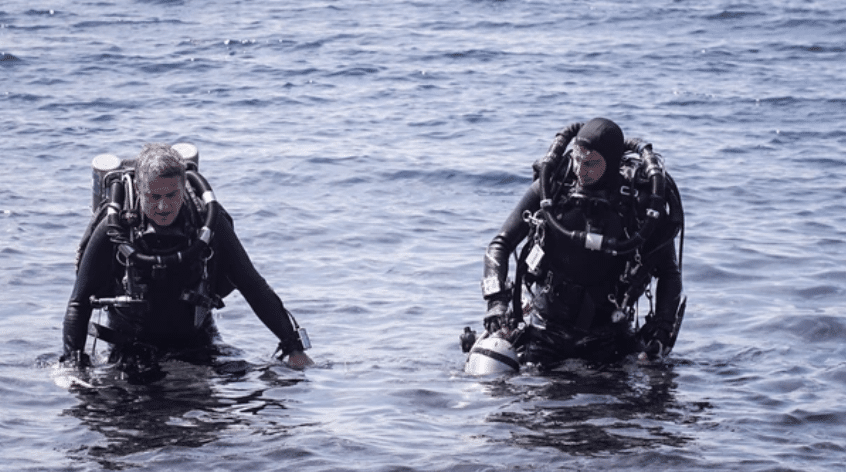
Relying on Experience Alone?
Time underwater does not automatically translate into competence. Structured training and feedback are what turn experience into capability.
From the N9BO℠ Knowledge Base