Camouflage as an Active Process
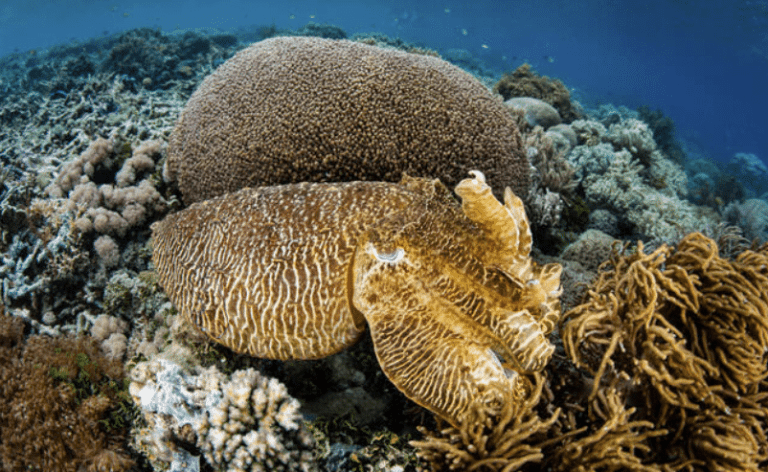
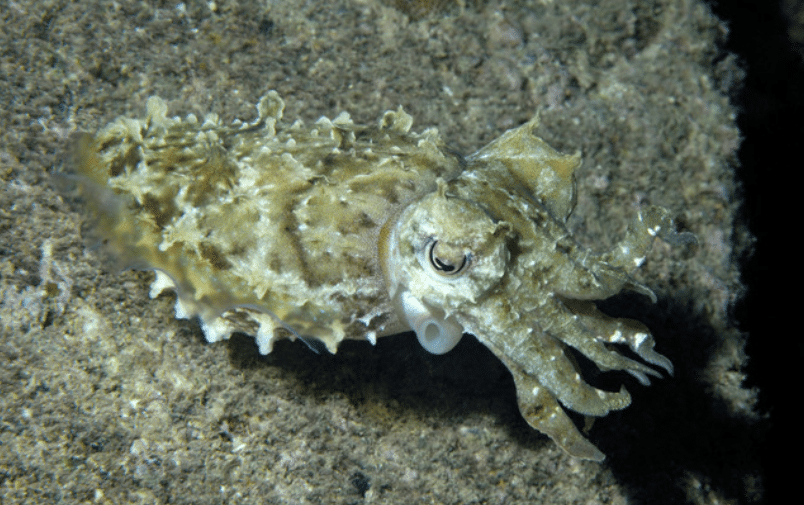
Cuttlefish camouflage is often described as colour change, but this is only one component of a much more complex system. Unlike passive concealment, cuttlefish camouflage is active, continuous, and responsive to environmental input.
They do not simply blend in—they interpret their surroundings and adjust in real time. This includes colour, contrast, pattern, and even body posture.
This process is driven by constant assessment. The cuttlefish evaluates light, texture, and background structure, then selects the most effective form of concealment.
At N9BO℠, we emphasise that this is not static camouflage. It is a continuous cycle of observation, interpretation, and adjustment—directly aligned with operational situational awareness.
Components of the Camouflage System
Cuttlefish achieve their camouflage through specialised skin cells that allow rapid transformation. These include chromatophores for colour, iridophores for light reflection, and leucophores for brightness control.
The result is a system capable of:
- Instant colour change to match surroundings
- Pattern creation to disrupt visual recognition
- Contrast adjustment to match lighting conditions
- Texture simulation through body positioning
These elements are combined dynamically. The cuttlefish does not rely on a single pattern but constructs a response based on current conditions.
This layered approach is key. Effective concealment is not based on one factor, but on the integration of multiple variables.
At N9BO℠, we apply the same principle—effective awareness and response require integration, not isolated observation.
Environmental Interpretation and Decision-Making
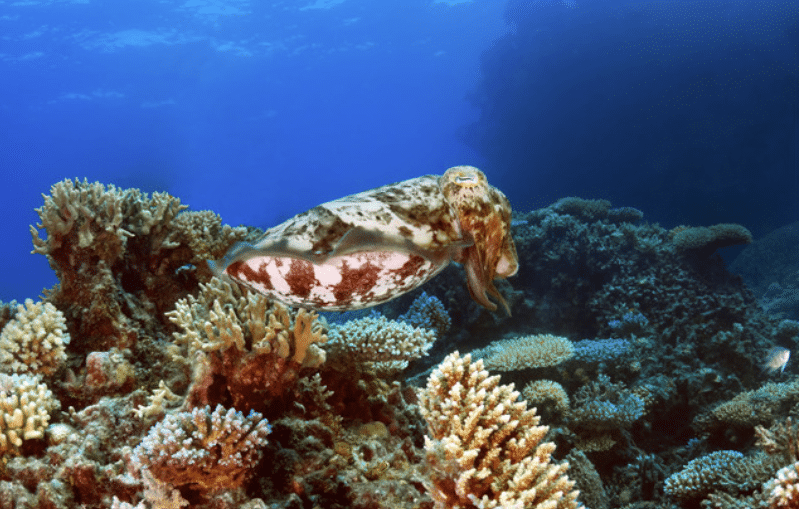
Cuttlefish do not react randomly. Their camouflage reflects decision-making based on environmental interpretation. They assess the type of background—sand, coral, rock—and adjust accordingly.
This process includes:
- Identifying dominant colours and patterns
- Assessing light direction and intensity
- Evaluating potential threats or observers
The response is selected based on effectiveness, not speed alone. While the system operates rapidly, it remains controlled and appropriate to the situation.
For divers, this reinforces the importance of interpretation. Observation without understanding leads to ineffective response.
At N9BO℠, we emphasise that situational awareness must lead to informed action, not automatic reaction.
Adaptive Behaviour Under Threat
Camouflage is only one component of cuttlefish defence. When concealment is insufficient, behaviour changes.
Responses may include:
- Freezing to avoid detection
- Gradual repositioning to maintain concealment
- Rapid escape using jet propulsion
- Ink release to disrupt visual tracking
The cuttlefish selects its response based on threat level and available options. This adaptability ensures that energy is conserved and risk is managed effectively.
For divers, this highlights a key operational principle: response must be proportional. Not every situation requires immediate or maximal action.
At N9BO℠, we train personnel to assess before acting, ensuring that responses align with actual risk.
Positioning and Use of Terrain
Cuttlefish do not rely solely on their own capabilities. They use the environment to enhance concealment. Positioning is critical.
They select locations that:
- Match their camouflage pattern
- Provide cover or shadow
- Reduce visibility from potential threats
This integration with terrain increases effectiveness. Camouflage is more effective when supported by environment.
For divers, positioning has the same impact. Poor positioning reduces awareness and increases exposure. Effective positioning enhances both observation and control.
At N9BO℠, we treat positioning as a deliberate decision, not a passive outcome.
Energy Efficiency and Controlled Movement
Cuttlefish avoid unnecessary movement. Motion attracts attention, so they remain still when concealment is effective. Movement is used only when required.
This results in:
- Reduced energy expenditure
- Lower detection probability
- Greater control over exposure
When movement is necessary, it is controlled and purposeful.
For divers, uncontrolled movement increases both environmental impact and personal risk. Efficient, deliberate movement improves stability, reduces gas consumption, and enhances situational awareness.
At N9BO℠, we integrate movement discipline into training, recognising its operational importance.
Interaction with Divers
Cuttlefish are highly responsive to diver behaviour. Sudden movement, close approach, or erratic positioning disrupts their camouflage and triggers defensive responses.
Indicators of disturbance include:
- Rapid colour or pattern change
- Movement away from position
- Ink release or rapid escape
These responses indicate that the diver has altered the environment.
Responsible interaction requires maintaining distance, controlling movement, and avoiding interference with natural behaviour.
At N9BO℠, we emphasise that observation must not compromise the subject or the environment.
From Camouflage to Operational Awareness
Cuttlefish behaviour demonstrates that effective concealment and survival depend on continuous awareness and adaptation. This is directly applicable to operational environments.
Key parallels include:
- Continuous assessment of surroundings
- Selection of appropriate response based on conditions
- Integration of positioning, movement, and behaviour
- Avoidance of unnecessary exposure
These are not theoretical concepts—they are observable behaviours in a highly adaptive species.
At N9BO℠, we use such examples to reinforce operational principles in a practical context.
Operational Mindset
Cuttlefish camouflage is not a static capability. It is a dynamic system driven by awareness, interpretation, and controlled response. This aligns directly with effective human performance in complex environments.
Divers who operate without awareness rely on chance. Those who observe, interpret, and adapt maintain control.
At N9BO℠, we emphasise that adaptability is not optional in dynamic environments. It is a requirement for effective operation.
Understanding how natural systems manage risk provides insight into how divers should approach their own environment—through awareness, control, and continuous adjustment.

Adapt to the Environment, Don’t Fight It
Contact N9BO℠ to integrate advanced situational awareness and environmental control into your training, ensuring your teams operate effectively in dynamic conditions.
From the N9BO℠ Knowledge Base