The Conversation Most Divers Avoid
For many professional divers, discussing their work with family is not straightforward.
On one hand, there is a desire to reassure. Divers understand the systems, procedures, and training that reduce risk. They know how structured operations are designed to prevent incidents. From their perspective, the environment is controlled through preparation and discipline.
On the other hand, family members see something different.
They see:
- Water
- Depth
- Limited visibility
- News stories of accidents
Without context, these elements create a perception of unpredictability and danger. The gap between how divers understand their work and how it is perceived externally can be significant.
This is why many avoid the conversation altogether.
Or simplify it.
But avoidance does not remove concern.
It often increases it.
Understanding the Perspective of Others
Before explaining the realities of the job, it is important to understand how it is perceived.
Family members are not evaluating risk based on training or procedure. They are evaluating it based on:
- What they can imagine
- What they have heard
- What they fear
This perception is shaped by uncertainty.
If they do not understand how diving operations are conducted, they will assume the worst. This is a natural response. Humans tend to fill gaps in knowledge with scenarios that emphasise risk rather than control.
The objective of the conversation is not to dismiss these concerns.
It is to address them.
Explaining Risk Without Minimising It
One of the most common mistakes divers make is trying to eliminate concern by downplaying risk.
Statements such as “It’s safe” or “There’s nothing to worry about” may provide temporary reassurance, but they lack credibility. Family members recognise that the environment itself carries risk, and overly simple explanations can reduce trust.
A more effective approach is to acknowledge reality.
Diving does involve risk.
But it is managed through:
- Training
- Procedures
- Equipment
- Team systems
Explaining how these elements work provides context.
It shifts the conversation from uncertainty to understanding.
Describing the System, Not Just the Activity
Family members often imagine diving as an individual activity.
A person enters the water, performs a task, and returns.
In professional diving, this is not accurate.
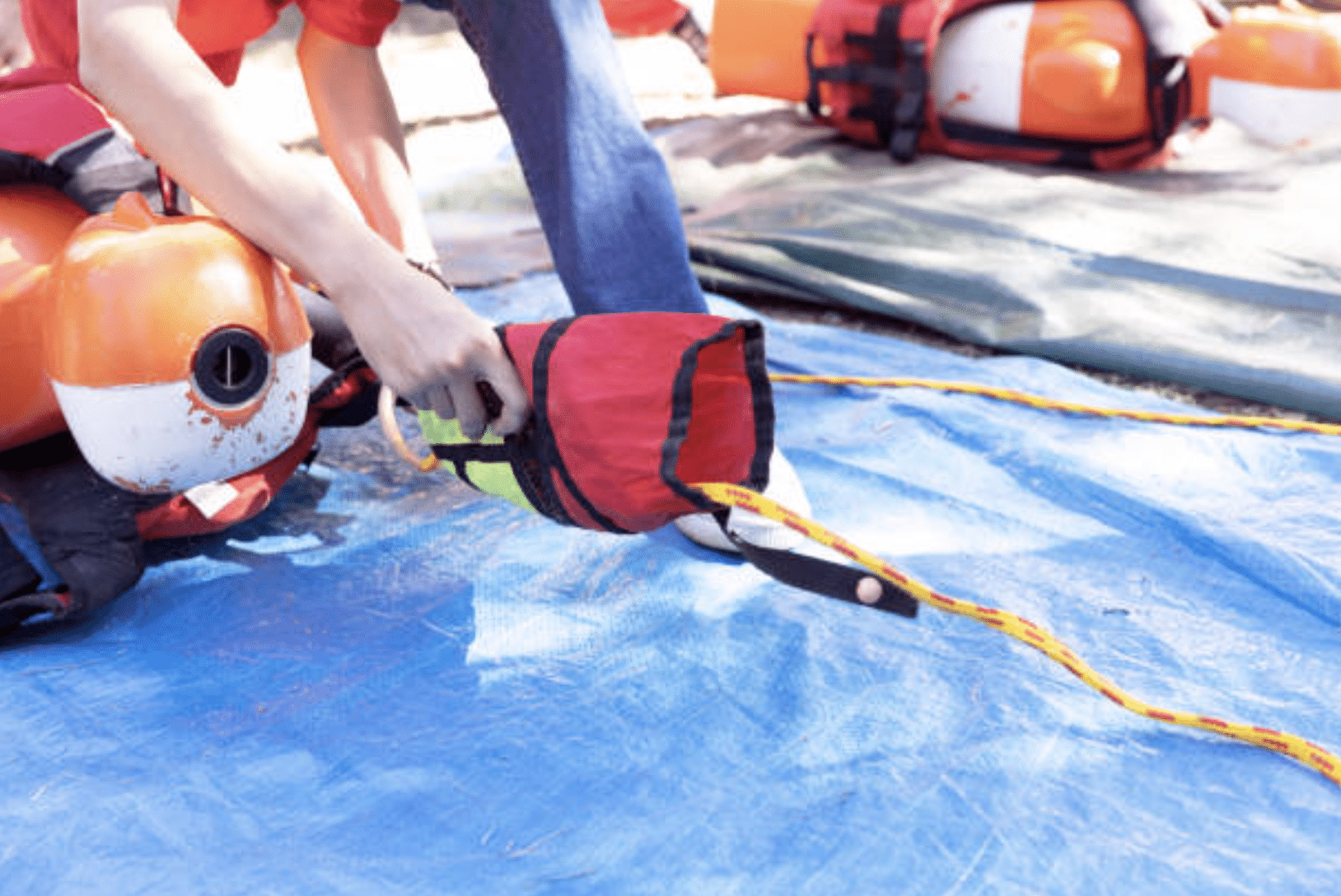
Operations are conducted within a structured system that includes:
- Planning
- Team coordination
- Defined roles
- Continuous monitoring
The diver is not alone.
They are part of a process designed to:
- Anticipate problems
- Detect changes
- Respond quickly
Explaining this system is important.
It demonstrates that the work is not improvised.
It is organised.
The Role of Training and Discipline
Another key aspect to communicate is the role of training.
Professional divers are not relying on instinct.
They are trained to:
- Follow procedures
- Manage stress
- Respond to failures
Training is not a one-time event.
It is continuous.
At N9BO℠, we emphasise that training goes beyond minimum standards because real-world environments require more than basic competence. This level of preparation is difficult to convey in simple terms, but it is essential to helping others understand how risk is managed.
When family members understand that diving is supported by structured training, their perception begins to change.
Addressing the Emotional Component
Conversations about high-risk professions are not purely logical.
They are emotional.
Family members may not be concerned only about the technical aspects of diving. They may be thinking about:
- Personal loss
- Uncertainty
- Lack of control
These concerns cannot be addressed with technical explanations alone.
They require acknowledgment.
Listening is as important as explaining.
Allowing concerns to be expressed without dismissing them builds trust. It shows that the diver recognises the emotional dimension of the conversation.
This is often more important than the details themselves.

Balancing Transparency and Reassurance
Effective communication requires balance.
Providing too little information leaves gaps that are filled with assumptions. Providing too much detail—especially about worst-case scenarios—can increase anxiety.
The objective is to:
- Explain how the work is conducted
- Highlight how risk is managed
- Reassure without oversimplifying
This balance allows family members to understand the reality of the profession without becoming overwhelmed by it.
Consistency Over Time
One conversation is rarely enough.
Understanding develops over time.
As family members hear about:
- Training
- Procedures
- Operational experiences
their perception evolves.
Consistency is key.
Regular, honest communication reinforces:
- Trust
- Familiarity
- Confidence
Over time, what was once unknown becomes understood.
The Responsibility Beyond the Dive
Professional divers often focus on operational responsibility.
Completing the task, maintaining safety, and supporting the team.
But there is also a responsibility beyond the dive.
Communicating effectively with family is part of that.
It ensures that:
- Expectations are realistic
- Concerns are addressed
- Support systems are strong
Ignoring this aspect does not remove its importance.
It simply leaves it unmanaged.
Final Perspective
Working in technical or public safety diving involves risk.
This cannot be removed.
But it can be managed.
And it can be explained.
Clear, honest communication allows family members to understand:
- What the work involves
- How it is conducted
- How risk is controlled
This understanding does not eliminate concern.
But it replaces uncertainty with knowledge.
And in doing so, it creates something essential for anyone working in high-risk environments:
Trust.
Supporting Professional Divers Beyond Training?
Contact N9BO℠ to integrate human factors, communication, and resilience into your operational and training programmes.
From the N9BO℠ Knowledge Base