Apex Predators in Context
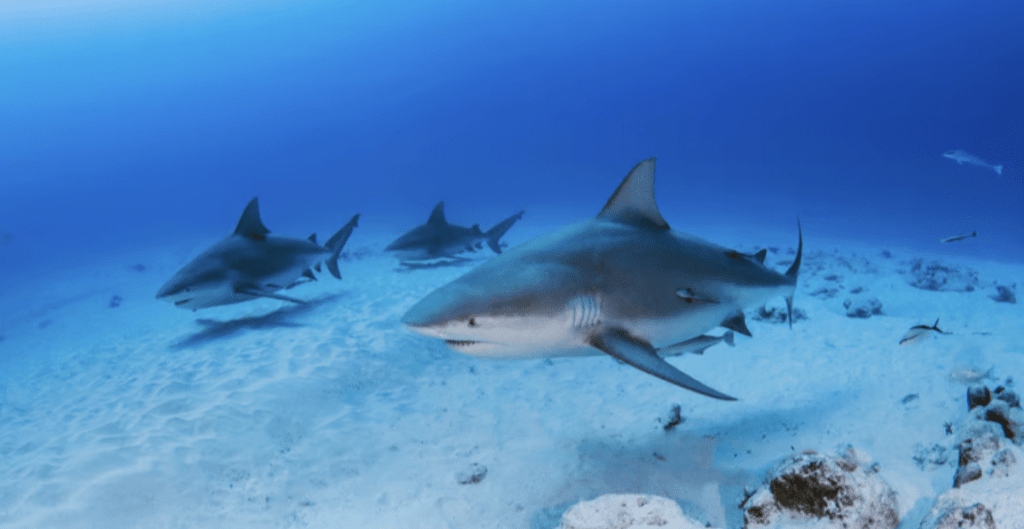
The “big three” — great white (Carcharodon carcharias), bull (Carcharhinus leucas), and tiger (Galeocerdo cuvier) — share several characteristics:
- Large body size
- Powerful bite force
- Wide geographic distribution
- High trophic positioning
However, grouping them together oversimplifies behavioural distinctions.
Each species occupies different ecological niches and displays unique interaction patterns with humans.
Understanding those differences reduces misinformation and promotes responsible diving.
Great White Sharks: Precision and Power
Great whites are often associated with temperate waters and coastal regions.
They are ambush predators, relying on speed and surprise. Their behaviour around seals and large prey reflects high-energy, single-strike hunting patterns.
For divers, great white encounters are rare and typically occur in specific regions known for aggregation.
Observations show that white sharks are:
- Curious
- Cautious
- Highly sensory-driven
They rely heavily on electroreception and visual cues.
Most documented interactions with divers involve investigative passes rather than aggressive engagement.
Understanding body language — arched back, lowered pectoral fins, exaggerated tail beats — provides behavioural insight.
Knowledge replaces panic.

Bull Sharks: Adaptability and Territoriality
Bull sharks differ significantly.
They are unique in their ability to tolerate freshwater, allowing them to inhabit rivers, estuaries, and coastal systems.
Their adaptability increases proximity to human populations.
Bull sharks are often described as assertive. In turbid water environments, reduced visibility increases the likelihood of mistaken investigative behaviour.
Divers operating in low-visibility coastal waters must exercise heightened situational awareness.
Environmental factors — not inherent aggression — often explain elevated interaction risk.
Avoiding:
- Spearfishing activity
- Erratic movement
- Flashing equipment
reduces likelihood of triggering curiosity.
Tiger Sharks: The Ocean’s Opportunistic Scavenger
Tiger sharks are known for broad dietary flexibility.
They inhabit tropical and subtropical waters and frequently patrol reef systems.
Their behaviour is generally slower and investigative rather than ambush-driven.
Tiger sharks often display:
- Wide, sweeping passes
- Direct eye contact
- Slow approach patterns
Their curiosity can bring them closer to divers than other species.
Maintaining eye contact, controlled movement, and stable posture communicates awareness.
Erratic finning or fleeing behaviour can escalate attention.
Risk Perception vs Statistical Reality
Media coverage amplifies rare incidents.
Statistically, shark interactions remain extremely uncommon relative to global water exposure.
Factors influencing elevated risk include:
- Low visibility
- Prey abundance
- Spearfishing
- Dusk or dawn activity
- Surface splashing
Divers who understand environmental context dramatically reduce risk.
Education alters perception.
At N9BO℠, we emphasise that risk management begins with situational awareness, not fear.
Diving Conduct Around Large Sharks
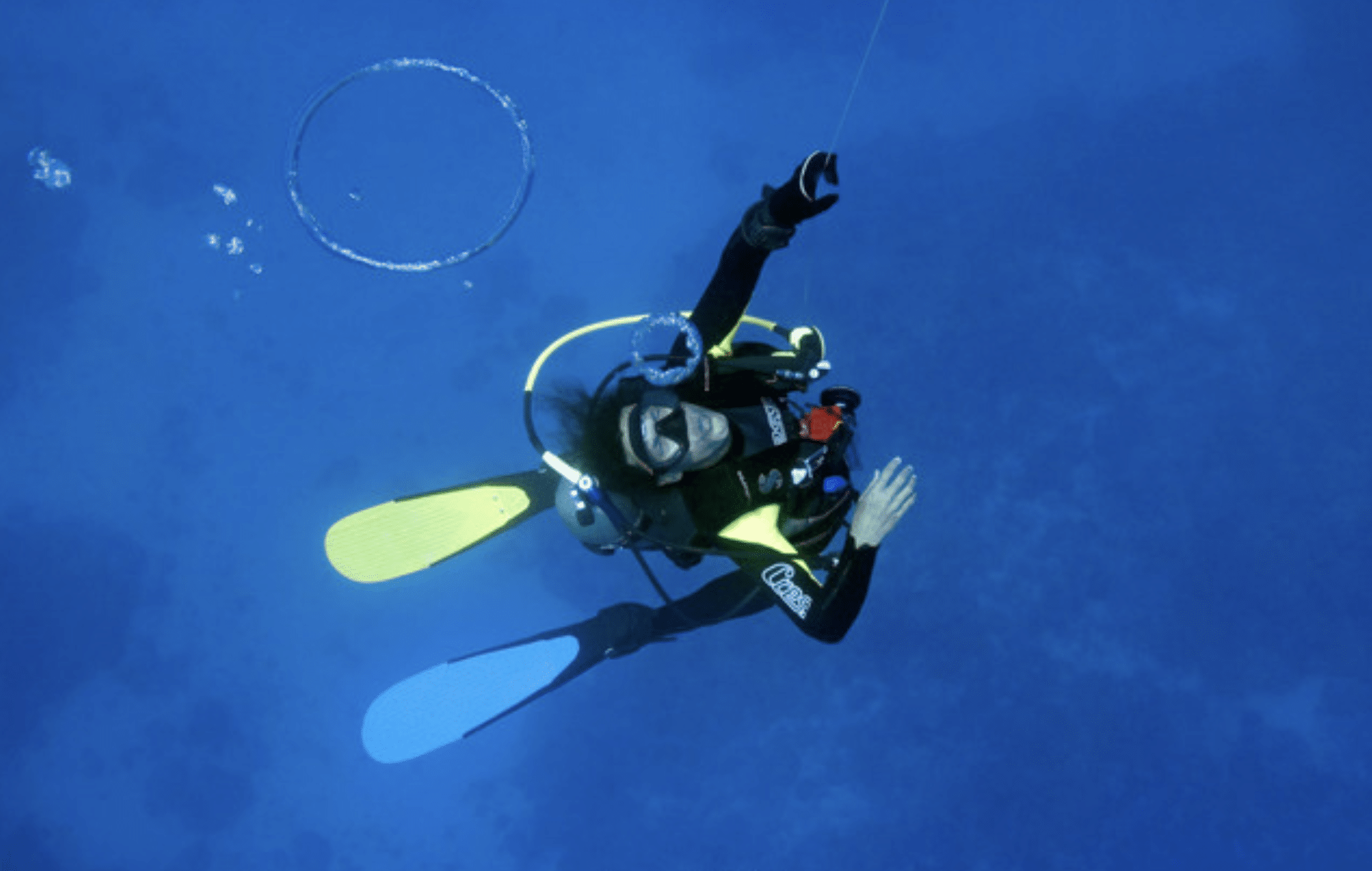
Professional divers operating in regions known for large shark presence adhere to behavioural discipline:
- Maintain vertical posture when possible
- Avoid rapid ascents
- Keep group formation compact
- Minimise shiny or reflective objects
- Avoid excessive splashing at the surface
Calm, deliberate movement signals control.
Sharks respond to environmental cues, not emotion.
Structured conduct reduces unpredictable outcomes.
Ecological Importance of Apex Predators
Great whites, bulls, and tigers regulate marine ecosystems.
As apex predators, they:
- Control prey populations
- Maintain species balance
- Support reef health indirectly
Declining shark populations destabilise marine systems.
Divers who understand ecological roles become advocates for conservation rather than participants in fear-driven narratives.
Knowledge supports preservation.
Respect Through Understanding
Large sharks command attention and respect.
They are powerful animals adapted to their environment — not villains.
For divers, the objective is not confrontation but informed coexistence.
Environmental literacy, behavioural understanding, and structured diving discipline create safety margins.
The ocean is shared space.
At N9BO℠, we promote professional awareness — whether managing decompression schedules or interacting responsibly with apex predators.
Confidence underwater should always be built on knowledge, not assumption.

Want to Dive with Greater Environmental Awareness?
Understanding marine behaviour strengthens both safety and conservation responsibility. Contact N9BO℠ to explore advanced diving pathways rooted in discipline and knowledge.
From the N9BO℠ Knowledge Base