Accidents Begin Long Before the Dive
Most diving accidents are not caused by a single bad decision. They are the result of many small deviations that accumulate unnoticed.
When minor rule-breaking produces no immediate consequences, it becomes normal. Technical diving training treats this drift as one of the most dangerous threats to long-term safety.
What Is Normalisation of Deviance?
Normalisation of deviance occurs when behaviours that violate standards slowly become accepted because “nothing bad happened last time.”
Examples include:
- Skipping checks
- Reducing reserves
- Pushing depth or time slightly
- Ignoring minor equipment issues
Advanced technical diving progression teaches divers to recognise this pattern early.
Why Humans Are Vulnerable to Drift
Humans adapt to what works. If shortcuts appear safe repeatedly, the brain reclassifies them as acceptable.
This adaptive trait is useful in many contexts—but dangerous in high-risk environments. Technical diving training deliberately resists this psychological drift.

Success Is Not Proof of Safety
A dive completed without incident does not validate unsafe behaviour. It only proves that failure did not occur that time.
Professional divers judge actions by process, not outcome. Advanced technical diving progression reinforces that safety is measured by margins, not luck.
Drift Happens Gradually
No one decides to become unsafe. Drift happens incrementally, one small compromise at a time.
Because each step feels insignificant, the overall deviation is invisible. Technical diving training focuses on maintaining hard lines to prevent gradual erosion.
Instructor Perspective: Catching Deviance Early
Instructors often identify normalised deviance by listening to language:
- “I usually don’t bother with…”
- “It’s never been a problem before…”
At N9BO℠, these phrases trigger immediate correction—not debate.
Team Culture and Deviance
Deviance spreads through teams. When one diver cuts corners, others follow—often unconsciously.
Professional teams hold each other accountable. Technical diving training teaches respectful challenge as a safety skill.
When Deviance Meets Stress
Under stress, reduced margins disappear quickly. Practices that “worked fine” in calm conditions fail catastrophically.
Advanced technical diving progression trains divers to protect margins aggressively—especially when things feel easy.
Countering Normalisation of Deviance
Effective countermeasures include:
- Strict adherence to standards
- Regular external audits (instructors, peers)
- Clear abort criteria
- Honest debriefs
Technical diving training institutionalises these practices.
Professional Parallels
Normalisation of deviance has caused disasters in aviation, spaceflight, and industry.
Technical diving acknowledges these lessons. Small deviations are treated seriously—before consequences appear.
The Bottom Line
Nothing bad happening is not proof that something is safe.
In technical diving, professionalism means holding the line—even when shortcuts appear harmless. The most dangerous habits are the ones that feel normal.
At N9BO℠, standards exist to be defended.
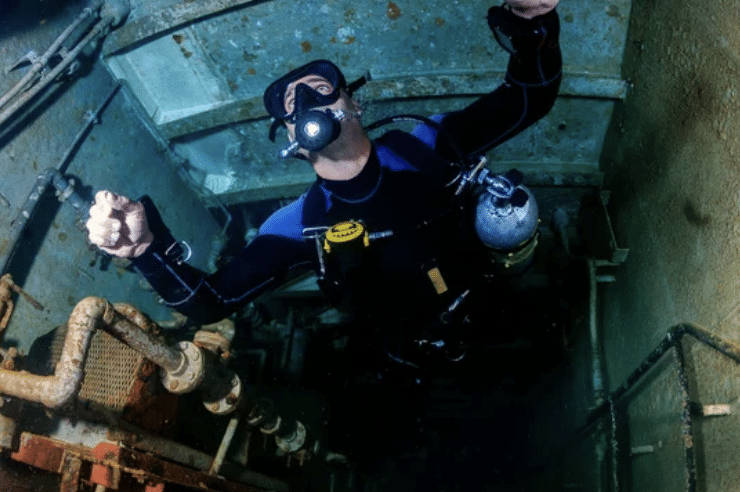
Noticing Small Deviations Becoming Normal?
Repeated small shortcuts can quietly increase risk until failure occurs. Contact us to discuss maintaining discipline and operational standards in diving.
From the N9BO℠ Knowledge Base