The Shift From Diver to Professional
Many divers pursue the Divemaster rating as a natural progression after accumulating experience. However, the transition is not merely a higher certification level — it represents a fundamental mindset change.
As a Divemaster, you are no longer diving for yourself.
You are responsible for:
- Briefing certified divers
- Supervising dive activities
- Assisting instructors during courses
- Monitoring group safety
- Managing environmental impact
The focus moves from personal performance to collective responsibility.
Professional identity begins here.
Leadership Underwater
Leadership in diving is quiet and structured.
A Divemaster must:
- Read group behaviour
- Identify early signs of stress
- Maintain clear positioning
- Control pace
- Intervene calmly when needed
Leadership is not dominance. It is stability.
Clients often mirror the emotional tone of the professional leading them. If a Divemaster appears rushed or uncertain, the group’s composure degrades.
Professional calmness builds trust.
Risk Awareness and Prevention
Divemasters are often the first line of defence against preventable incidents.
Responsibilities include:
- Equipment checks
- Gas monitoring oversight
- Entry and exit supervision
- Environmental condition assessment
- Emergency planning
Small oversights escalate quickly in open water.
Risk mitigation begins before the descent.
Professional discipline requires attention to detail — even on “easy” dives.
Assisting Instructors: Learning the Teaching Framework
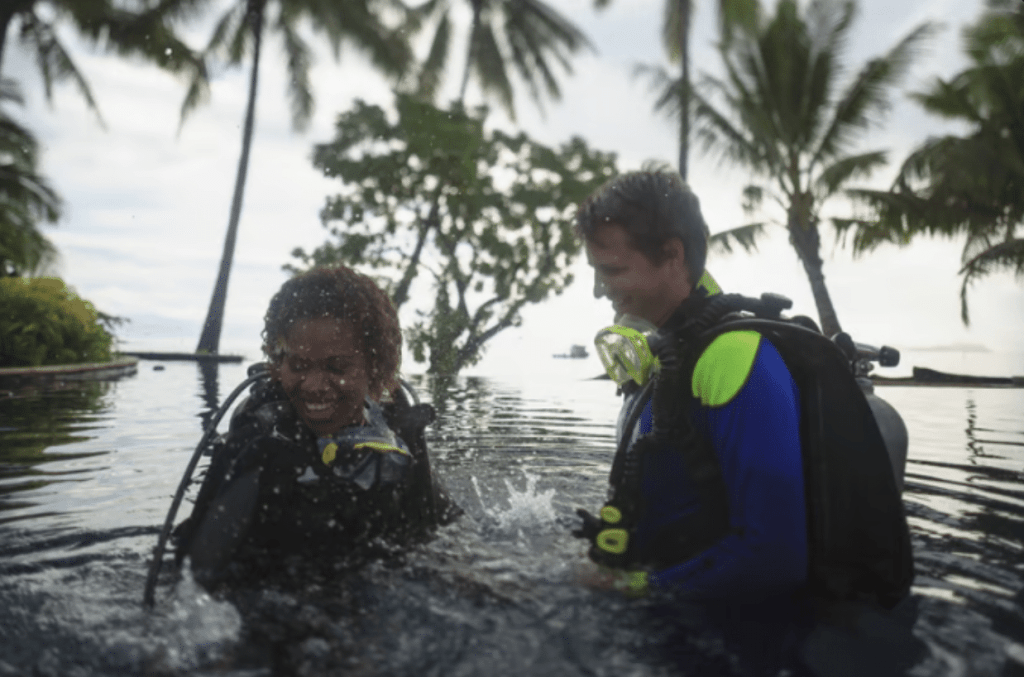
Divemaster candidates assist in training environments.
This exposure teaches:
- Skill demonstration standards
- Student positioning
- Safety control techniques
- Debrief structure
- Classroom support
Observing instructor methodology builds instructional literacy.
Understanding why instructors sequence skills in certain ways deepens professional insight.
The Divemaster programme often becomes the gateway to Instructor Development.
Environmental Stewardship
As visible representatives of the dive industry, Divemasters model underwater conduct.
Responsibilities include:
- Enforcing buoyancy discipline
- Preventing reef contact
- Discouraging marine harassment
- Promoting sustainable behaviour
Professional divers influence community culture.
Environmental negligence undermines credibility.
At N9BO℠, we emphasise that professional standards extend beyond safety — they include ecological responsibility.
Physical and Mental Endurance
Divemasters frequently conduct:
- Multiple dives per day
- Surface support between dives
- Equipment management
- Logistical coordination
Physical endurance supports operational consistency.
Mental resilience supports decision-making across long working days.
Professional performance requires maintaining composure under fatigue.
Consistency defines professionalism.
Career Pathways Beyond Certification
The Divemaster rating opens pathways into:
- Instructor development
- Technical supervision roles
- Public safety diving
- Expedition support
- Marine research assistance
However, certification alone does not create competence.
Experience under structured mentorship builds confidence.
The Divemaster period should be used to refine discipline and observation skills.
Professional growth is cumulative.
What Separates Strong Divemasters From Average Ones
Technical skill is necessary — but insufficient.
Strong Divemasters demonstrate:
- Situational awareness
- Anticipatory thinking
- Clear communication
- Professional boundaries
- Ethical conduct
Clients may forget dive site names, but they remember professionalism.
The Divemaster role defines reputation.
From Passion to Profession
Many begin Divemaster training driven by love for diving.
Passion sustains motivation — but professionalism sustains careers.
Understanding standards, respecting protocols, and maintaining discipline transforms enthusiasm into credibility.
At N9BO℠, we view Divemaster training as the first serious step into professional diving culture. Leadership, responsibility, and structure define the role far more than certification paperwork.
Professionalism begins here.
Considering the Professional Path in Diving?
The Divemaster rating is more than a certification — it is the foundation of leadership underwater. Contact N9BO℠ to discuss professional development pathways.
From the N9BO℠ Knowledge Base