Explosive Environments Redefine “Normal” Diving Behaviour
In conventional diving, efficiency, trim, and gas optimisation support safety and performance. In explosive environments, those same elements become non-negotiable survival requirements.
Bubble release, fin wash, and uncontrolled buoyancy shifts can disturb unstable ordnance. ERDI underwater EOD training redefines normal diving behaviour around disturbance minimisation.
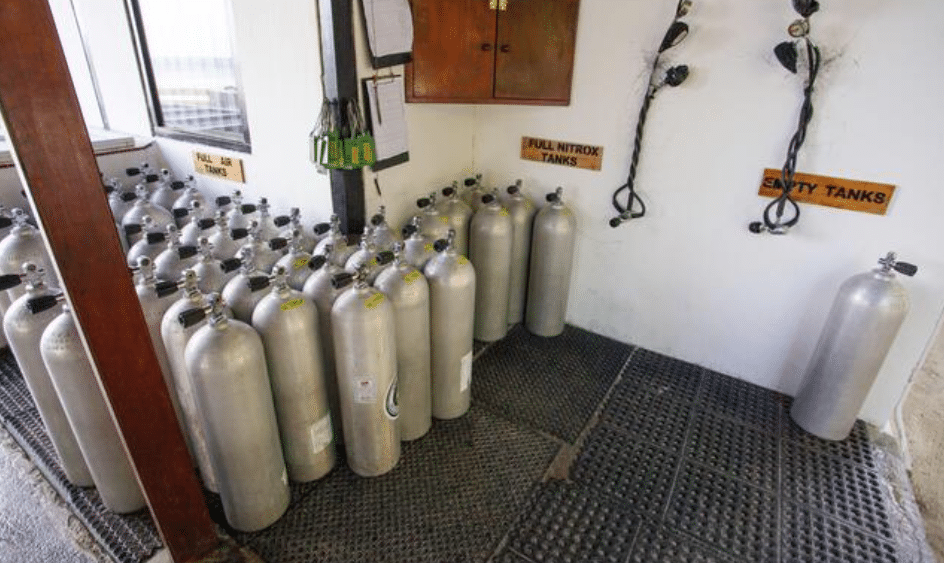
Gas Discipline Is Not About Endurance
In EOD contexts, gas discipline is not about extending bottom time—it is about predictability.
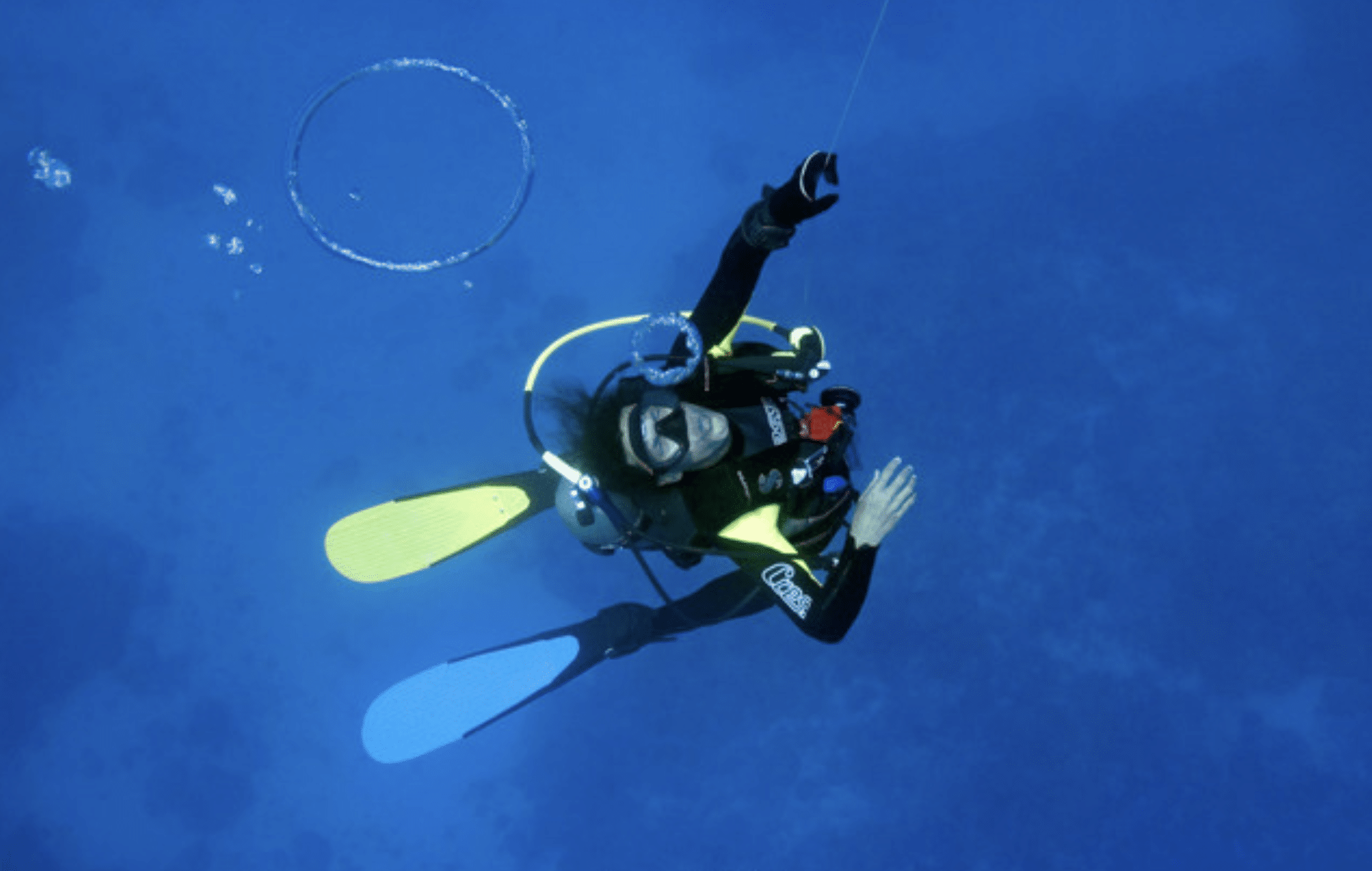
Controlled breathing minimises bubble output and pressure fluctuations. ERDI-certified training teaches divers to treat respiration as a tactical variable.
Bubble Management as a Hazard Control
Bubbles can:
- Agitate unstable devices
- Reduce visibility abruptly
- Mask acoustic cues
- Trigger mechanical sensitivity
Professional EOD divers learn bubble discipline through posture, breathing cadence, and positioning. ERDI training addresses this explicitly.
Buoyancy Must Be Passive and Stable
Active buoyancy corrections increase movement and bubble release.
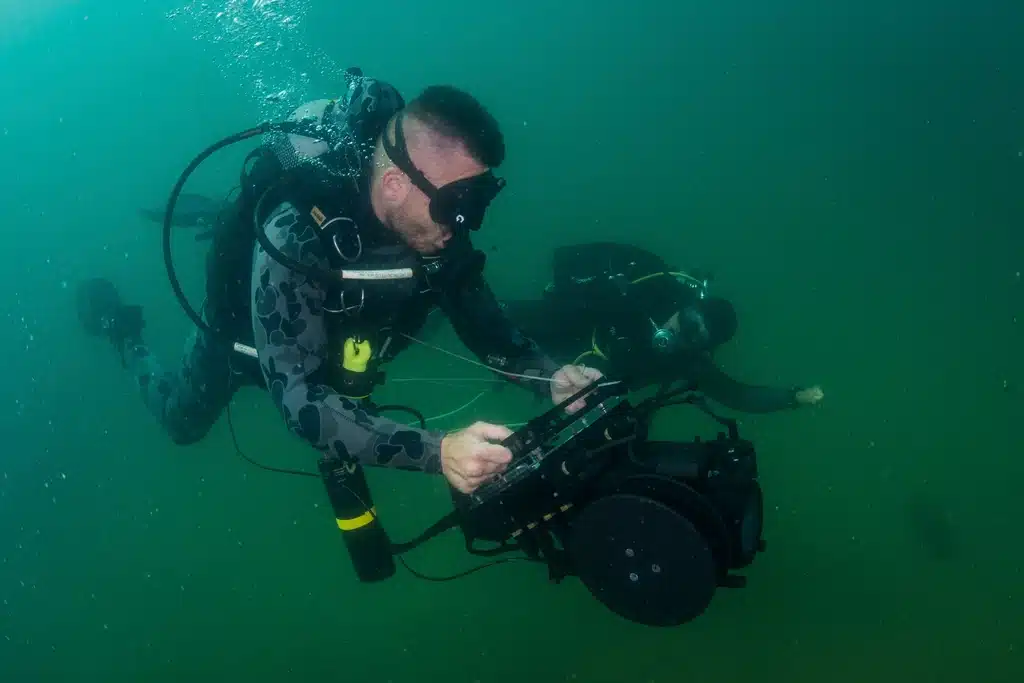
In EOD diving, buoyancy must be set correctly before approach—then left untouched. ERDI underwater EOD programmes require divers to hold position without finning or sculling.
Movement Is Risk Amplification
Every movement increases uncertainty.
Fin kicks, hand motions, and body rotation all transmit energy through the water column. ERDI training teaches divers to move only when necessary—and then minimally.
Instructor Perspective: Teaching Stillness
Instructors observe that many experienced divers struggle most with doing less.
At N9BO℠, EOD training drills focus on stillness, patience, and positional discipline—not task execution.
Gas Planning for Immediate Withdrawal
Gas plans prioritise:
- Rapid, calm withdrawal
- No decompression obligations
- Maximum reserve
ERDI EOD training prohibits profiles that complicate exit under stress.
Team Gas Synchronisation
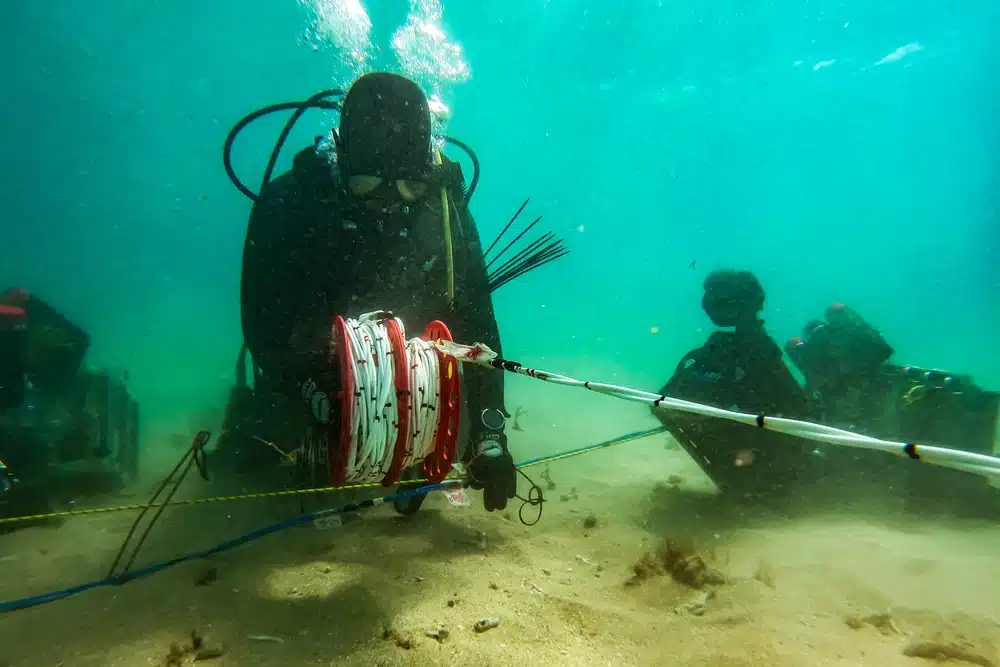
Team divers must maintain matched profiles to avoid unplanned pressure differentials and movement.
Professional training enforces synchronised breathing rates and positioning. ERDI programmes treat the team as a single system.
Psychological Control Drives Physical Control
Stress accelerates breathing and movement instinctively.
ERDI training integrates stress management to prevent physiological escalation that could trigger explosive sensitivity.
Why This Discipline Is Rare
Most divers are trained to do things underwater.
EOD diving trains divers to not do things—and that restraint requires exceptional discipline. ERDI certification reflects this elevated standard.
The Bottom Line
In explosive environments, motion equals risk.
Gas discipline and movement control are not techniques—they are survival systems. ERDI underwater EOD training exists to enforce restraint where instinct would otherwise betray safety.
At N9BO℠, this discipline is taught with uncompromising precision.

Operating in High-Risk Underwater Environments?
Precision in gas management and movement control is critical in explosive hazard environments. Contact us to discuss ERDI operational training and safety protocols.
From the N9BO℠ Knowledge Base