Why the Guideline Is Everything
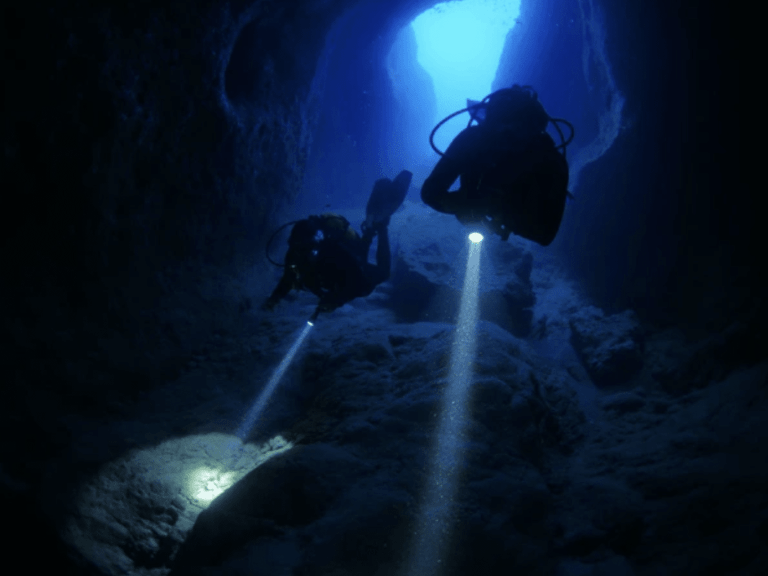
In cave diving, there is no direct ascent. There is no natural light. There is only the route back.
The continuous guideline connects the diver to the exit. It provides direction, structure, and orientation in environments that often lack visual reference.
When visibility is reduced to zero — through silt, equipment contact, or environmental disturbance — the line becomes the only reliable path home.
Losing that line transforms a manageable dive into a critical situation within seconds.
This is why lost line drills are not optional exercises. They are survival skills.
How Lines Are Lost
Guidelines are rarely “lost” by disappearing. They are lost through:
- Poor line tension
- Improper tie-offs
- Diver distraction
- Excessive movement during silt-out
- Physical separation while troubleshooting
Often, the diver believes the line is within reach — until tactile contact fails.
The most dangerous element is hesitation. The diver may attempt to search impulsively, increasing movement and stirring more sediment.
Visibility collapses further.
Gas consumption rises.
Cognitive clarity decreases.
A small mistake compounds rapidly.
The Immediate Response: Stop, Stabilise, Assess
The first principle of lost line response is simple: stop moving.
Movement increases disorientation and silt disturbance.
Stabilise buoyancy. Control breathing. Reduce fin movement to near zero.
Only once stable should the diver initiate a structured search.
Training reinforces this pause.
In untrained divers, instinct pushes action. In trained divers, discipline controls it.
Structured Search Patterns
The lost line drill follows a defined procedure:
- Maintain reference to last known position
- Establish a controlled pivot point
- Conduct slow, circular tactile search patterns
- Avoid large sweeping movements
- Keep search radius limited and structured
This search is not random.
It is systematic.
If the line is not located within a defined radius and time limit, contingency plans must be initiated — including team contact and exit strategy reassessment.
Search discipline prevents uncontrolled escalation.
Gas Awareness During Crisis
One of the most critical elements in a lost line scenario is gas monitoring.
Stress elevates breathing rate. Elevated breathing rate reduces available time.
Divers must consciously slow respiration and verify gas status early.
Lost line response is time-sensitive.
Training reinforces gas awareness as part of the drill — not an afterthought.
The exit plan only works if sufficient gas remains to execute it.
Team Coordination and Touch Contact
In team diving, lost line drills require communication without visibility.
Touch contact protocols allow divers to:
- Maintain physical reference
- Share awareness
- Avoid separation
- Coordinate search direction
Team structure must be pre-briefed before entry.
Improvised coordination in zero visibility increases confusion.
At N9BO℠, we emphasise that lost line response is not an individual hero drill. It is a coordinated team exercise rooted in discipline.

Psychological Control in Zero Visibility
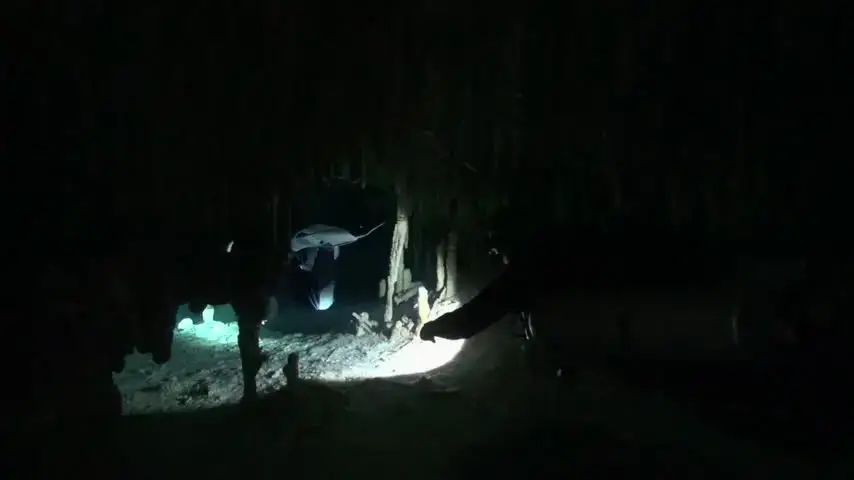
The most dangerous element of a lost line scenario is not physical distance from the line — it is panic.
Darkness and confinement amplify uncertainty. Elevated heart rate narrows focus. Cognitive bandwidth shrinks.
Training addresses this directly.
Repeated exposure to simulated zero-visibility drills reduces the shock factor. Familiarity builds confidence. Structured procedure overrides instinct.
The diver learns that loss of visual reference does not equal loss of control — if the procedure is followed.
Prevention Is Better Than Recovery
The best lost line scenario is the one that never occurs.
Prevention includes:
- Proper primary tie-offs
- Secondary and tertiary secure placements
- Maintaining tension without over-stressing the line
- Staying within defined penetration limits
- Avoiding unnecessary movement near the line
Discipline at the beginning of the dive reduces complexity later.
Lost line mastery is not about searching skill. It is about reducing the probability of separation in the first place.
Why This Drill Defines Cave Competence
Full cave training demands comfort with uncertainty.
Lost line drills force divers to confront the most destabilising variable in overhead diving: disorientation.
Those who can remain stable, structured, and deliberate under those conditions demonstrate readiness for greater complexity.
Those who cannot must train further before extending penetration distance.
The environment does not forgive improvisation.
Mastery of the lost line drill is not about confidence — it is about composure under constraint.
In cave diving, knowing how to recover from error is as important as avoiding it.

Want to Strengthen Your Overhead Environment Skills?
Lost line mastery is a core component of structured cave training. Contact N9BO℠ to discuss disciplined overhead progression pathways.
From the N9BO℠ Knowledge Base