Purpose of the Tec 40 Course
The Tec 40 course is designed to move divers from no-decompression diving into an environment where decompression becomes part of the dive plan. This transition is deliberate and controlled, ensuring that divers are exposed to obligation without being overwhelmed by complexity.
Rather than increasing depth or duration significantly, the course focuses on introducing structure. Divers must begin to plan dives in detail, execute those plans precisely, and understand that ascent is no longer immediate but dependent on defined stop requirements.
At N9BO℠, we treat Tec 40 as the point where diving changes from flexible activity to controlled operation.
Introduction to Limited Decompression
The concept of limited decompression is central to Tec 40. Divers are introduced to short, planned decompression stops that must be completed before surfacing, creating a controlled form of obligation.
This exposure is intentionally restricted. It allows divers to experience the operational implications of decompression while still remaining within manageable limits. The emphasis is not on extending decompression time, but on executing it correctly.
Maintaining depth during stops becomes a key requirement. Even minor deviations can affect decompression efficiency, which reinforces the need for precise buoyancy control and awareness.
At N9BO℠, we use limited decompression as a training tool to establish discipline before increasing exposure.
Depth Limits and Gas Selection
The Tec 40 course operates within defined depth limits, typically up to 40 metres, using air or enriched air as bottom gas. These limits are not restrictive by accident; they are designed to maintain control over narcosis, gas density, and overall complexity.
Gas selection remains relatively simple compared to higher technical levels, but it is no longer casual. Divers must understand how oxygen percentages affect maximum operating depth and how those limits influence planning.
This creates an early link between gas and depth. Divers begin to see that gas choice is not just a preference, but a defining factor in how the dive can be conducted.
At N9BO℠, we emphasise that respecting gas limits is one of the first indicators of technical discipline.

Equipment Configuration and Redundancy
Tec 40 introduces a transition in equipment philosophy. Divers move from recreational setups to technical configurations that include redundancy and structured layout.
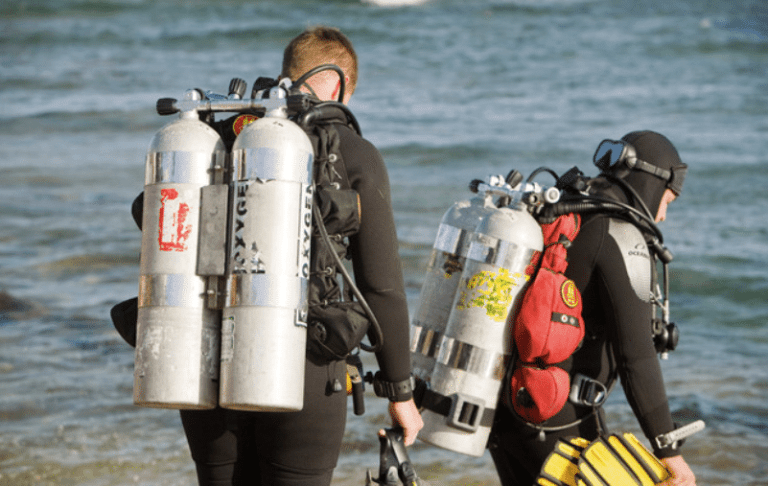
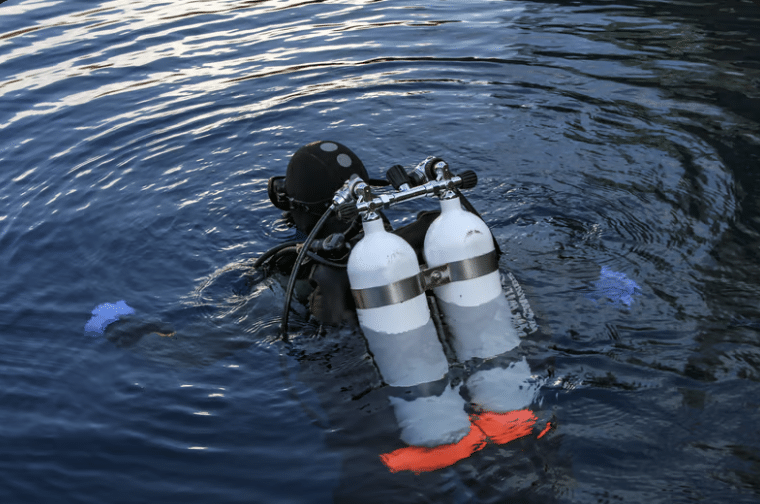
This may involve back-mounted doubles or sidemount systems, supported by additional cylinders for decompression gas. The configuration must be clear, accessible, and consistent, allowing the diver to manage both normal operations and potential failures.
Redundancy becomes essential because the diver can no longer rely on immediate ascent as a solution. Equipment must support in-water problem management without compromising the dive plan.
At N9BO℠, we treat equipment configuration as part of the operational system, ensuring it supports both execution and contingency.
Gas Switching and Decompression Procedures
Gas switching is introduced as a controlled and deliberate procedure. Divers begin to use a dedicated decompression gas, typically enriched air or oxygen, to improve off-gassing efficiency.
Each switch must be executed at the correct depth and verified before breathing. This introduces a level of procedural discipline that is new to many divers, as there is no tolerance for assumption or error.
At the same time, decompression stops must be held accurately. Depth control becomes critical, as even small changes can affect the outcome of the decompression schedule.
The diver must integrate gas switching and decompression into a single, continuous process rather than treating them as separate tasks.
At N9BO℠, we emphasise that these procedures must be repeatable and consistent under all conditions.
Managing Task Load and Maintaining Awareness
Tec 40 introduces a noticeable increase in task load. Divers must manage multiple variables simultaneously, including depth, time, gas supply, decompression status, and team positioning.
This creates a requirement for structured awareness. The diver must monitor all relevant parameters continuously while executing tasks without losing control of the overall situation.
One of the key challenges at this level is avoiding fixation. Focusing too heavily on a single task, such as a gas switch or timing, can lead to loss of awareness in other areas.
Developing the ability to balance execution and awareness is a central outcome of the course.
At N9BO℠, we train divers to maintain control across all variables, not just the task immediately in front of them.
Team-Based Diving and Coordination
Tec 40 reinforces the transition from individual diving to team-based operation. Divers must work within a shared plan, maintaining alignment throughout the dive.
This includes synchronised descents, coordinated gas switches, and consistent decompression stops. Each diver must understand not only their own role, but how their actions affect the rest of the team.
Communication becomes more structured, even when limited. Positioning must be maintained, and awareness of team members must remain continuous.
This shift in approach reduces variability and increases safety.
At N9BO℠, we emphasise that technical diving is always executed as a coordinated system.
Upgrade Path to Tec 40 Trimix
The Tec 40 certification can be upgraded to Tec 40 Trimix, introducing the use of helium-based breathing gases within the same controlled depth range. This upgrade does not extend depth limits but improves diver performance by reducing narcosis and gas density, allowing clearer thinking and more efficient task execution at depth.
This pathway provides a direct progression for divers who want to improve performance before increasing exposure. It reinforces the principle that gas selection is a tool for control, not just a requirement for deeper diving.
At N9BO℠, we recommend this upgrade as a strategic step for divers aiming to build capability through improved performance rather than increased risk.
Position Within the Technical Pathway
Tec 40 is the first level in the PADI TecRec pathway where decompression is introduced in a controlled manner. It establishes the baseline for further progression into courses such as Tec 45 and Tec 50, where both depth and complexity increase.
The course is not intended to create advanced technical divers. It is designed to ensure that divers can manage obligation, equipment, and procedures before exposure increases.
Progression depends on demonstrating control at this level. Without it, additional depth or complexity only increases risk.
At N9BO℠, we position Tec 40 as a critical threshold in technical training.
Operational Mindset
The PADI Tec 40 course introduces the defining characteristic of technical diving: commitment to the dive plan. Once decompression obligation exists, the diver must complete the ascent as planned.
This requires a shift in mindset from flexibility to discipline. Every action must be deliberate, and every procedure must be executed consistently.
Awareness must remain continuous, and deviation from the plan must be recognised and managed immediately.
At N9BO℠, we approach Tec 40 as the point where diving becomes a controlled system. Planning, equipment, and execution must align to manage risk effectively.
In technical diving, capability is not defined by how deep you go, but by how precisely you manage the dive.

Enter Technical Diving with Control
Contact N9BO℠ to integrate PADI Tec 40 training into your development pathway, building the discipline and control required for safe decompression diving.
From the N9BO℠ Knowledge Base