Understanding Contaminated Water Environments
Contaminated water is defined by the presence of substances that pose a risk to human health. These may include industrial chemicals, biological pathogens, fuel residues, or environmental pollutants.
Such environments are commonly encountered in:
- Urban waterways and ports
- Flood response scenarios
- Industrial and agricultural runoff areas
- Wastewater or sewage systems
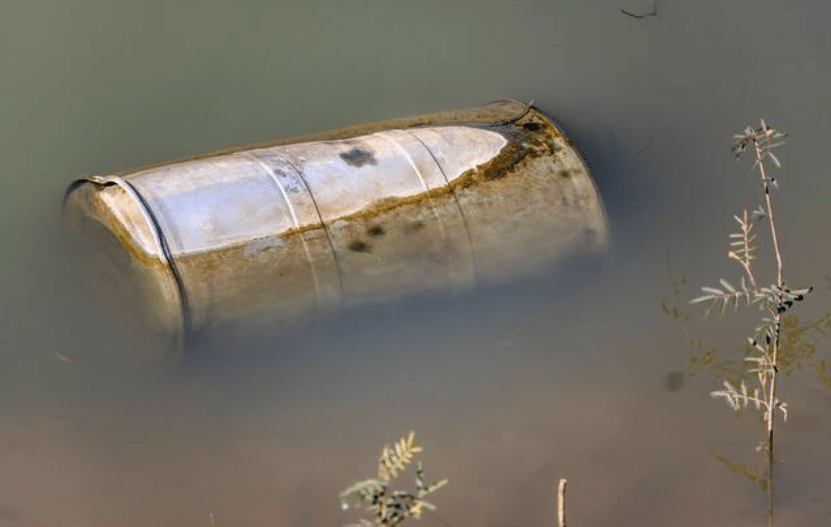
The risk is not always visible. Clear water may still contain hazardous contaminants, making visual assessment unreliable.
At N9BO℠, we treat all unknown water conditions as potentially contaminated until verified otherwise.
Types of Contamination and Associated Risks
Contamination falls into three primary categories, each with distinct risks:
Chemical hazards
- Hydrocarbons, heavy metals, and industrial chemicals
- Risk of skin absorption, inhalation, or ingestion
- Potential for acute toxicity or long-term health effects
Biological hazards
- Bacteria, viruses, and parasites
- Risk of infection through skin contact or ingestion
- Increased exposure in sewage or floodwater
Physical hazards
- Sharp objects, debris, and entanglement risks
- Reduced visibility increasing likelihood of injury
These hazards often exist simultaneously, compounding risk.
At N9BO℠, hazard identification is the first step in operational planning for contaminated environments.
Exposure Pathways and Risk Control
Contaminants enter the body through specific pathways. Understanding these pathways allows for targeted control measures.
Primary exposure routes include:
- Skin contact
- Inhalation through breathing systems
- Ingestion via contaminated water
Protection requires blocking these pathways. This is achieved through equipment selection, procedural control, and discipline.
Failure to control exposure pathways results in direct health risk.
At N9BO℠, we approach contamination risk by controlling how exposure can occur.

Protective Equipment and System Requirements
Standard recreational equipment is not suitable for contaminated water diving. Protective systems must provide full isolation from the environment.
Required equipment typically includes:
- Drysuits with integrated seals to prevent water ingress
- Full-face masks or helmets to protect the airway
- Gloves and hoods designed for sealed systems
These systems create a barrier between the diver and the environment. However, their effectiveness depends on correct use and maintenance.
Improper sealing, damaged equipment, or incorrect configuration compromises protection.
At N9BO℠, we ensure that equipment selection and configuration align with the level of contamination risk.
Decontamination Procedures
Decontamination is a critical phase of contaminated water operations. Exposure does not end when the diver exits the water.
Decontamination procedures must:
- Remove contaminants from equipment and personnel
- Prevent transfer to clean areas
- Protect support personnel from exposure
This typically involves staged decontamination:
- Initial rinse to remove bulk contaminants
- Secondary cleaning using appropriate agents
- Controlled removal of equipment
Decontamination must be structured and supervised. Informal or incomplete processes increase risk.
At N9BO℠, we treat decontamination as part of the operational process, not a post-dive task.
Operational Planning and Site Assessment
Effective risk management begins before the dive. Site assessment identifies potential contaminants and informs operational decisions.
Assessment includes:
- Reviewing environmental and industrial factors
- Identifying potential contamination sources
- Determining required level of protection
Planning must align equipment, procedures, and personnel with identified risks.
Unknown conditions require conservative assumptions. Underestimating contamination introduces unacceptable risk.
At N9BO℠, we prioritise conservative planning in uncertain environments.
Team Roles and Control Measures
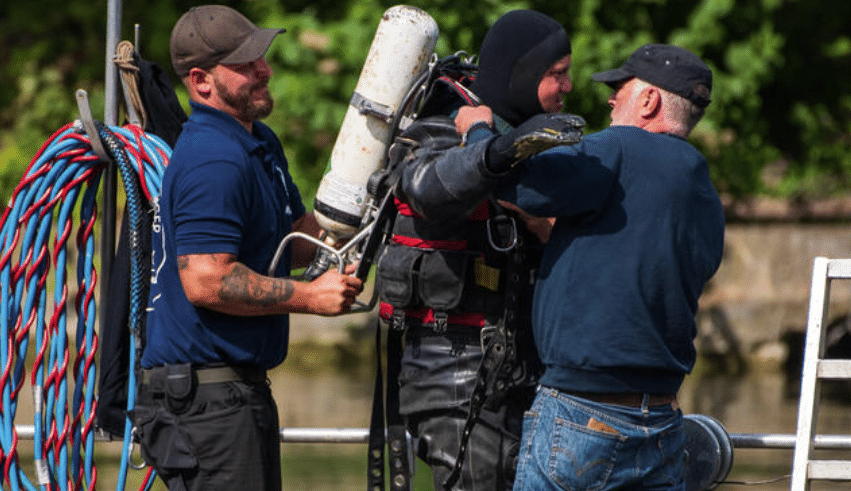
Contaminated water operations require structured team roles to maintain control and reduce exposure.
Typical roles include:
- Diver operating within the hazard zone
- Tender managing umbilical and diver support
- Decontamination team controlling post-dive procedures
- Supervisor overseeing the operation
Each role has defined responsibilities. Overlap or confusion increases exposure risk.
Support personnel must also be protected. Exposure risk extends beyond the diver.
At N9BO℠, we emphasise role clarity and controlled procedures to manage risk across the team.
Health Monitoring and Post-Exposure Management
Exposure to contaminants may not produce immediate symptoms. Monitoring is essential to identify delayed effects.
Post-dive procedures should include:
- Recording exposure conditions
- Monitoring for symptoms over time
- Reporting and documenting any health issues
Early identification allows for timely medical intervention.
Ignoring or underreporting exposure increases long-term risk.
At N9BO℠, we integrate health monitoring into operational procedures, ensuring that exposure is tracked and managed.
Training and Operational Discipline
Contaminated water diving requires specialised training. Standard diving skills are not sufficient to manage the additional risks.
Training must cover:
- Hazard identification and risk assessment
- Use of protective equipment
- Decontamination procedures
- Emergency response
Operational discipline ensures that procedures are followed consistently. Deviation increases exposure risk.
At N9BO℠, we treat contaminated water operations as high-risk activities requiring strict adherence to protocol.
Operational Mindset
Contaminated water environments require a shift in mindset. The environment is not neutral—it is a hazard that must be controlled.
Protection depends on systems, procedures, and discipline. Equipment alone does not eliminate risk.
At N9BO℠, we emphasise that risk is managed through preparation, execution, and follow-through. Every stage of the operation must be controlled.
In hazardous environments, safety is not defined by avoiding exposure—it is defined by controlling it.
Protect Your Team in Hazardous Environments
Contact N9BO℠ to integrate contaminated water diving procedures and protection systems into your training, ensuring safe and controlled operations in high-risk environments.
From the N9BO℠ Knowledge Base