The Difference Between Visiting and Penetrating
Many divers explore wrecks by remaining within natural light zones — areas where a direct ascent to the surface is possible.
Advanced penetration removes that option.
Inside the wreck:
- There is no vertical exit.
- Corridors may narrow unexpectedly.
- Overhead plating blocks ascent.
- Visibility can drop to zero within seconds.
The wreck becomes an overhead environment.
The operational mindset must shift accordingly.
Penetration diving is not tourism — it is structured navigation in a dynamic structure.
Structural Hazards and Instability
Wrecks are not static monuments.
They deteriorate continuously due to:
- Corrosion
- Storm impact
- Biological growth
- Structural collapse
Penetration divers must evaluate:
- Load-bearing integrity
- Overhead clearance
- Debris entanglement risk
- Sharp metal hazards
Touching or disturbing corroded surfaces can accelerate collapse.
Movement discipline protects both diver and structure.

Silt-Out and Zero Visibility
Unlike cave systems with limestone walls, wreck interiors often contain fine sediment and rust flakes.
A single misplaced fin kick can:
- Reduce visibility to zero
- Disorient the team
- Obscure exit reference
Proper propulsion techniques — such as modified frog kicks or controlled flutter — reduce silt disturbance.
Line placement becomes essential.
In overhead wreck penetration, visibility cannot be assumed.
Training must prepare for darkness.
Gas Planning for Enclosed Spaces
Gas management inside wrecks requires conservative margin planning.
Divers must account for:
- Delayed exit due to obstruction
- Stress-induced breathing increase
- Team gas sharing scenarios
- Depth variation within compartments
Rule-of-thirds planning often applies — but experienced teams frequently plan even more conservatively.
Gas is exit potential.
Consumption discipline determines survivability.
Line Discipline and Navigation
Unlike open-water wreck tours, penetration requires:
- Primary reel deployment
- Continuous guideline to open water
- Secure tie-offs
- Clear directional markers
The guideline is not optional.
In low visibility, it becomes the only reliable exit reference.
Improvised navigation invites confusion.
Professional wreck divers treat line discipline as mandatory.
Entanglement and Configuration Management
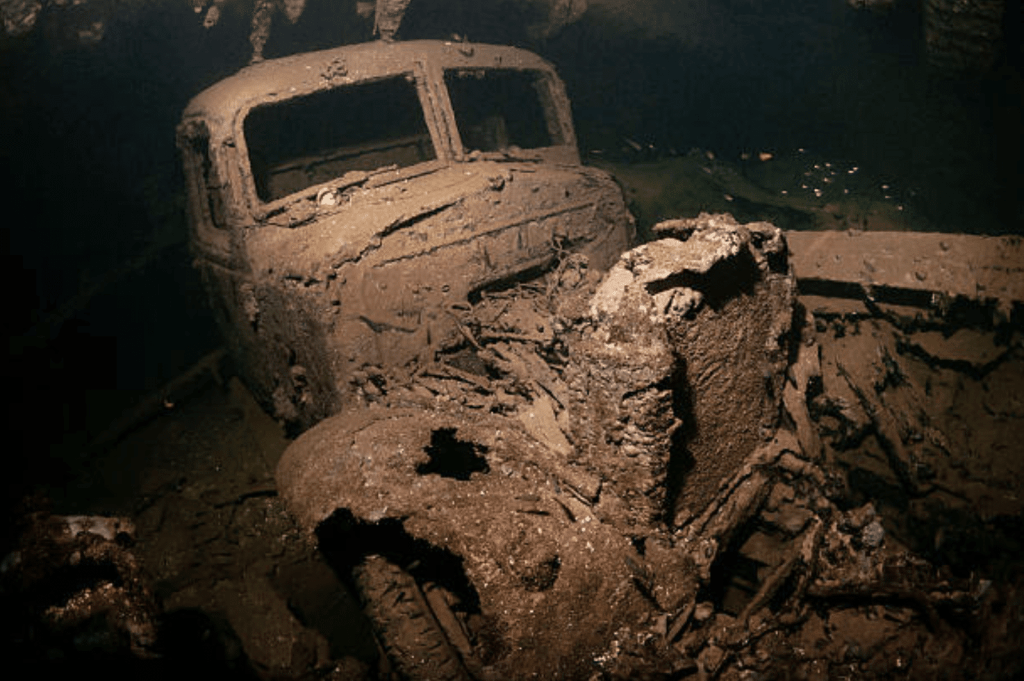
Wreck interiors are filled with:
- Cables
- Fishing line
- Structural wires
- Fallen debris
Equipment configuration must be streamlined.
Hoses routed cleanly. Accessories secured. Backup tools accessible.
Entanglement in confined space escalates rapidly.
Redundancy includes cutting tools and rehearsed procedures.
At N9BO℠, we emphasise that configuration simplicity reduces complexity creep inside overhead spaces.
Psychological Control in Confined Environments
Penetration amplifies psychological stress.
Contributing factors include:
- Darkness
- Reduced space
- Loss of vertical orientation
- Awareness of blocked ascent
Calm behaviour under stress defines competence.
Training introduces progressive complexity to build:
- Controlled breathing
- Deliberate movement
- Stable buoyancy under stress
Emotional regulation preserves gas and clarity.
Decision-Making Inside the Wreck
Professional wreck penetration requires clear abort criteria.
Reasons to exit include:
- Equipment malfunction
- Reduced visibility
- Unexpected obstruction
- Elevated breathing rate
- Team separation
Professional divers exit early rather than press deeper.
Distance does not define success.
Exit integrity does.
Why Advanced Wreck Training Exists
Recreational wreck exposure does not prepare divers for enclosed penetration.
Structured training builds:
- Navigation precision
- Gas discipline
- Entanglement management
- Failure response under constraint
- Team coordination
Without formal training, penetration becomes improvisation.
Improvisation inside overhead environments carries disproportionate consequence.
Advanced wreck diving rewards discipline, not boldness.
Considering Advanced Wreck Penetration Training?
Overhead wreck environments demand structured gas planning, line discipline, and controlled decision-making. Contact N9BO℠ to explore progressive wreck training pathways.
From the N9BO℠ Knowledge Base