What Makes Ice Diving Different
At first glance, ice diving may appear similar to cold-water diving conducted beneath a frozen lake or river. In reality, the environment changes the dive completely.
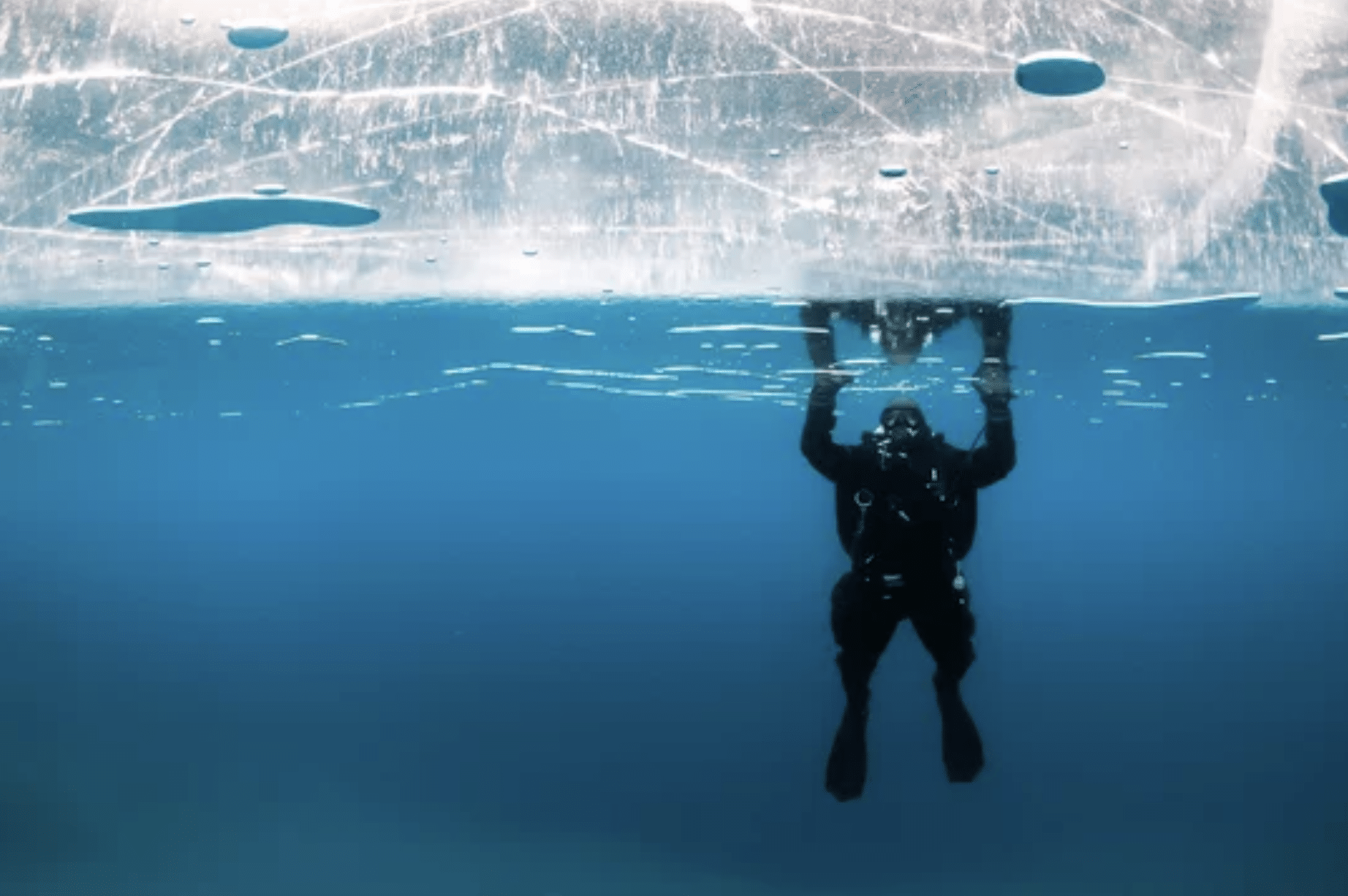
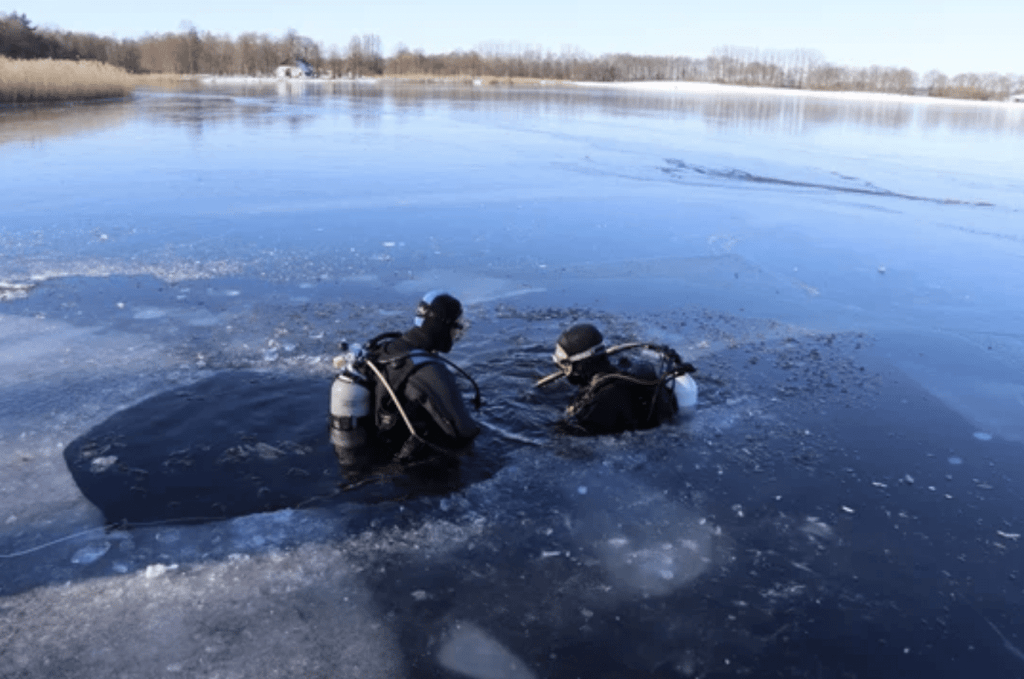
Once beneath the ice, the diver no longer has unrestricted access to the surface. The ice itself becomes an overhead environment, meaning ascent is only possible through designated entry and exit points cut into the surface.
This single factor changes:
- Emergency procedures
- Gas management
- Team coordination
- Navigation priorities
- Psychological stress levels
The diver must continuously maintain awareness of:
- The entry point location
- Guideline orientation
- Team communication
- Environmental conditions beneath the ice
At N9BO℠, we teach ice diving as overhead environment diving combined with extreme environmental exposure.
The Psychological Environment Beneath the Ice
Few diving environments alter perception as dramatically as ice diving.
The underwater world beneath the ice is:
- Quiet
- Isolated
- Visually unusual
- Physically restrictive
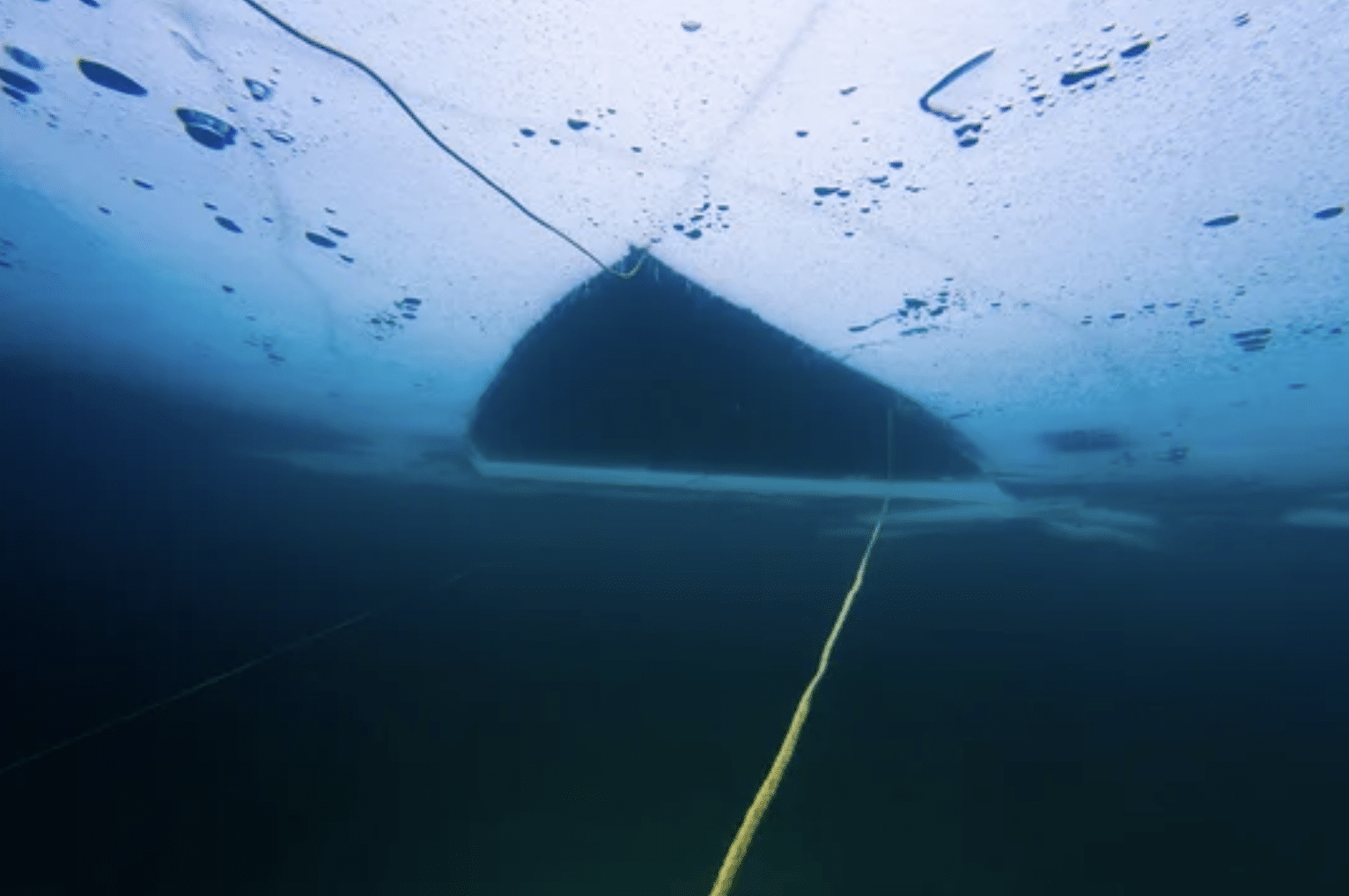
Natural light behaves differently beneath the frozen surface, often creating an environment of muted colour, shadow, and filtered illumination.
For many divers, the greatest challenge is psychological. Knowing that the surface above is inaccessible except through a controlled exit point naturally increases stress and task loading.
Divers quickly realise that calmness and procedural discipline are essential. Panic or impulsive behaviour beneath the ice can escalate rapidly.
At N9BO℠, we emphasise that mental control is one of the most important safety systems in ice diving.
The Importance of the Surface Team
Ice diving is fundamentally a team operation.
Unlike many forms of recreational diving, ice divers rely heavily on surface support personnel throughout the dive. A properly organised surface team typically includes:
- Dive supervisors
- Tender personnel
- Backup divers
- Safety and support staff
The surface team monitors:
- Diver position
- Line tension and communication
- Dive timing
- Environmental conditions
- Emergency readiness
The diver beneath the ice is never operating independently.
This structured operational framework is one of the defining characteristics of ice diving.
At N9BO℠, we reinforce that successful ice diving depends on disciplined team coordination above and below the surface.
Guidelines and Tether Systems
Guidelines are critical during ice diving operations because direct ascent is impossible through the ice layer itself.
Divers typically remain connected to the surface using:
- Tether lines
- Safety lines
- Communication systems where applicable
The line provides:
- Direction back to the entry point
- Diver tracking and control
- Surface communication capability
- Emergency retrieval support
Without line discipline, disorientation beneath the ice can become extremely dangerous.
Visibility conditions beneath the ice may also change rapidly due to suspended sediment, darkness, or environmental factors.
At N9BO℠, we teach that the line is the diver’s direct connection to safety beneath the ice.
Cold Exposure and Physiological Stress
Extreme cold is one of the defining environmental challenges of ice diving.
Cold water rapidly affects:
- Dexterity
- Breathing rate
- Equipment performance
- Decision-making ability
- Physical endurance
Exposure protection therefore becomes critical.
Most ice divers use:
- Drysuits
- Thermal undergarments
- Environmental sealing systems
- Cold-water regulator configurations
Even with proper equipment, the cold environment significantly increases physiological stress and energy expenditure.
Divers must therefore monitor themselves carefully for:
- Reduced dexterity
- Mental fatigue
- Cold-related distraction
- Increased breathing workload
At N9BO℠, we emphasise that cold management begins long before entering the water.
Equipment Requirements and Redundancy
Ice diving requires specialised equipment preparation because cold water affects both diver performance and mechanical systems.
Regulator freeze-up becomes a significant concern in near-freezing water. Divers therefore often use:
- Environmentally sealed regulators
- Redundant gas systems
- Cold-water-specific equipment configurations
Equipment must also be streamlined and accessible while wearing heavier thermal protection systems.
Pre-dive checks become particularly important because troubleshooting equipment problems underwater while wearing gloves and operating in extreme cold is significantly more difficult.
At N9BO℠, we teach that reliability and simplicity become increasingly important as environmental severity increases.
Buoyancy and Movement Control
Ice divers often operate in confined areas with limited visibility and overhead restrictions, making buoyancy control especially important.
Poor buoyancy may lead to:
- Contact with the ice ceiling
- Silt disturbance
- Increased stress and workload
- Difficulty maintaining stable orientation
The diver must remain:
- Calm
- Stable
- Deliberate in movement
Cold conditions and bulky equipment also increase task loading, making precise movement more challenging than in warm-water environments.
At N9BO℠, we emphasise slow, controlled movement and disciplined trim control during ice operations.
Environmental Awareness Beneath the Ice
Ice environments create unusual underwater conditions that differ significantly from open-water diving.
Divers may encounter:
- Altered sound perception
- Limited natural light penetration
- Entrapped air pockets beneath the ice
- Surface textures and formations unseen in normal diving environments
The frozen surface itself often becomes one of the most visually striking elements of the dive.
At the same time, the environment remains unforgiving. Divers must continuously maintain awareness of:
- Orientation
- Distance from the entry point
- Team communication
- Environmental changes
At N9BO℠, we teach divers to appreciate the beauty of the environment without becoming distracted by it.
Operational Discipline and Emergency Planning
Ice diving demands procedural discipline because environmental margins are reduced significantly.
Every dive requires:
- Detailed planning
- Surface emergency preparation
- Controlled entry and exit procedures
- Strict communication protocols
Emergency response under ice conditions is more complex because:
- Access points are limited
- Surface conditions may hinder support operations
- Cold stress affects both divers and surface teams
For this reason, ice diving operations are conducted conservatively and methodically.
At N9BO℠, we reinforce that successful ice diving depends on preparation long before the diver enters the water.
Operational Mindset
Ice diving reinforces a critical principle of advanced environmental diving: as environmental severity increases, procedural discipline becomes more important.
The frozen overhead environment removes direct access to the surface and introduces:
- Extreme cold
- Psychological stress
- Increased task loading
- Reduced emergency options
Divers must therefore rely on:
- Team coordination
- Line discipline
- Situational awareness
- Calm decision-making
- Conservative operational planning
Strong ice divers are not defined by aggression or endurance. They are defined by precision, composure, and operational control.
At N9BO℠, we approach ice diving as structured environmental adaptation supported by disciplined procedures and teamwork.
The environment beneath the ice is extraordinary—but it demands respect at every stage of the dive.
Experience the Frozen Underwater World Safely
Contact N9BO℠ to begin ice diving training and develop the awareness, cold-water procedures, and operational discipline required for safe diving beneath frozen surfaces.
From the N9BO℠ Knowledge Base