Purpose of the Tec Trimix Blender Course
The Tec Trimix Blender course is designed to qualify individuals to blend trimix gases containing oxygen, nitrogen, and helium. It extends beyond enriched air blending by introducing helium as a third component, significantly increasing both complexity and operational importance.
This course is not about diving performance in the water. It is about ensuring that the gas used during the dive is correct, consistent, and safe. At advanced technical levels, gas composition directly defines depth limits, narcosis management, and decompression efficiency.
The objective is to produce accurate gas mixtures that align exactly with the dive plan. There is no tolerance for estimation or variation.
At N9BO℠, we treat trimix blending as a critical upstream control that determines the outcome of the entire dive.
From Nitrox Blending to Trimix Complexity
Moving from nitrox to trimix blending introduces a fundamental increase in complexity. Instead of managing a binary gas mix, the blender must now balance three components, each with a distinct operational role.
Oxygen defines exposure limits and maximum operating depth. Nitrogen contributes to narcosis and decompression loading. Helium reduces narcosis and gas density, but affects decompression behaviour.
The interaction between these gases must be calculated precisely. A change in one component affects the entire mixture and its suitability for the planned dive.
This requires a deeper understanding of gas physics and planning integration. The blender must think in terms of the dive profile, not just the final percentage.
At N9BO℠, we emphasise that trimix blending is not about mixing gases—it is about building a gas strategy.
Helium Handling and Operational Considerations
Helium introduces specific operational considerations. It is an inert gas with low density, but it is also costly and must be handled efficiently to avoid waste.
Blending with helium requires controlled sequencing. The order in which gases are added affects accuracy and final composition. Improper sequencing can lead to incorrect mixes or inefficient use of resources.
Helium also affects decompression planning. Its inclusion changes how the body absorbs and releases inert gas, which must be accounted for during dive planning.
This reinforces the need for precision. The blender must understand not only how to add helium, but why it is used and how it affects the dive.
At N9BO℠, we treat helium as a strategic component, not just an additive.

Blending Methods and Accuracy Control
The course introduces advanced blending methods, including partial pressure blending and continuous flow systems adapted for trimix production. Each method must be applied correctly to achieve the desired result.
Accuracy becomes more demanding. The final mixture must match the planned gas within tight tolerances, as even small deviations can alter depth limits or decompression profiles.
This requires careful measurement, controlled filling procedures, and continuous monitoring throughout the process.
Blending must be repeatable. The same procedure must produce the same result every time, regardless of conditions or operator.
At N9BO℠, we emphasise that precision in blending is non-negotiable at technical levels.
Gas Analysis and Verification
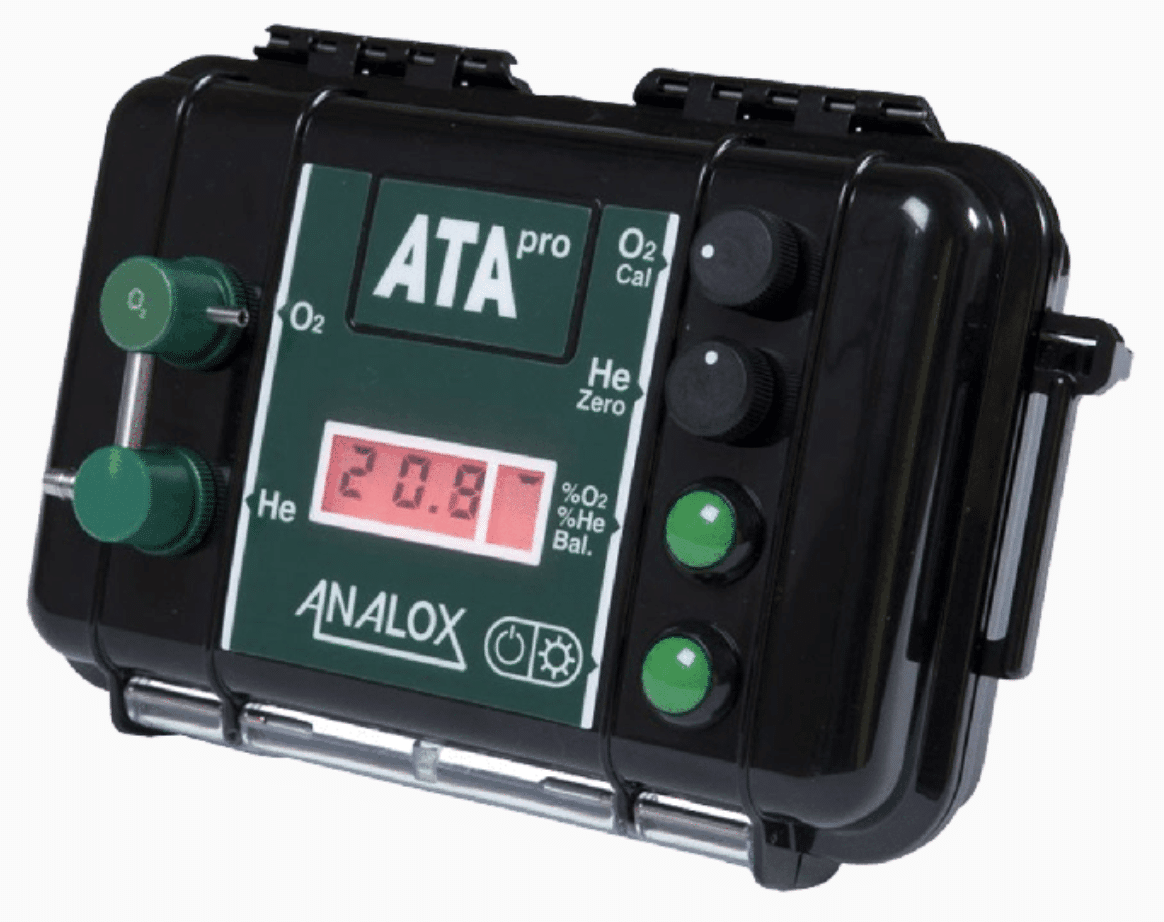
Verification is a critical step in trimix blending. The final gas must be analysed for both oxygen and helium content to confirm that it matches the intended composition.
This requires calibrated analyzers and correct measurement techniques. The blender must ensure that readings are accurate and consistent before approving the gas for use.
Without verification, the entire process is based on assumption. In technical diving, assumption is unacceptable.
Documentation must also be maintained, ensuring traceability of gas composition for operational and safety purposes.
At N9BO℠, we treat gas analysis as the final confirmation that the dive plan can be executed safely.
Equipment Systems and Operational Control
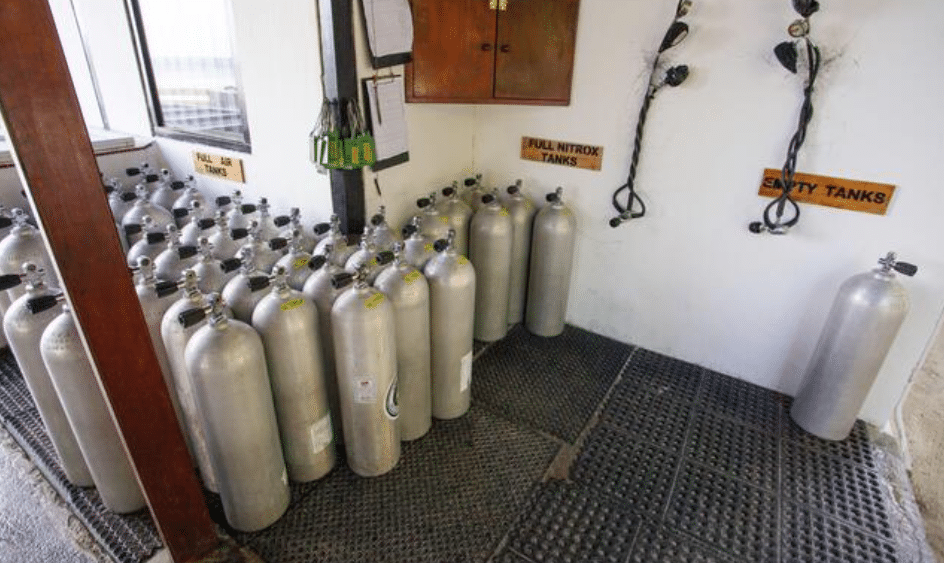
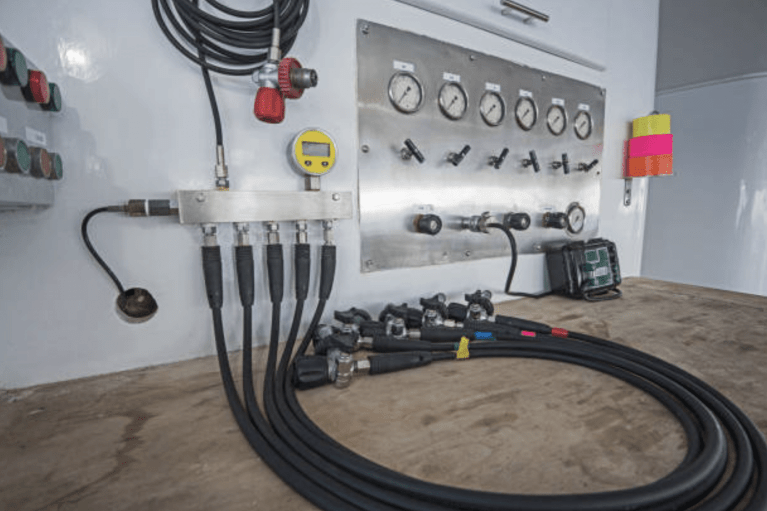
Trimix blending relies on a complete gas production system, including compressors, filtration units, cylinders, and blending panels. Each component must function correctly to ensure gas quality.
The blender must understand how these systems interact. Air quality, filtration performance, and equipment condition all affect the final mixture.
Operational control requires following a structured process. Preparation, blending, analysis, and documentation must all be completed without deviation.
Any failure in the system introduces risk. The blender must be capable of identifying and correcting issues before gas is released for use.
At N9BO℠, we treat gas production as an integrated operational system where each element must perform reliably.
Operational Relevance in Technical Diving
The Tec Trimix Blender course is directly relevant to advanced technical diving operations. As divers progress into deeper environments, reliance on accurate trimix becomes essential.
In dive centres, liveaboards, and expedition environments, the ability to produce trimix on-site ensures operational independence and reliability.
This capability reduces reliance on external suppliers and allows for immediate adjustment of gas strategies based on operational needs.
It also introduces accountability. The diver or operator producing the gas becomes responsible for its accuracy and safety.
At N9BO℠, we integrate trimix blending into operational readiness for advanced diving environments.
Position Within the Technical Pathway
The Tec Trimix Blender course builds on the Tec Gas Blender programme and represents the highest level of gas production training within the PADI TecRec system.
It complements diver-level trimix training by ensuring that the gases used in deep technical dives are produced to the required standard.
For divers, it provides a deeper understanding of how gas composition affects planning and execution. For professionals, it provides the ability to support advanced operations.
At N9BO℠, we recommend trimix blending as a critical capability for those operating at advanced technical levels.
Operational Mindset
The Tec Trimix Blender course reinforces that technical diving begins long before entering the water. Gas composition defines the dive profile, influences decompression, and determines operational limits.
Blending requires precision, discipline, and accountability. Every step must be controlled, and every result must be verified.
At N9BO℠, we approach trimix blending as a core operational function. It ensures that the dive is built on accurate and reliable conditions from the outset.
In advanced technical diving, control starts with the gas—and the gas must be right.

Produce the Gas That Defines the Dive
Contact N9BO℠ to integrate PADI Tec Trimix Blender training into your operational capability, ensuring precision, safety, and full control over your advanced diving gases.
From the N9BO℠ Knowledge Base