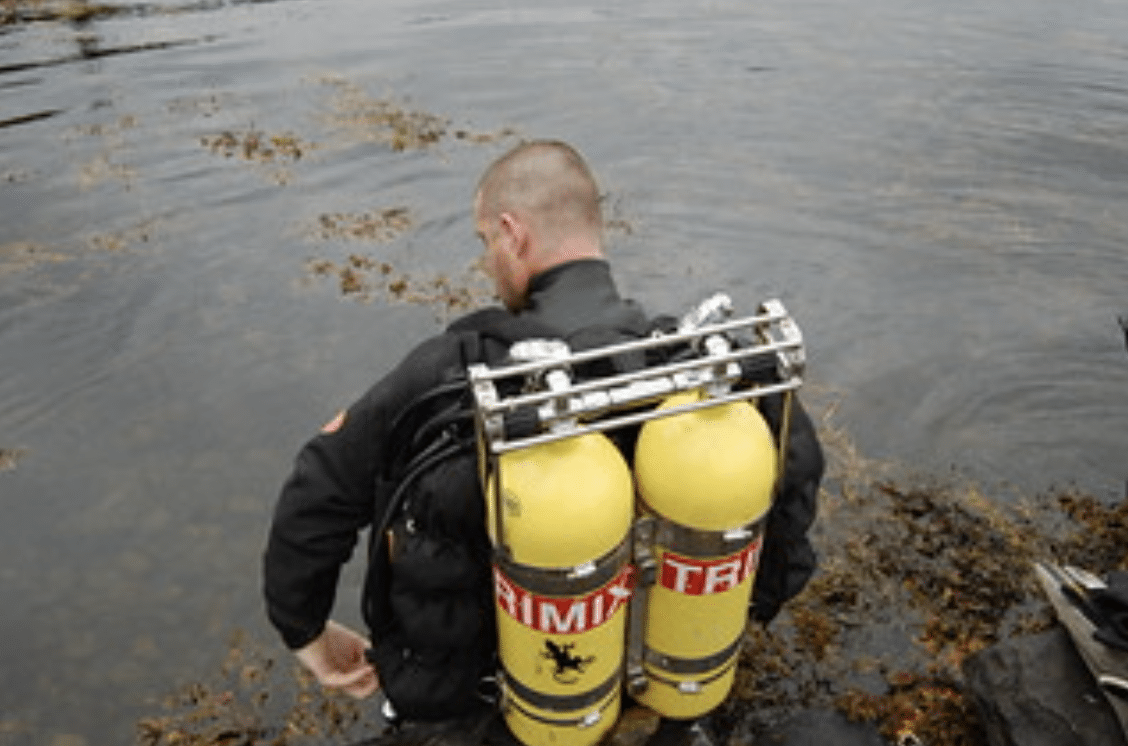
Purpose of the Tec Trimix 65 Course
The Tec Trimix 65 course is designed to extend a diver’s capability beyond air-based technical diving by introducing trimix as a standard operational gas. It builds directly on Tec 50, maintaining the same structured approach to decompression while increasing depth and complexity.
Divers are trained to plan and execute dives to a maximum depth of 65 metres, integrating helium into their gas strategy to reduce narcosis and improve performance.
This course does not simply allow deeper diving. It introduces a new level of control where gas selection becomes a primary tool for managing physiological and operational limits.
At N9BO℠, we position Tec Trimix 65 as the point where depth is no longer the main constraint—gas strategy becomes the defining factor.
Why Trimix Changes the Equation
At depths approaching and exceeding 50 metres, air becomes increasingly limiting. Nitrogen narcosis affects cognition, and gas density increases breathing resistance, both of which reduce diver performance.
Trimix addresses these limitations by replacing a portion of nitrogen with helium. This reduces narcosis and improves breathing efficiency, allowing divers to maintain clarity and control at greater depth.
However, trimix introduces its own complexity. Gas planning becomes more precise, and the diver must understand how different gas components affect both physiology and decompression.
This creates a shift in focus. Diving deeper is no longer the objective; maintaining performance at depth becomes the priority.
At N9BO℠, we emphasise that trimix is a performance tool, not just a depth enabler.
Depth Extension and Operational Impact
The extension to 65 metres significantly increases exposure and reduces margin for error. Gas consumption rises sharply, decompression obligations become longer, and environmental factors have a greater impact on the dive.
At this depth, the diver must operate within a tightly controlled framework. There is no capacity for improvisation, and every phase of the dive must be executed as planned.
The deeper environment also amplifies small errors. A minor deviation in depth, timing, or gas use can have significant consequences.
This reinforces the need for precision. The diver must rely on structured procedures and disciplined execution.
At N9BO℠, we treat depth as a compounding factor that demands proportional increases in control.

Multi-Gas Planning and Decompression Strategy
Tec Trimix 65 requires divers to manage multiple gases, including bottom trimix and at least two decompression gases. Planning must integrate all gases into a single, coherent profile.
Each gas has a defined role. Bottom gas is selected to balance narcosis and oxygen exposure, while decompression gases are used to accelerate inert gas elimination during ascent.
The diver must calculate:
- Maximum operating depths for each gas
- Gas volumes for the entire dive, including contingencies
- Decompression schedules that integrate all gas switches
Execution must match the plan exactly. Gas switches must occur at the correct depth, and decompression stops must be maintained without deviation.
At N9BO℠, we emphasise that multi-gas planning is the core of technical diving at this level.
Equipment Configuration and Redundancy
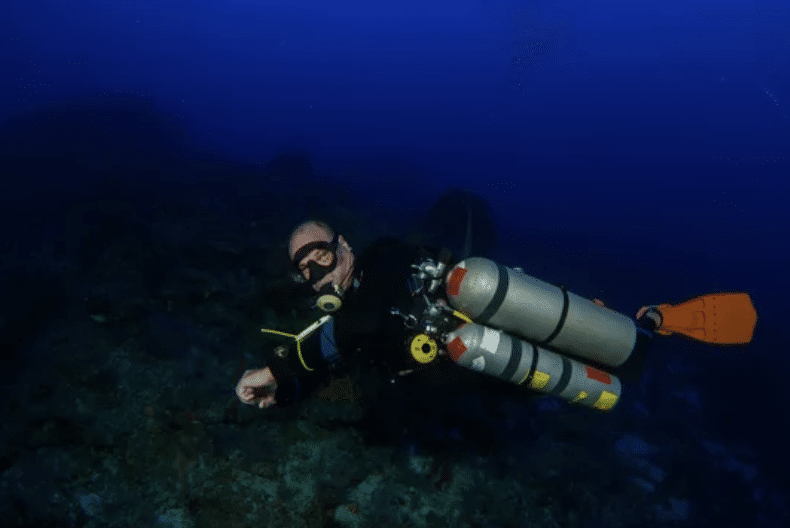
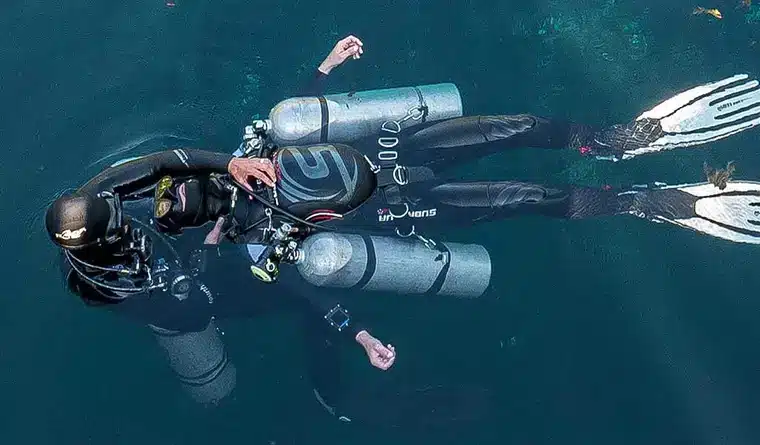
At this stage, equipment configuration must support both increased complexity and failure management. Divers operate with full technical setups, including doubles or sidemount systems and multiple stage cylinders.
All gases must be clearly identified and accessible. Regulator configuration must support efficient switching, and hose routing must minimise task load.
Redundancy is critical. The diver must be able to manage equipment failures without compromising decompression obligations, which may now be extended and non-negotiable.
Configuration must be standardised and consistent. Any ambiguity increases risk, particularly under increased task load at depth.
At N9BO℠, we treat equipment as a structured system designed to support both execution and contingency.
Task Load, Awareness, and Performance at Depth
The introduction of trimix does not reduce task load. It allows the diver to manage that load more effectively by improving cognitive clarity.
However, the number of variables increases. The diver must manage depth, time, multiple gases, decompression schedules, and team coordination simultaneously.
Awareness must remain continuous. The diver must monitor all aspects of the dive while executing procedures without hesitation.
The risk of fixation remains. Even with improved clarity, focusing on a single element can lead to loss of overall control.
At N9BO℠, we train divers to maintain structured awareness across all variables, ensuring stability under increased complexity.
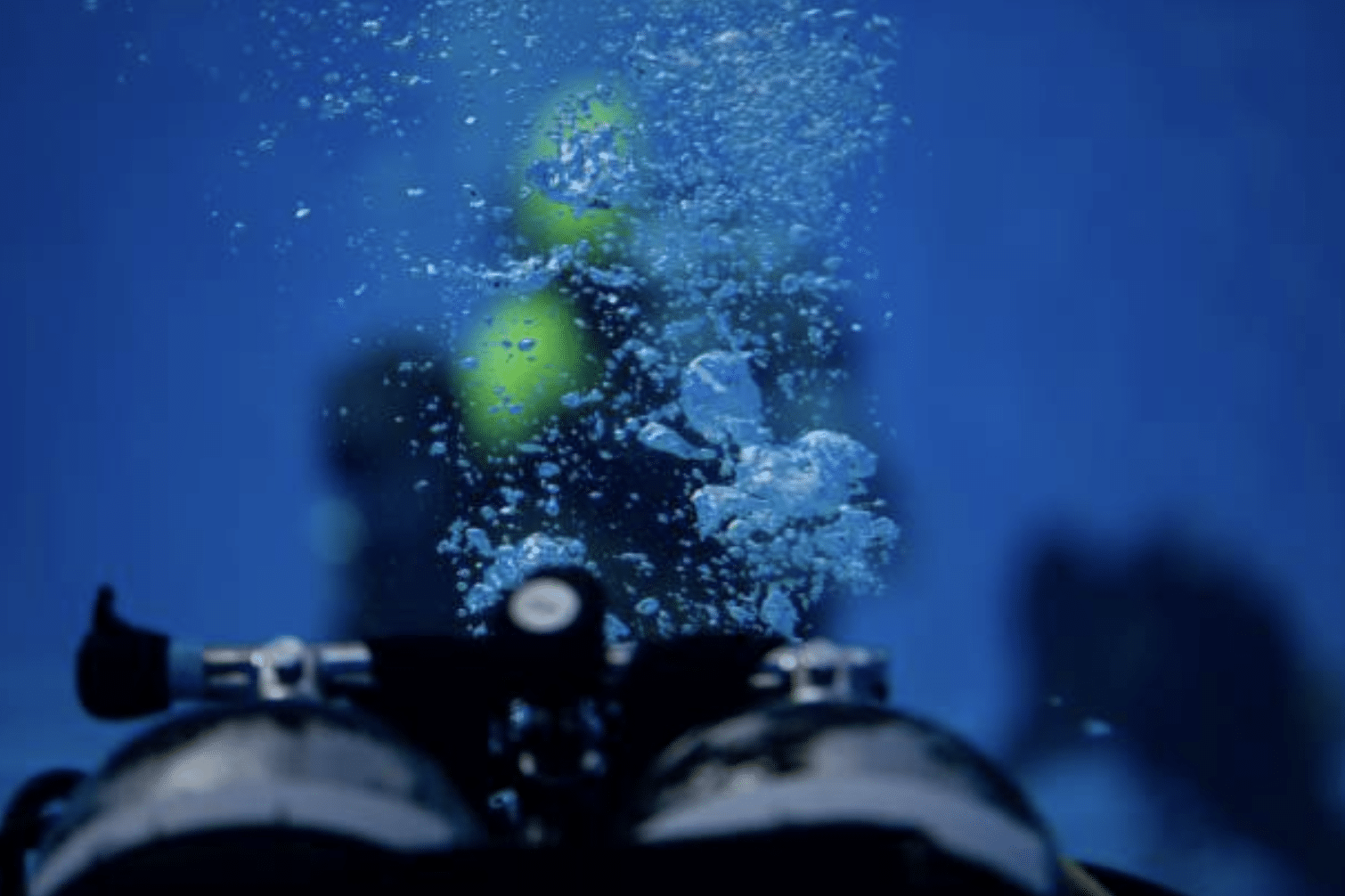
Team Coordination in Deep Technical Diving
At 65 metres, team coordination becomes even more critical. Divers must operate within a shared plan, maintaining alignment throughout descent, bottom phase, and decompression.
Gas switches, ascent rates, and stop durations must be synchronised. Each diver must understand both their own responsibilities and those of the team.
Any deviation must be recognised immediately and managed according to established procedures.
At this level, individual performance directly affects team safety. Coordination is therefore not optional—it is essential.
At N9BO℠, we emphasise that deep technical diving is always a team-based operation.
Position Within the Technical Pathway
Tec Trimix 65 is the first level in the PADI trimix pathway and represents the transition from air-based to helium-based deep diving. It prepares divers for full trimix courses, where depth and decompression complexity increase further.
The course confirms that the diver can manage:
- Multi-gas planning and execution
- Extended decompression obligations
- Increased depth and physiological load
It acts as a bridge between foundational technical training and advanced deep exploration.
At N9BO℠, we position Tec Trimix 65 as the point where technical diving becomes performance-driven rather than depth-limited.
Operational Mindset
The Tec Trimix 65 course reinforces that technical diving at depth is defined by control, not capability. The introduction of helium improves performance, but it does not reduce the need for discipline.
Planning must be exact. Execution must be consistent. Awareness must be continuous.
At N9BO℠, we approach trimix diving as a controlled system where gas, equipment, and procedures must align to manage increased exposure.
In deep technical diving, success is not defined by reaching depth, but by maintaining control throughout the dive.

Extend Depth with Control, Not Risk
Contact N9BO℠ to integrate PADI Tec Trimix 65 training into your development pathway, building the precision, awareness, and gas management capability required for deep technical diving.
From the N9BO℠ Knowledge Base