GPS Is a Tool — Not Awareness
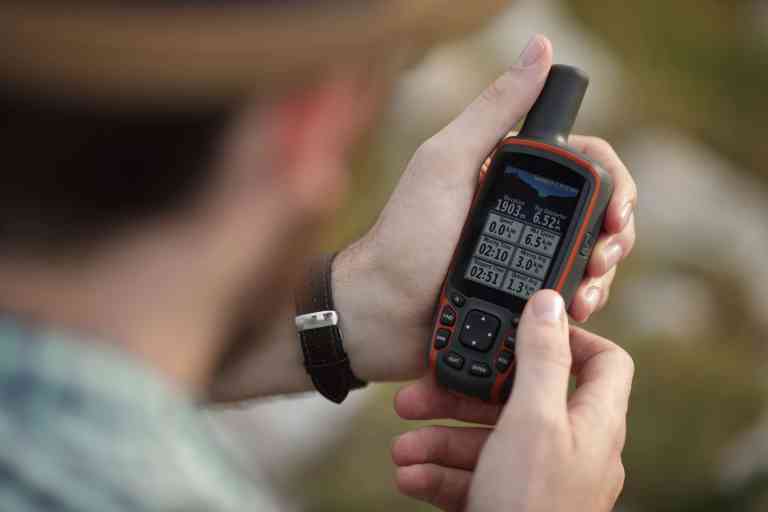
GPS provides position, not understanding.
It tells you where you are, but not where it is safe to go, what is changing around you, or how conditions will evolve. Professional navigation training treats GPS as a support tool, not a decision-maker.
Why GPS Feels More Reliable Than It Is
Digital precision creates psychological confidence.
Coordinates appear exact, movement tracks look clean, and maps feel authoritative. In reality, GPS accuracy fluctuates constantly due to:
- Satellite geometry
- Atmospheric interference
- Signal reflection (multipath)
- Terrain obstruction
False precision is one of the most dangerous aspects of GPS use.
Where GPS Fails First
GPS reliability degrades rapidly in:
- Dense jungle or urban canyons
- Narrow valleys and caves
- Heavy weather
- High-latitude regions
- Underwater or near steep cliffs
Professional teams expect these failures and plan accordingly.

Instructor Perspective: Teaching Navigation Without Screens
Instructors frequently observe divers and trainees freezing when GPS fails.
At N9BO℠, navigation training deliberately removes digital aids so teams learn to orient using:
- Bearings
- Terrain association
- Dead reckoning
- Environmental cues
Technology supports skill—it does not replace it.
GPS and Diving Operations
On the surface, GPS aids site location, drift management, and recovery coordination.
Underwater, however, navigation depends on:
- Compass discipline
- Distance estimation
- Time awareness
- Team alignment
Professional dive training reinforces the boundary between surface and subsurface navigation.
Redundancy Means Different Systems
Two GPS units do not equal redundancy if both rely on the same signals.
Professional navigation planning integrates:
- Paper charts
- Compasses
- Visual references
- Local knowledge
Each system fails differently.

The Legal and Operational Risk of GPS Error
Misplaced coordinates can:
- Trigger incorrect SAR responses
- Send teams into hazardous zones
- Delay rescue or evacuation
Professional operations treat GPS data as one input, not truth.
GPS and Cognitive Offloading
Reliance on GPS reduces situational awareness.
When devices fail, users often lack the mental map to recover. Professional training resists cognitive offloading and preserves navigation competence.
Training for Degraded Navigation
Professional navigation courses include:
- Intentional GPS failure
- Night or low-visibility scenarios
- Stress-induced disorientation drills
These exercises build resilience when technology disappears.
Professional Parallels
Aviation and maritime industries train pilots and captains to navigate without GPS.
Diving and expedition teams must adopt the same discipline.
The Bottom Line
GPS is powerful—but brittle.
Professional navigation depends on judgement, fundamentals, and redundancy. When GPS supports awareness, it enhances safety. When it replaces awareness, it creates risk.
At N9BO℠, navigation training prepares teams to operate confidently—with or without screens.

Want to Improve Navigation and Field Awareness Skills?
Navigation tools support decision-making but never replace judgment and training. Contact us to discuss navigation and field operations training programmes.
From the N9BO℠ Knowledge Base