The Myth of the “Good Instinct”
Divers often admire those who appear to make fast, confident decisions underwater. This confidence is frequently attributed to instinct—an innate ability to “just know” what to do when something goes wrong.
In reality, instinct is unreliable under stress.
What looks like instinctive decision-making is almost always the result of prior preparation. Technical diving training recognises that humans do not make better decisions when stressed—they make faster decisions, often with less information.
Preparation determines whether those fast decisions are correct.
How Stress Changes Decision-Making
Under stress, the brain narrows its focus. Peripheral awareness drops, working memory shrinks, and emotional responses intensify. These physiological changes are unavoidable.
Divers under stress may:
- Fixate on one problem
- Ignore secondary cues
- Default to familiar actions
- Delay abort decisions
Advanced technical diving progression trains divers to recognise these stress responses and compensate for them through structure rather than intuition.
Why Experience Alone Is Not Enough
Experience contributes pattern recognition, but it does not eliminate stress responses. Even experienced divers are susceptible to cognitive narrowing when conditions deteriorate.
TDI technical diving courses demonstrate that experience without preparation can lead to confident but flawed decisions. Experience becomes reliable only when paired with disciplined planning and rehearsal.
Preparation as Decision Architecture
Effective decision-making is built on decision architecture—structures that guide behaviour under pressure.
These include:
- Abort criteria
- Gas management rules
- Failure protocols
- Team communication standards
Each removes the need to invent solutions underwater. Technical diving training treats these structures as essential decision-support systems.
Predefined Responses Reduce Cognitive Load
When responses are predefined, divers do not need to evaluate multiple options in real time. They simply execute known actions.
This reduces hesitation and error. Advanced technical diving progression reinforces procedural memory so that critical actions remain accessible even when cognition is impaired.
The Role of Debriefing in Better Decisions
Debriefing improves future decisions. By analysing what went well and what did not, divers refine their mental models.
At N9BO℠, debriefs focus on decision processes rather than outcomes. A good outcome does not always indicate good decision-making, and vice versa.
When Instinct Works—and When It Doesn’t
Instinct works best in environments where consequences are low and feedback is immediate. Technical diving offers neither.
Delayed consequences, complex interactions, and limited feedback make instinct unreliable. Technical diving training therefore replaces instinct with deliberate practice.
Team Decision-Making
Teams enhance decision quality by distributing cognitive load. When communication is effective, teams catch errors and challenge assumptions.
Advanced technical diving progression teaches teams to externalise decisions through communication rather than internalise them silently.
The Instructor’s Role in Decision Training
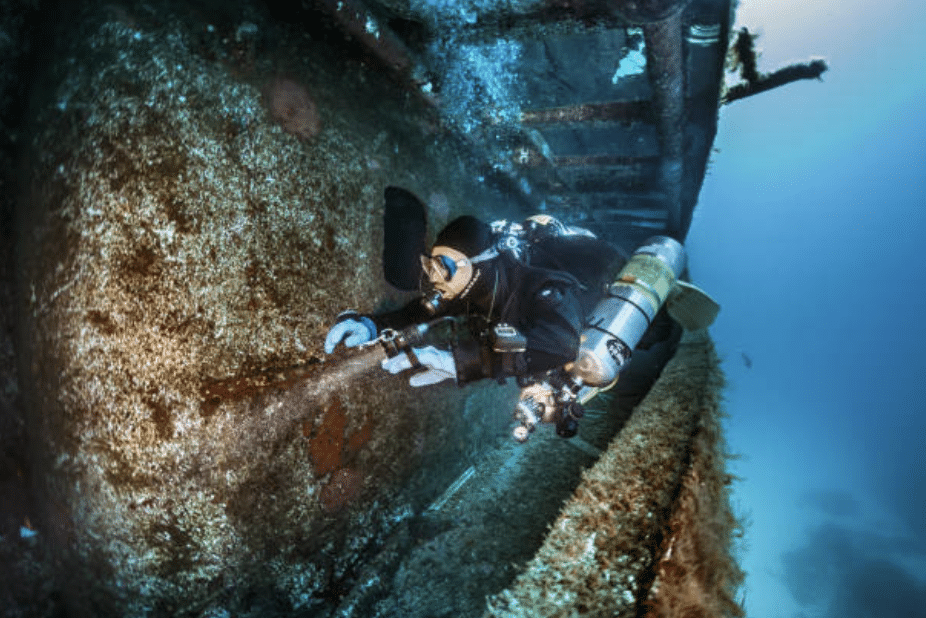
Instructors shape how divers think under pressure. By presenting ambiguous scenarios and guiding reflection, instructors help divers develop disciplined judgement.
TDI technical diving courses emphasise that instructors are not decision-makers for students—they are decision architects.
Professional Parallels
In aviation, medicine, and emergency services, critical decisions are guided by protocols and checklists, not gut feeling. These systems exist precisely because instinct fails under stress.
Technical diving aligns with this professional model. At N9BO℠, preparation is treated as the foundation of good judgement.
The Bottom Line
Good decisions underwater are rarely spontaneous.
They are pre-built.
Instinct may guide you on land. Underwater, preparation guides survival. Technical diving rewards those who plan deliberately, train realistically, and remove guesswork before it matters.
Want to Improve Underwater Decision-Making?
Reliable decisions underwater come from preparation and repetition, not instinct alone. Contact us to discuss training that builds consistent judgement under pressure.
From the N9BO℠ Knowledge Base