Recreational Training: Purposefully Limited by Design
Recreational diving training is one of the most successful safety frameworks in modern sport. It introduces millions of people to the underwater environment in a way that is accessible, structured, and forgiving. These programmes are not designed to create underwater technicians or operational specialists; they are designed to create competent participants within clearly defined limits.
Those limits are not arbitrary. Recreational training assumes:
• Direct access to the surface at all times
• Minimal task loading
• Single-cylinder gas management
• Predictable ascent profiles
• Limited environmental constraints
Within this envelope, recreational divers can explore safely and enjoyably. Problems arise not because recreational training is inadequate, but because divers sometimes outgrow its assumptions without recognising it.
The Invisible Line Most Divers Cross Without Noticing
Very few divers wake up one day and decide, consciously, to exceed their training limits. Instead, progression tends to be incremental. A slightly deeper dive. A longer bottom time. Repeated dives near no-decompression limits. Penetrating a wreck “just a little.” Carrying an extra cylinder “just in case.”
Individually, these steps may feel benign. Collectively, they signal that a diver is operating outside the design parameters of recreational training.
One of the most dangerous aspects of this transition phase is that dives may continue to “work.” Nothing goes wrong—until it does. This reinforces a false sense of competence, masking the fact that the diver is now relying on luck, favourable conditions, or untested assumptions rather than structured preparation.
This is precisely the gap that technical diving training is designed to fill.

Why Recreational Problem-Solving Stops Scaling
Recreational emergency procedures are based on simplicity and immediacy. Out of gas? Ascend. Equipment issue? Abort and surface. Separation? Look briefly, then surface. These responses work because the environment allows them to work.
Once a diver incurs decompression obligations or enters overhead environments, these solutions are no longer viable. An out-of-gas situation becomes a shared, managed event rather than an immediate ascent. An equipment failure must be stabilised, isolated, and controlled over time. Surfacing is no longer an option—it is a consequence.
This is not a criticism of recreational training; it is an acknowledgement of its scope. TDI technical diving courses and PADI Tec training programmes exist precisely because recreational solutions stop scaling once ascent is constrained.
Gas Planning: The First Point of Failure
One of the earliest signs that recreational training is no longer enough is gas management. Recreational gas planning is typically based on “turn pressures,” reserve rules, or computer prompts. These methods assume:
• Low task loading
• Stable breathing rates
• Immediate ascent availability
In technical environments, these assumptions collapse. Gas planning must now account for worst-case consumption, delayed ascents, team sharing, and multiple contingencies. Without formal training, divers often underestimate how quickly reserves disappear when stress, depth, or workload increase.
Technical diving training reframes gas planning as a failure-management tool, not a convenience metric. This shift alone justifies formal progression for many divers.
Task Loading and Cognitive Saturation
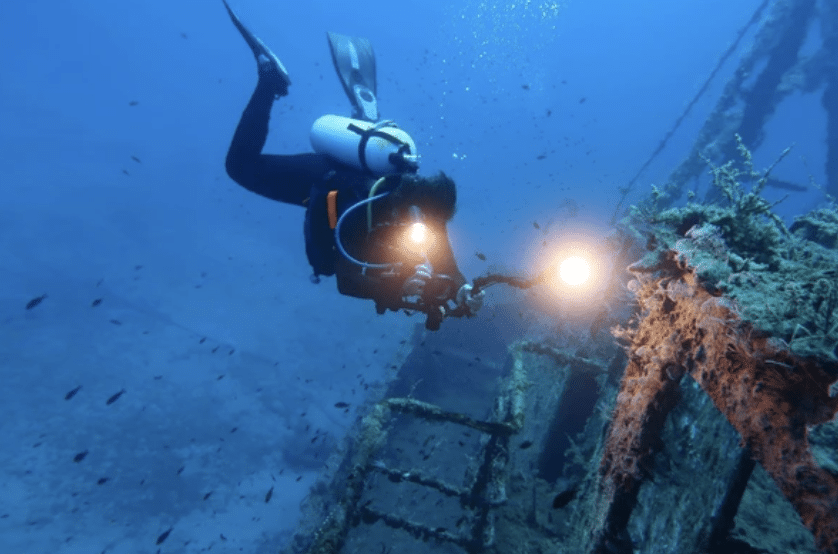
Another indicator that recreational training has reached its limit is task loading. Adding reels, lights, stage bottles, navigation tasks, or photographic objectives dramatically increases cognitive demand. Many divers are unaware of how close they are to saturation until performance degrades.
Technical training intentionally introduces task loading in a controlled way, allowing divers to experience:
• Degraded buoyancy under stress
• Tunnel vision
• Slowed decision-making
• Missed cues
These experiences are not failures; they are diagnostics. Advanced technical diving progression uses them to build resilience and procedural discipline.
“I’ve Been Doing This for Years” — Experience vs Structure
A common justification for informal progression is experience. While experience is valuable, it is not self-validating. Repetition without feedback often reinforces habits—good or bad—without correcting underlying flaws.
Structured technical courses provide something informal experience cannot: systematic exposure to failure modes, guided by instructors trained to recognise and address them. This is why divers with thousands of recreational dives may still struggle initially in TDI technical diving courses or PADI Tec training programmes.
Experience becomes powerful when it is paired with structure.
The Cost of Delaying the Transition
Many divers delay formal technical training because they feel “almost ready.” Ironically, this is often when risk is highest. Operating near or beyond recreational limits without technical tools increases exposure while reducing safety margins.
Formal technical training does not remove risk—but it makes risk visible, measurable, and manageable. Divers who transition earlier tend to develop better habits, stronger judgement, and more conservative instincts.
Recognising the Moment to Progress
The decision to pursue technical training should not be driven by depth goals or equipment interest. It should be driven by an honest assessment of:
• Whether ascent is always an option
• Whether gas planning is becoming complex
• Whether task loading is increasing
• Whether dives depend on “everything going right”
When the answer to any of these questions becomes uncertain, recreational training has likely reached its limit.
At N9BO℠, divers are encouraged to view technical training not as an escalation, but as a responsible recalibration—one that replaces assumption with analysis and comfort with competence.
Recreational diving opens the door. Technical training teaches you how to stay safely on the other side.
Another warning sign is task loading. Carrying additional equipment, navigating complex sites, or managing multiple objectives increases cognitive demand. Without formal training, divers may unknowingly compromise buoyancy, awareness, or gas management. These limitations are addressed methodically through TDI technical diving courses, where complexity is introduced in a controlled progression.
It is also important to recognise that extending recreational limits does not make a dive “almost technical.” The margin between acceptable risk and unacceptable risk narrows quickly. This is why PADI Tec training programmes and similar pathways exist: to bridge the gap responsibly rather than allowing divers to drift into hazardous territory.
At N9BO℠, divers are encouraged to evaluate their goals honestly and conservatively. Technical training is not a reward for ambition; it is a tool for safe, sustainable exploration through Advanced technical diving progression.

Unsure When to Move Beyond Recreational Diving?
If you’re questioning whether recreational training still meets your diving objectives, we can help you assess readiness and next steps safely.
From the N9BO℠ Knowledge Base