Understanding PADI Distinctive Specialities
A PADI Distinctive Speciality is a course created by an individual instructor or training organisation, then reviewed and approved by PADI. Unlike standard PADI courses, which follow globally fixed curricula, distinctive specialities allow adaptation to specific operational needs, environments, or expertise.
This means the course structure, exercises, and emphasis can be tailored while still operating within PADI’s quality assurance framework. It allows training providers to integrate external standards, industry practices, or specialised knowledge into a recognised certification.
In the case of Tec Advanced EANx Diver [Distinctive], the programme aligns its depth limits, gas ratios, and operational scope with established Advanced Nitrox standards, while being delivered under a PADI framework.
At N9BO℠, we use distinctive specialities to bridge agency systems and deliver training that reflects real operational requirements.
Purpose of the Tec Advanced EANx Distinctive
The Tec Advanced EANx Diver [Distinctive] course mirrors the functional scope of Advanced Nitrox-level training. Divers are trained to use enriched air mixtures up to 100% oxygen for decompression, while operating within depth limits consistent with air or normoxic bottom gas profiles.
The objective is not to extend depth, but to refine decompression efficiency and control. Oxygen becomes a tool for managing exposure rather than simply an additional gas.
This course introduces a more structured approach to gas planning, where oxygen use is integrated into the dive profile from the outset. Divers must understand how oxygen affects both physiology and execution.
At N9BO℠, we position this programme as a precision course, focused on control rather than expansion.
Oxygen Exposure and Operational Limits
High oxygen concentrations introduce strict exposure limits that must be managed continuously. Partial pressure thresholds define maximum operating depths, and these limits must be respected without exception.
Divers must calculate these limits during planning and apply them accurately during execution. Gas switches must occur exactly at the correct depth, with no tolerance for approximation.
Exposure is cumulative, requiring continuous monitoring throughout the dive. The diver must remain aware of both current and total oxygen exposure.
This creates a dynamic control requirement. Oxygen management is not completed before the dive: it is maintained throughout.
At N9BO℠, we treat oxygen exposure as a live operational parameter.
Decompression Optimisation Through Oxygen Use
The use of high-oxygen gases allows for more efficient decompression by accelerating inert gas elimination. When integrated correctly, this reduces overall decompression time and improves safety margins.
However, this efficiency depends entirely on precision. Decompression stops must be held accurately, and gas switches must be executed at the correct depth.
The diver must integrate oxygen use into a structured ascent profile, ensuring that timing, depth, and gas selection remain aligned.
Oxygen does not simplify decompression—it increases its effectiveness when managed correctly.
At N9BO℠, we emphasise that optimisation requires discipline, not approximation.
Gas Switching and Procedural Discipline
Gas switching is one of the most critical procedures in this course. Divers must transition between gases without error, using a structured and repeatable process.
Each switch must be verified before execution and confirmed immediately after. This removes reliance on assumption and reduces the likelihood of error.
Mistakes at this stage have immediate consequences, particularly when high-oxygen gases are involved at depth.
Procedural discipline ensures that switching remains controlled, even under increased task load.
At N9BO℠, we enforce consistent switching protocols as a primary safety control.
Equipment Configuration and Operational Clarity
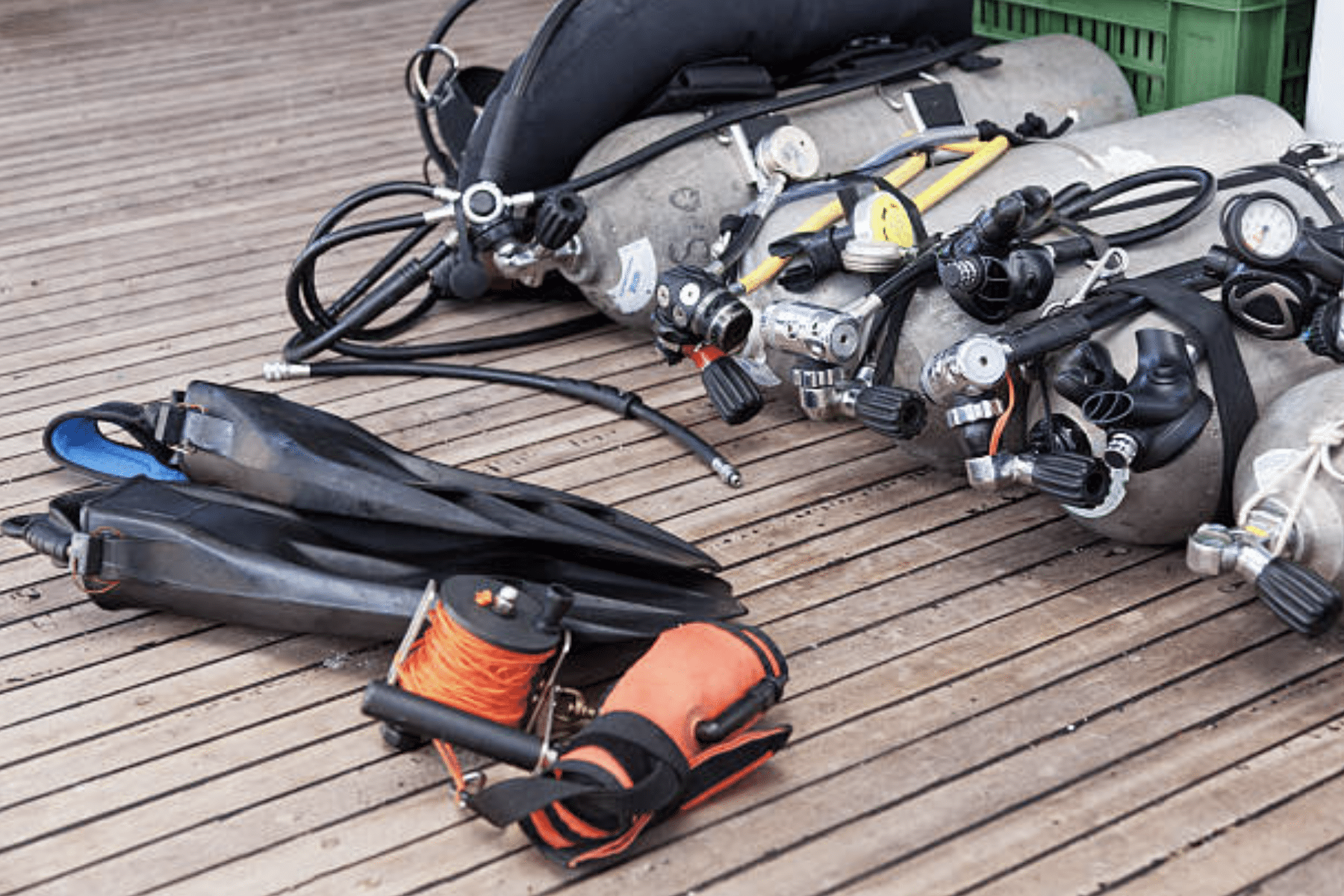
Managing multiple gases requires a clear and standardised equipment configuration. Cylinders must be correctly labelled, regulators must be identifiable, and access must be immediate.
Configuration must support the diver’s procedures. It must reduce task load and eliminate ambiguity during critical phases of the dive.
Redundancy is also essential. The diver must be able to manage equipment failures without compromising decompression obligations.
Poor configuration introduces hesitation and increases risk.
At N9BO℠, we treat equipment as an integrated system that supports both execution and contingency.
Task Load and Awareness Management
The addition of multiple gases increases task load. Divers must manage depth, time, decompression status, and gas selection simultaneously.
Maintaining awareness becomes critical. The diver must monitor all variables continuously while executing procedures without disruption.
Fixation on a single task can lead to loss of control in other areas. Structured awareness ensures that no element is neglected.
This level of control is developed through repetition and discipline.
At N9BO℠, we train divers to maintain full situational awareness under increased complexity.
Integration Within the Technical Pathway
The Tec Advanced EANx Diver [Distinctive] course aligns with Advanced Nitrox-level capability and prepares divers for decompression procedures and deeper technical training.
It introduces the core requirement of technical diving: managing obligation through structured gas use.
This course forms part of a progression where oxygen management, decompression, and depth must eventually be combined into a single operational system.
Divers must demonstrate control at this level before increasing complexity.
At N9BO℠, we position this course as a critical step in building disciplined technical capability.
Operational Mindset
The Tec Advanced EANx Diver [Distinctive] course reinforces that technical diving is defined by precision and control. Oxygen is a powerful tool, but it must be managed within strict limits.
Planning must be exact, execution must be consistent, and awareness must be continuous. There is no tolerance for deviation.
At N9BO℠, we approach oxygen management as part of a controlled system. Gas selection, procedures, and equipment must align to reduce risk.
In technical diving, capability is not defined by the gases you carry, but by how precisely you use them.

Master Oxygen Before Increasing Complexity
Contact N9BO℠ to integrate Tec Advanced EANx Diver training into your development pathway, ensuring precise gas management and disciplined decompression execution.
From the N9BO℠ Knowledge Base