Purpose of the Advanced Open Water Course
The Advanced Open Water course is intended to move divers beyond basic entry-level certification and introduce them to a broader range of diving activities.
While the Open Water Diver course focuses on foundational safety and core skills, the Advanced Open Water programme emphasises experience and adaptation. Divers are exposed to new conditions, environments, and task loading under instructor supervision.
The course allows divers to:
- Improve overall diving confidence
- Develop greater situational awareness
- Experience deeper and more complex dives
- Explore specialised areas of recreational diving
Importantly, the course is not designed for “advanced experts”. It is a structured progression programme aimed at helping divers gain experience safely.
At N9BO℠, we describe Advanced Open Water as an experience-building course rather than an expert-level qualification.
Learning Through Diving
One of the defining characteristics of the course is that learning occurs primarily through diving itself.
Rather than extensive classroom sessions, divers complete a series of Adventure Dives that introduce new skills and environments directly in the water.
This practical approach helps divers develop:
- Comfort in unfamiliar situations
- Improved buoyancy and control
- Better underwater awareness
- Increased confidence through repetition
The emphasis is on exposure and adaptation rather than mastery of a single speciality.
At N9BO℠, we believe divers improve most effectively through structured real-world experience.
The Core Adventure Dives
The course includes five Adventure Dives, two of which are mandatory:
- Deep Dive
- Underwater Navigation Dive
The remaining dives are selected based on interest, local environment, and operational conditions.
Common elective dives include:
- Peak Performance Buoyancy
- Night Diving
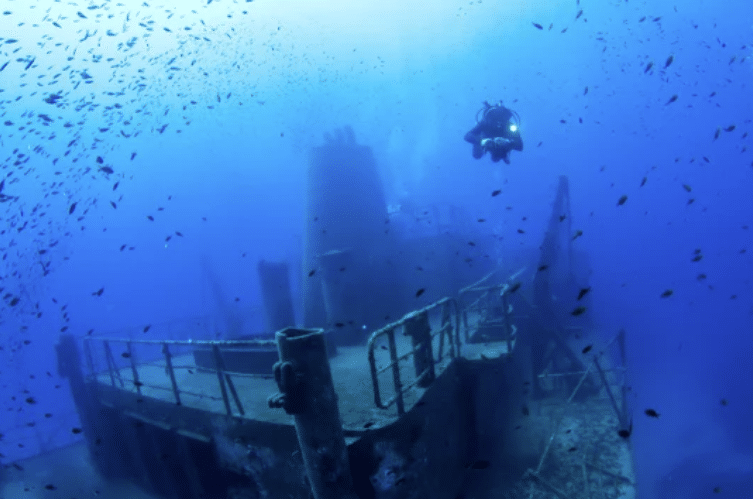
- Wreck Diving
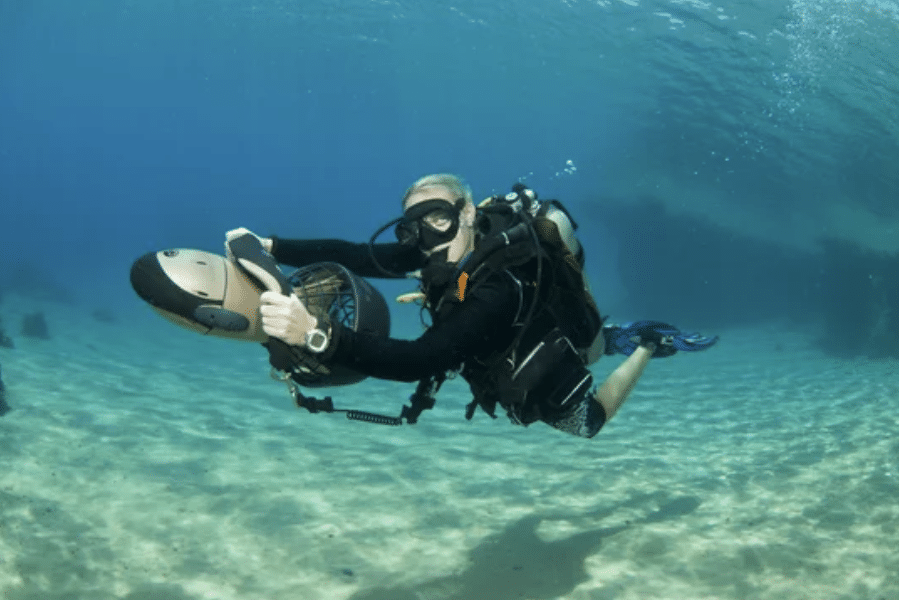
- Drift Diving
- Fish Identification
- Boat Diving
This flexibility allows divers to experience multiple areas of recreational diving while discovering personal interests and strengths.
At N9BO℠, we tailor dive selection to maximise both learning value and environmental suitability.

The Deep Dive Experience
The Deep Dive introduces divers to depths beyond the Open Water training limit, typically progressing to a maximum of 30 metres / 100 feet.
This experience teaches divers how depth affects:
- Gas consumption
- Buoyancy control
- Light and colour perception
- Physiological and cognitive performance
Divers also learn the importance of increased planning and awareness at greater depth.
The objective is not simply to go deeper, but to understand how the underwater environment changes as depth increases.
At N9BO℠, we emphasise that depth introduces responsibility as much as opportunity.
Underwater Navigation and Situational Awareness
The Navigation Dive develops one of the most important diving skills: orientation underwater.
Divers learn how to:
- Use a compass effectively
- Navigate using natural references
- Estimate distance underwater
- Return accurately to exit points or boats
Good navigation improves safety, reduces stress, and increases overall confidence during dives.
It also strengthens situational awareness by teaching divers to continuously monitor their environment and position.
At N9BO℠, we treat navigation as a foundational control skill rather than a speciality task.
Building Buoyancy and Efficiency
As divers gain experience through multiple Adventure Dives, buoyancy control naturally improves.
Different environments and tasks require:
- Better trim and body positioning
- More precise finning techniques
- Improved breathing control
The course encourages divers to become more relaxed and efficient underwater rather than simply task-focused.
This directly improves gas consumption, awareness, and overall diving enjoyment.
At N9BO℠, we emphasise that buoyancy is one of the strongest indicators of overall diving competence.
Exposure to Different Diving Environments
A major value of the course is environmental exposure. Many divers complete Open Water training in controlled or relatively simple conditions.
Advanced Open Water introduces divers to:
- Reduced visibility
- Greater depth
- Current and drift conditions
- Night environments
- Boat operations
This broader exposure develops adaptability and helps divers become more comfortable outside ideal conditions.
The course builds familiarity gradually while maintaining instructor supervision and structured progression.
At N9BO℠, we believe adaptability is developed through controlled exposure, not theory alone.
Confidence and Psychological Development
The programme also has an important psychological effect. Many divers finish their Open Water course still feeling relatively inexperienced or uncertain.
The Advanced course provides additional guided experience that helps remove hesitation and improve underwater confidence.
This confidence develops through:
- Repetition of core skills
- Exposure to new conditions
- Successful completion of progressively more complex dives
As comfort increases, breathing becomes calmer, awareness improves, and divers become more capable overall.
At N9BO℠, we believe confidence should be earned through structured experience rather than assumed through certification alone.
Progression Beyond Advanced Open Water
The Advanced Open Water course also acts as a gateway to further training.
It prepares divers for:
- Rescue Diver programmes
- Speciality courses
- Professional pathways such as Divemaster
- Technical diving foundations
The additional depth and experience gained during the course provide a stronger platform for future progression.
For many divers, this is the point where recreational diving begins to evolve into a long-term activity rather than a one-time experience.
At N9BO℠, we position Advanced Open Water as the beginning of broader diving development.
Operational Mindset
The Advanced Open Water course reinforces that experience is one of the most important components of diver development.
Certification alone does not create competence. Capability develops through exposure, repetition, and controlled progression into more varied environments.
The course is designed to expand the diver’s comfort zone gradually while reinforcing safe procedures and situational awareness.
At N9BO℠, we approach Advanced Open Water as a confidence and capability-building programme that prepares divers for more independent and adaptable recreational diving.
The goal is not simply to dive deeper or try new activities. The goal is to become a more capable diver overall.
Expand Your Diving Experience with Confidence
Contact N9BO℠ to begin your PADI Advanced Open Water Diver course and develop the experience, awareness, and confidence needed to explore more of the underwater world safely.
From the N9BO℠ Knowledge Base