Understanding Coral as a Living System
Coral reefs are often perceived as static underwater structures, but they are living systems built by colonies of coral polyps. These organisms exist in a symbiotic relationship with microscopic algae known as zooxanthellae. This relationship is fundamental to reef survival.
The algae perform photosynthesis, producing nutrients that sustain the coral. In return, the coral provides protection and access to sunlight. This exchange supports not only the coral itself but the entire reef ecosystem that depends on it.
When this relationship is stable, reefs thrive. When it is disrupted, the consequences extend far beyond the coral structure.
At N9BO℠, we emphasise that understanding coral biology is essential for interpreting environmental changes and operational impact.
What Bleaching Actually Means
Coral bleaching is a stress response, not an immediate death event. When corals are exposed to environmental stress—most commonly elevated sea temperatures—they expel the zooxanthellae living within their tissues.
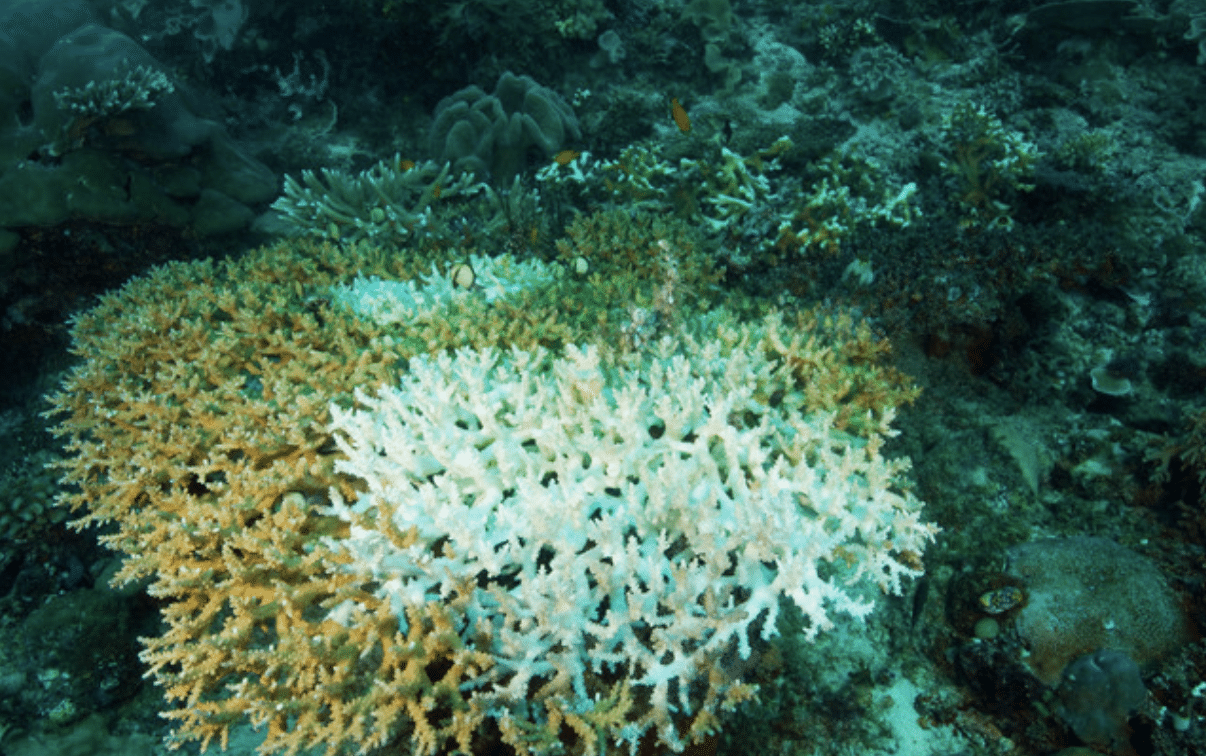
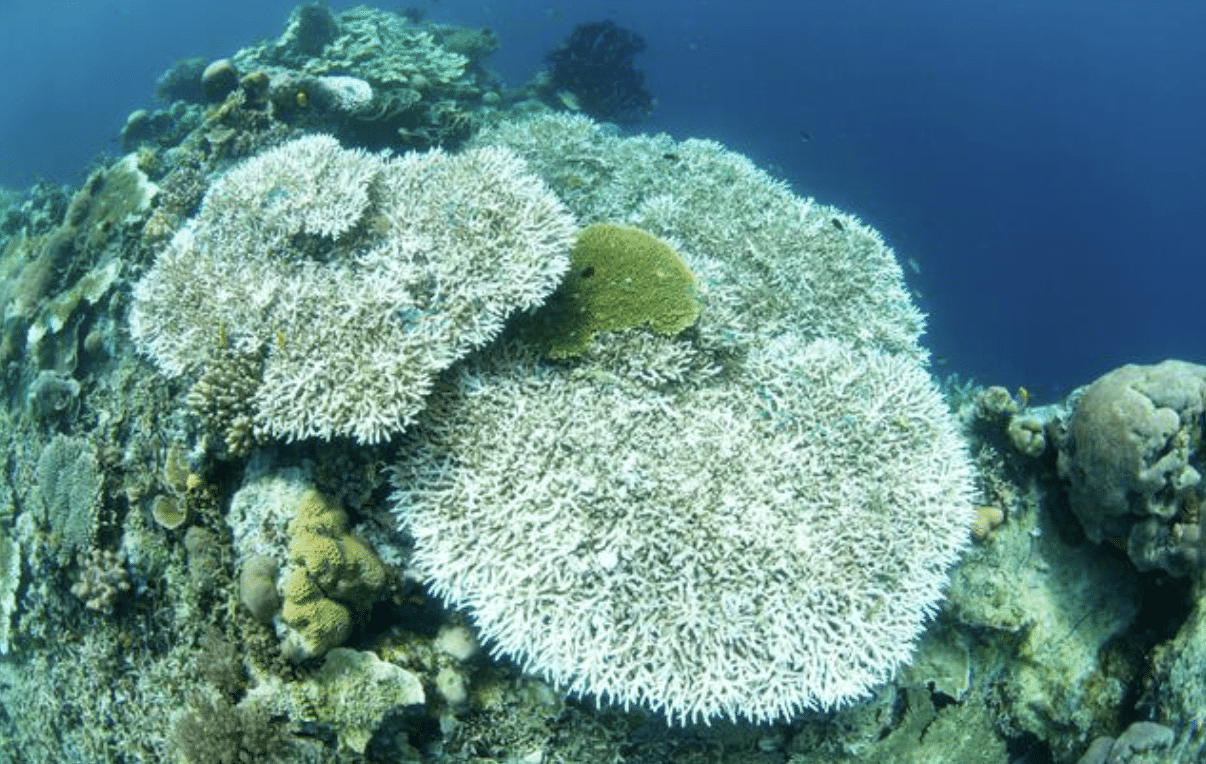
Without these algae, the coral loses both its primary energy source and its pigmentation, revealing the white calcium carbonate skeleton beneath. This is what gives bleached coral its characteristic appearance.
Bleaching does not mean the coral is dead, but it does indicate that it is under severe stress. Without the algae, the coral is weakened and more susceptible to disease, starvation, and eventual mortality if conditions do not improve.
Key triggers for bleaching include:
- Elevated sea surface temperatures
- Prolonged solar radiation exposure
- Pollution and reduced water quality
- Changes in salinity or sedimentation
At N9BO℠, we reinforce that bleaching is an indicator of environmental instability, not an isolated event.
Temperature Stress and Thermal Thresholds
Temperature is the primary driver of large-scale bleaching events. Corals exist within a narrow thermal tolerance range. Even small increases—typically 1–2°C above seasonal averages—can trigger stress responses if sustained over time.
This is not a short-term fluctuation issue. It is the duration of exposure that determines impact. Prolonged heat stress disrupts the photosynthetic processes of zooxanthellae, leading to the production of harmful compounds within the coral tissue. As a protective response, the coral expels the algae.
Mass bleaching events are now occurring more frequently due to rising ocean temperatures. This reduces recovery time between events, weakening reef systems over time.
At N9BO℠, we highlight that thermal stress is cumulative. Repeated exposure without recovery leads to long-term degradation.

Ecosystem-Level Consequences
Coral reefs support a significant proportion of marine biodiversity. When bleaching occurs, the impact extends beyond individual coral colonies.
Loss of coral health affects:
- Habitat structure for reef-associated species
- Food availability across trophic levels
- Spawning and breeding environments
- Coastal protection from wave energy
As coral cover declines, reef systems shift. Algae may dominate, biodiversity decreases, and ecosystem stability is reduced. These changes are not easily reversible.
For dive operations, this has direct implications. Reef quality affects both ecological value and long-term sustainability of dive sites.
At N9BO℠, we consider reef health a critical operational factor, not just an environmental concern.
Recovery vs Mortality
Bleached corals can recover if stress conditions are reduced quickly. If water temperatures return to normal and environmental conditions stabilise, zooxanthellae can repopulate the coral, restoring both colour and function.
However, recovery is not guaranteed. Prolonged stress leads to:
- Energy depletion
- Increased susceptibility to disease
- Structural weakening
- Eventual mortality
The likelihood of recovery depends on:
- Duration and intensity of stress
- Overall water quality
- Presence of additional stressors such as pollution or physical damage
Repeated bleaching events reduce resilience. Corals that are repeatedly stressed without sufficient recovery time are less likely to survive future events.
At N9BO℠, we emphasise that resilience is finite. Once exceeded, recovery becomes unlikely.
Human Impact and Operational Responsibility
While climate change is the primary driver of global bleaching, local human activity can increase stress on reef systems. Dive operations, tourism, and coastal development all influence reef health.
Operational impacts may include:
- Physical contact causing tissue damage
- Poor buoyancy control leading to breakage
- Anchor damage to reef structures
- Pollution from vessels or coastal runoff
These factors do not cause bleaching directly, but they reduce the coral’s ability to recover from thermal stress.
At N9BO℠, we integrate environmental responsibility into operational standards, recognising that local behaviour influences global outcomes.
Mitigation Through Operational Control
Divers and operators cannot control ocean temperature, but they can control their impact on reef systems. Reducing additional stress increases the likelihood of coral survival and recovery.
Key control measures include:
- Strict buoyancy control to avoid contact
- Use of mooring lines instead of anchoring
- Managing diver positioning and group size
- Avoiding contact with marine life and substrate
These measures are simple but require consistent enforcement. In high-traffic dive sites, even minor impacts accumulate over time.
At N9BO℠, environmental control is treated as part of operational discipline, not optional behaviour.
The Role of Divers in Monitoring and Awareness
Divers are uniquely positioned to observe reef conditions directly. This places them in a role that extends beyond recreation or instruction.
Regular observation allows for:
- Early identification of bleaching events
- Monitoring of reef recovery or decline
- Reporting changes to conservation or research organisations
This data contributes to broader understanding and response efforts. While individual observations may seem limited, collective reporting provides valuable insight.
At N9BO℠, we encourage divers to operate with awareness, recognising that observation contributes to conservation.
Operational Mindset
Coral bleaching is not a distant or abstract issue. It is an ongoing process that directly affects dive environments, marine ecosystems, and operational sustainability.
Understanding the science behind bleaching allows personnel to interpret what they see, adjust behaviour, and minimise impact. Without this understanding, degradation may go unnoticed until it becomes irreversible.
At N9BO℠, we approach reef interaction with the same discipline applied to safety. Awareness, control, and consistency are required to reduce impact and support long-term viability.
Coral reefs are resilient, but only within limits. Exceeding those limits results in permanent change.
Protect the Environment You Operate In
Contact N9BO℠ to integrate environmental awareness into your dive operations and training, ensuring sustainable practices that protect reef systems under increasing global pressure.
From the N9BO℠ Knowledge Base