Professional Diving Is Not a Single Dive
Recreational divers may:
- Dive once or twice per day.
- Rest between dives.
- Recover fully between trips.
Dive professionals often:
- Teach 2–4 dives daily.
- Manage logistics before and after dives.
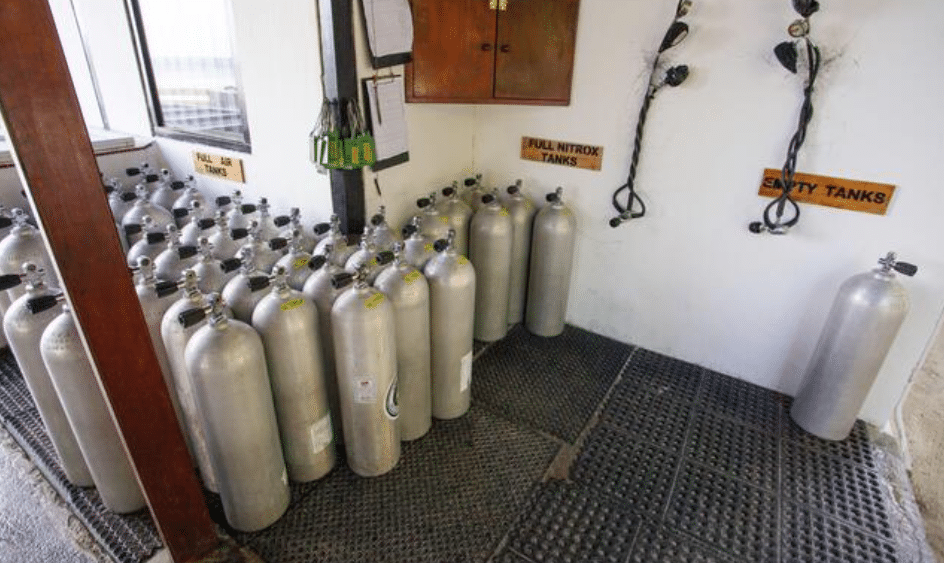
- Load and unload cylinders.
- Carry weights repeatedly.
- Conduct briefings and debriefings.
- Stay on their feet for 8–10 hours.
Fatigue accumulates gradually.
Stamina protects performance when the schedule does not slow down.
Physical Endurance and Task Loading
Every dive professional performs:
- Gear lifting.
- Tank handling.
- Equipment checks.
- Surface swims.
- Current management.
- Student assistance.
- Boat boarding under swell.
These activities:
Elevate heart rate.
Increase respiratory demand.
Tax musculoskeletal endurance.
If physical reserves are low:
Breathing becomes irregular.
Gas consumption increases.
Stress tolerance drops.
Physical stamina directly affects underwater control.
Mental Stamina: The Hidden Load
Professional diving also requires:
- Constant situational awareness.
- Monitoring multiple students.
- Anticipating problems.
- Adjusting plans dynamically.
- Maintaining calm authority.
- Communicating clearly.
Mental fatigue manifests as:
- Slower decision-making.
- Reduced patience.
- Shortened temper.
- Tunnel vision.
- Missed early warning signs.
Cognitive stamina is as critical as physical endurance.
Daily Diving and Cumulative Stress
Professional divers experience:
- Repeated pressure exposure.
- Thermal variation.
- Sun exposure.
- Dehydration risk.
- Interrupted recovery cycles.
Over weeks and months:
Small stressors accumulate.
Without adequate stamina:
Recovery lags behind workload.
Performance declines silently.
The most dangerous fatigue is the one you no longer notice.
Fatigue and Safety Margins
Fatigue reduces:
- Reaction time.
- Fine motor coordination.
- Depth awareness.
- Gas monitoring vigilance.
- Error detection ability.
Instructors under fatigue may:
Miss subtle student distress.
Delay abort decisions.
Underestimate current strength.
Misjudge ascent control.
Safety margin shrinks when stamina drops.

Stamina Is Professional Responsibility
A dive professional must be:
Operationally fit.
Not merely certified.
Fitness is not vanity.
It is risk management.
Professional stamina ensures:
- Stable breathing patterns.
- Calm emergency response.
- Consistent leadership presence.
- Reliable judgement under stress.
Clients and students rely on that stability.
The Link Between Stamina and Stress Management
Underwater stress increases:
Heart rate.
Respiration.
CO₂ retention.
A fit diver:
Recovers faster.
Maintains composure.
Controls breathing.
Preserves cognitive clarity.
A fatigued diver:
Escalates physiologically.
Amplifies stress.
Consumes gas rapidly.
Physical conditioning reduces physiological volatility.
Long-Term Career Sustainability
Dive professionals who lack stamina often:
- Burn out early.
- Develop chronic injuries.
- Experience repetitive strain.
- Struggle with cumulative fatigue.
Long careers require:
Structured fitness.
Active recovery.
Hydration discipline.
Sleep prioritisation.
Professional endurance is built intentionally.
Not assumed.
Strength vs Stamina
While strength matters for:
- Tank handling.
- Equipment setup.
- Rescue scenarios.
Stamina is about:
Sustained output over time.
Cardiovascular endurance supports:
Stable breathing.
Controlled gas usage.
Calm decompression management.
Professional diving is an endurance profession.
Not a sprint.

Mental Resilience and Emotional Regulation
Students can be:
Anxious.
Unpredictable.
Demanding.
Stamina supports:
Patience.
Clarity.
Consistent communication.
Emotional fatigue leads to:
Short responses.
Reduced empathy.
Inconsistent supervision.
Professional authority must remain steady.
Stamina stabilises behaviour.
Environmental Variability
Dive professionals operate in:
Heat.
Humidity.
Cold water.
Currents.
Rough seas.
Remote locations.
Environmental stress compounds fatigue.
Only structured conditioning offsets these pressures.
At N9BO℠, we emphasise that stamina is part of professional readiness. A dive professional must be physically and mentally prepared to operate day after day, not just perform on a single dive.
How Professionals Maintain Stamina
Sustainable practices include:
- Regular cardiovascular training.
- Core and mobility work.
- Strength conditioning.
- Structured hydration.
- Sleep discipline.
- Planned rest cycles.
Ignoring physical conditioning:
Increases long-term risk.
Prepared professionals protect their capacity.
The Psychological Benefit of Fitness
Confidence increases when:
You know your body can handle stress.
That confidence:
Reduces anxiety.
Stabilises breathing.
Improves judgement.
Enhances authority.
Stamina creates margin.
Margin protects teams.
Final Perspective
Dive professionals are:
Leaders.
Supervisors.
Instructors.
Operational anchors.
Their stamina supports:
Every dive.
Every student.
Every decision.
Fatigue is quiet.
But its consequences are not.
Professional endurance is not optional.
It is part of the safety system.

Want to Build Sustainable Professional Performance?
Operational diving demands endurance and discipline. Contact N9BO℠ to explore professional development pathways that strengthen both skill and resilience.
From the N9BO℠ Knowledge Base