What Coral Bleaching Actually Is
Coral bleaching occurs when corals expel the symbiotic algae (zooxanthellae) living within their tissues. These algae provide energy through photosynthesis and give corals their vibrant colours.
When water temperatures rise beyond tolerable thresholds — often just 1–2°C above normal seasonal averages — corals become stressed. In response, they expel the algae.
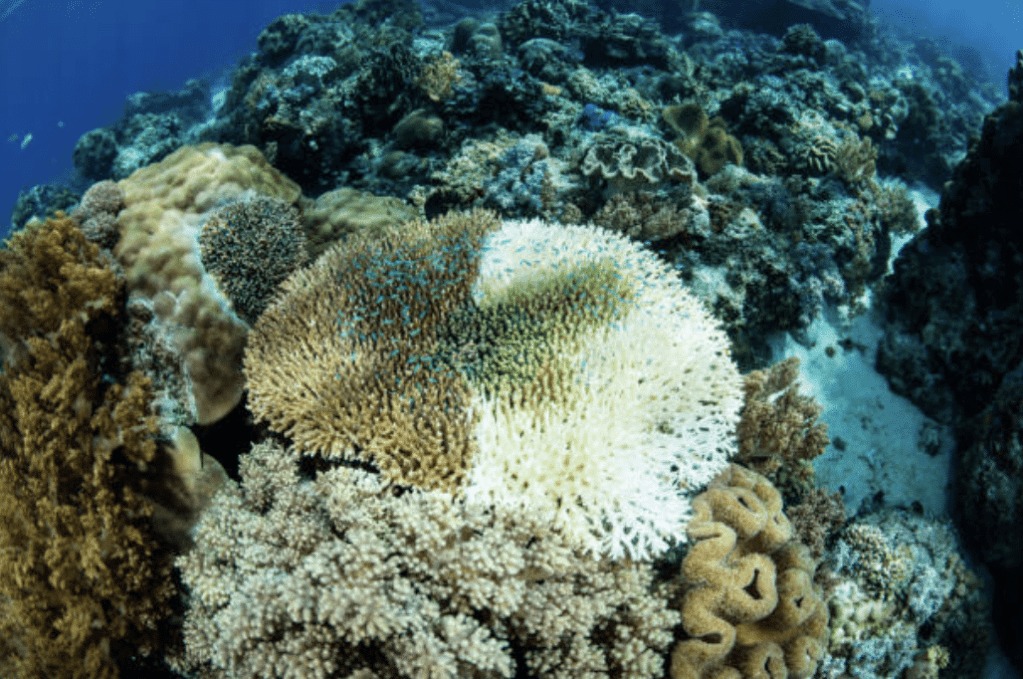
The coral skeleton becomes visible through the transparent tissue, giving the colony a white appearance.
Bleaching is not immediate death. It is a warning signal.
If environmental conditions stabilise, corals can recover and regain their symbiotic algae. If stress persists, mortality increases.
Understanding this distinction is critical.
Why Temperature Matters So Much
Coral ecosystems are finely tuned to stable environmental conditions.
Elevated sea surface temperatures disrupt the delicate balance between coral host and algae symbiont. Prolonged heat stress increases metabolic strain and oxidative damage.
Climate change amplifies:
- Frequency of marine heatwaves
- Duration of temperature anomalies
- Geographic spread of bleaching events
Divers often observe patchy bleaching before large-scale die-offs occur.
Early detection is valuable.
Other Stressors Beyond Heat
While temperature is the dominant driver, bleaching can also be influenced by:
- Sedimentation
- Coastal pollution
- Overfishing
- Ocean acidification
- Freshwater runoff
Compounded stress reduces resilience.
Coral systems already operating near tolerance thresholds respond more dramatically when multiple stressors interact.
Divers working near coastal development zones often witness localised bleaching linked to sediment plumes or construction activity.
Awareness of local environmental pressures adds context to what is observed underwater.
What Divers Actually See
Bleaching presents visually as:
- Uniform white coral colonies
- Patchy pale discolouration
- Fluorescent hues under certain light conditions
- Tissue recession in prolonged cases
It may begin in shallow reef zones exposed to greater thermal variation.
Sometimes bleaching affects only certain species while others remain stable.
Photographic documentation over time can reveal progression patterns.
Research divers often record:
- Colony percentage affected
- Depth-specific bleaching variation
- Species vulnerability trends
Observation becomes data when structured properly.

Why Divers Matter in Monitoring
Recreational and professional divers are uniquely positioned to observe reef health.
Early reporting of bleaching patterns supports:
- Marine biologists
- Conservation NGOs
- Reef management authorities
Citizen science programmes rely on divers to document:
- Geographic spread
- Intensity
- Recovery rates
However, observation must be responsible.
Disturbing already stressed coral through contact or poor buoyancy control compounds damage.
At N9BO℠, we emphasise that environmental awareness begins with precise underwater control. Stewardship is built into skill development.
Recovery Is Possible
Not all bleaching events end in coral death.
If temperatures stabilise and stressors reduce, corals can reacquire symbiotic algae and recover pigmentation.
Recovery depends on:
- Duration of heat stress
- Species resilience
- Local water quality
- Human impact
Resilient reef systems with reduced pollution and controlled fishing pressure show stronger recovery rates.
This reinforces the importance of broader environmental responsibility beyond the dive itself.
The Diver’s Role in Conservation
Divers cannot directly alter global temperature trends.
But divers can:
- Reduce reef contact
- Support conservation initiatives
- Document changes responsibly
- Educate others
- Choose environmentally responsible operators
Professional training reinforces that environmental discipline is not optional.
Technical precision underwater reduces ecological disturbance.
Conservation begins with behaviour.
From Awareness to Responsibility
Coral bleaching headlines often create alarm without context.
For divers, direct observation brings reality into focus.
Understanding the mechanism behind bleaching transforms reaction into informed response.
Environmental literacy strengthens diving culture.
At N9BO℠, we believe that competent divers operate with awareness of both safety and ecosystem impact. Marine environments are not simply dive sites — they are living systems requiring respect.
Professional diving culture includes environmental responsibility.

Want to Strengthen Your Environmental Diving Skills?
Precision buoyancy and responsible practices protect fragile reef systems. Contact N9BO℠ to explore environmentally responsible diving and advanced training pathways.
From the N9BO℠ Knowledge Base