What a PADI Distinctive Specialty Really Is
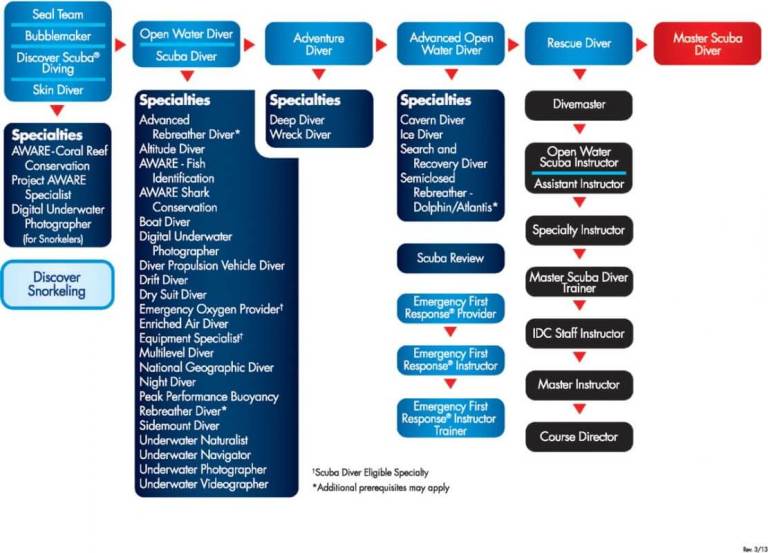
A PADI Distinctive Specialty is not simply an “extra course” or a novelty add-on. At its core, it is a formalised body of knowledge and skills that fills a gap between existing PADI programmes and real-world operational needs.
Distinctives exist because no global agency curriculum can cover every environment, industry, or specialised application. PADI allows qualified instructors to author distinctives precisely to address those gaps—when they are legitimate.
Not All Distinctives Are Equal
Over time, the term “distinctive” has been diluted by courses designed primarily for convenience or marketing. These often repackage existing material with minimal added value.
By contrast, rare, high-value distinctives share common traits:
- They are authored by subject-matter experts
- They are grounded in operational or expeditionary experience
- They address environments or risks not covered elsewhere
- They require judgement, not just skill repetition
Professional training organisations recognise the difference immediately.
Why Rare Distinctives Matter in Professional Diving
In technical, public safety, and expeditionary contexts, divers are often operating beyond standard recreational assumptions.
Rare PADI Distinctive Specialties formalise:
- Local or regional hazards
- Environment-specific procedures
- Industry-linked applications
- Advanced risk-management frameworks
This transforms informal “experience” into auditable, teachable, and repeatable training.

Instructor Authorship Is the Critical Filter
Authoring a legitimate distinctive requires more than enthusiasm. It requires:
- Documented experience
- Instructional discipline
- Alignment with agency standards
- Clear learning objectives and limits
This is why genuinely rare distinctives are uncommon. Most instructors simply do not have the operational depth required to author them responsibly.
Instructor Perspective: Teaching Beyond the Template
From an instructor’s standpoint, rare distinctives demand more accountability than standard courses.
There is no global template to hide behind. Every standard, scenario, and limitation must be defensible. At N9BO℠, distinctive instruction is approached with the same seriousness as technical or public safety programmes.
Why Agencies Allow — but Closely Review — Distinctives
PADI’s distinctive system exists to encourage innovation without compromising safety.
Approval processes are intentionally rigorous. This protects the agency, the instructor, and—most importantly—the student. Rare distinctives survive scrutiny because they are built on substance, not novelty.
The Value to Serious Students
For experienced divers, rare distinctives offer something standard courses cannot: contextualised expertise.
They provide insight into:
- How experienced professionals actually operate
- Why certain procedures exist
- Where limits truly lie
This makes them especially valuable to instructors, technical divers, and public safety personnel.
Distinctives as Professional Signalling
Holding or teaching a rare distinctive signals depth, not breadth.
It indicates that the instructor operates beyond generic curricula and has been trusted to formalise specialised knowledge responsibly. In professional circles, this matters far more than course quantity.
The Bottom Line
PADI Distinctive Specialties are tools.
Rare ones are instruments of professional credibility.
When authored and delivered correctly, they bridge the gap between agency standards and real-world complexity—without compromising either.
At N9BO℠, distinctive training is treated as professional instruction, not product diversification.
Interested in Unique Speciality Training?
Distinctive specialities allow training to go beyond standard curricula and focus on real operational skills. Contact us to learn which specialty programmes best support your diving goals.
From the N9BO℠ Knowledge Base