More Information Does Not Mean Better Decisions
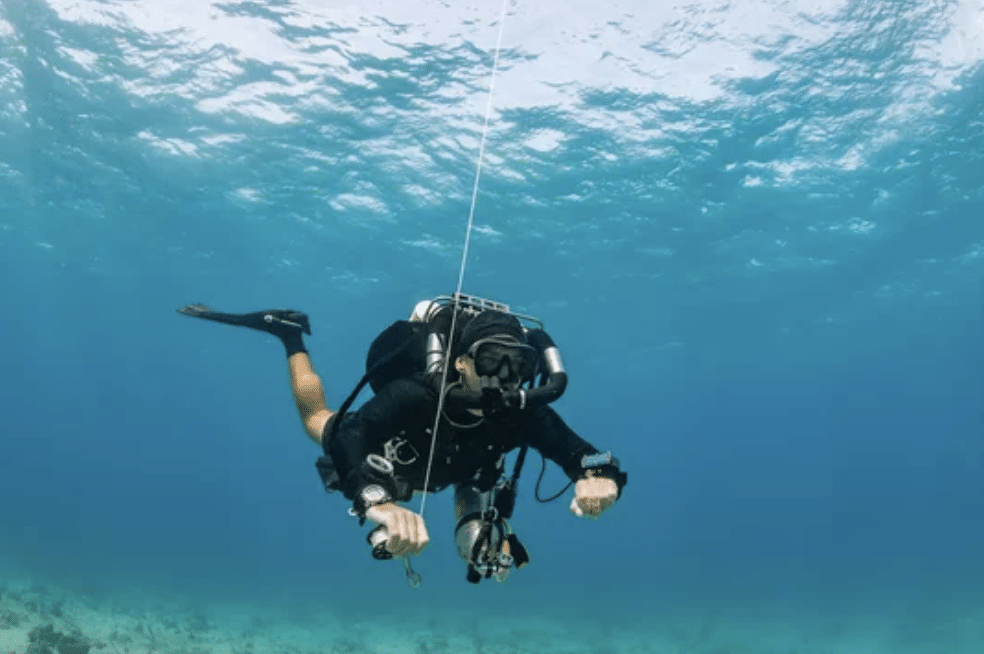
Diving technology has advanced rapidly. Divers now monitor depth, time, decompression status, gas pressures, PO₂, gradient factors, navigation, and team position—often simultaneously.
While this information is valuable, it has a cost.
Technical diving training recognises that human cognitive capacity is limited. When too much information competes for attention, decision quality drops.
How Cognitive Overload Develops Underwater
Cognitive overload occurs when the brain is asked to process more inputs than it can manage effectively. Underwater, this happens quickly due to:
- Multiple instruments demanding attention
- Task loading
- Stress and urgency
- Environmental complexity
Advanced technical diving progression treats overload as a predictable failure mode—not a personal deficiency.
The Illusion of “Staying on Top of Everything”
Divers often believe they are managing all inputs—until something is missed. Overload rarely feels dramatic; it feels busy.
Warning signs include:
- Constant instrument checking
- Difficulty prioritising
- Missed team cues
- Rising frustration
Technical diving training teaches divers to recognise “busy” as a danger state.
Why Overload Leads to Poor Decisions
When overloaded, the brain defaults to:
- Fixation on one variable
- Ignoring others entirely
- Simplistic or premature decisions
This explains why divers sometimes make drastic choices based on incomplete information. Advanced technical diving progression emphasises filtering before acting.
Filtering vs Monitoring
Professional divers do not monitor everything equally. They prioritise.
Key variables are monitored continuously; others are checked periodically or contextually. Technical diving training teaches divers to create a mental hierarchy of information importance.
Technology as Both Asset and Liability
Dive computers and sensors provide critical data—but they can also demand constant attention.
Professional training teaches divers to use technology strategically, not obsessively. Advanced technical diving progression reinforces that technology supports judgement—it does not replace it.
Instructor Perspective: Teaching Information Discipline
Instructors often observe students trying to “watch everything.” This behaviour increases stress and reduces performance.
At N9BO℠, instructors teach students to simplify displays, standardise checks, and trust procedures to manage load.

Team Awareness Reduces Cognitive Load
Teams distribute awareness. When divers share responsibility for monitoring different elements, individual load decreases.
Technical diving training treats communication as a cognitive load-sharing tool—not just coordination.
Slowing Down to Reduce Overload
Cognitive overload often creates false urgency. Slowing down—even briefly—allows the brain to re-prioritise.
Advanced technical diving progression trains divers to pause, reset awareness, and re-engage deliberately.
Professional Parallels
In aviation and emergency medicine, overload is mitigated through task delegation, checklists, and role clarity.
Technical diving applies the same principles. The goal is not to process everything—but to process the right things.
The Bottom Line
More data does not equal more safety.
Clarity comes from prioritisation.
In technical diving, the safest divers are those who know what not to focus on. Managing cognitive load is a skill—and it must be trained deliberately.
At N9BO℠, divers are trained to think clearly, not just monitor more.

Feeling Mentally Overloaded Underwater?
Excess information and workload can quickly degrade performance and awareness. Contact us to discuss training that improves prioritisation and mental capacity underwater.
From the N9BO℠ Knowledge Base